

Ball and cup — a step-by-step lesson for grown-up and child
Until now every card held one thing. Today it holds two — and this lesson turns that small change into a looking game your baby’s eyes have never played before.
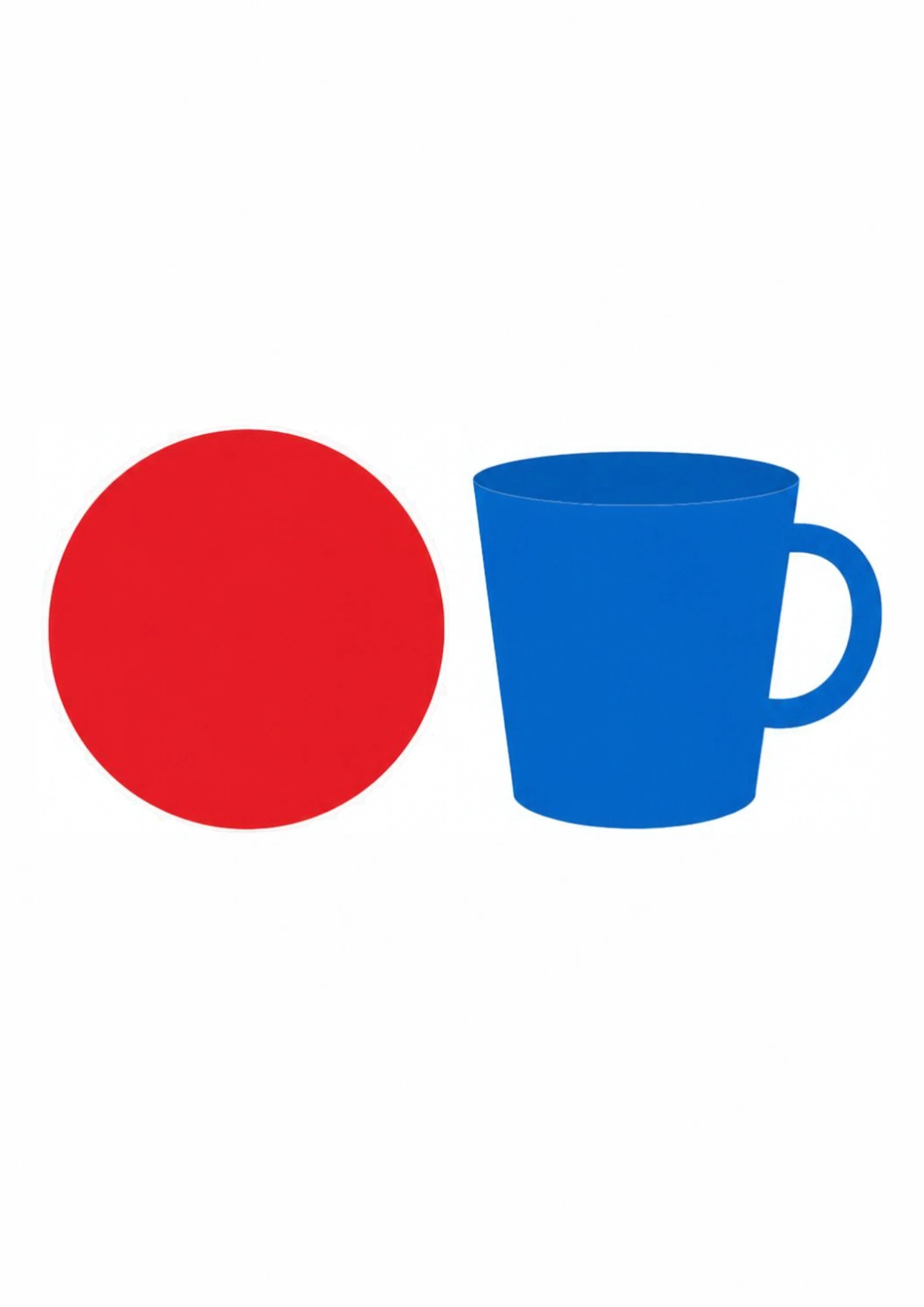
What is this?
The ball and cup card shows two everyday objects sharing one page: the ball your baby has batted at, the cup they see at every feed. Both names are already known — the new part is the twoness.
What does it mean?
One-object cards ask the eyes to arrive and stay; two-object cards ask them to travel. The gaze must leave one thing to visit the other, and that leaving-and-arriving is the visual engine of scanning, comparing and, much later, reading across a line.
What does the child need to know?
The method is patient turns: name the ball, pause long enough for a real look, then name the cup, pause again. Two names, one card, and your baby’s eyes doing the walking between them. If the eyes only ever camp on one object, that is a fine day’s work too.
Why this matters
"More than one" is a quiet revolution in baby thinking — the moment a page, and by extension the world, stops being one thing at a time. Every later skill from counting to sharing a storybook runs on the ability to hold two things in view.
What it teaches
Multi-object scanning, gaze-shifting between targets, sequential naming with pauses, and consolidation of two already-learned words on a single card.
Words to learn
ballcuptwothisthatback and forth
Say this to your child
“"Look — two things on one card! Here is the ball... round and ready. And here is the cup... waiting for milk. Ball, cup. Back and forth, one and the other. Two friends sharing a page, just for you."”
Step by step
- Show the card at close range and let your baby discover it is different today — two things! Name the card simply: "A ball and a cup."
- Name the ball first and point: "Ball." Then hold your finger still and give the gaze time to arrive.
- Shift to the cup: "Cup." Same patience — the pause is where the looking happens.
- Run the turns again, slower or faster on your baby’s mood, letting the eyes make their own trips between the two.
- End by naming both together — "ball and cup, two friends" — and bring the real cup or ball into view for a two-second cameo if attention allows.
Look closer at the picture
The artwork shows the two objects clearly separated on one page — say that much. The live noticing: how far do the eyes travel between the objects, and do the trips get longer through the session? Gaze-travel is the growth you can actually see.
Ask your child
Watch the journeys: does the gaze shuttle between ball and cup, or settle on a favourite? Does your pointing finger collect the eyes or do they roam alone? Wonder aloud: "I wonder which one is the home base today."
What your child can say or do
Shuttling looks between the two objects, a loyal stare on one with a glance for the other, excited arm movements when both real objects appear, or a fast loss of interest — two-object pages are bigger work, and shorter sessions are honest.
Out in the real world
Pairs fill the day: spoon and bowl, sock and foot, key and door. Naming real pairs — "spoon... bowl" — extends this card’s game to everything your baby already watches you handle.
Try it together
Two-object fetch: hold the real ball in one hand and the real cup in the other, bringing each into view as you name it, then both together. Card version, then live version — the same two objects wearing two costumes.
Understanding check
Parent self-check: did you actually pause between the two names — a real pause, two or three seconds? The pause is the pedagogy; without it, two words blur into noise and the eyes lose their map.
Parent tips
If your baby always looks at the same object first, say that one second — follow their order rather than imposing yours. The card teaches turn-taking, but your baby gets to call the coin toss.
Staying safe
Two real props means twice the grab-management: hands stay behind both objects, and neither rests within reach on the mat. If both objects end up fought over, the game worked — retire it for today rather than refereeing.
This lesson pairs with the Ball and cup flashcard in the library — print it, show it, keep it on the fridge. Back to Colors & First Objects (Infant 1).