

Apple — a step-by-step lesson for grown-up and child
The apple is a first-words classic: an object your baby has seen in the fruit bowl since birth, with a shape and colour that make the picture a joy to look at. This lesson brings card and fruit together.
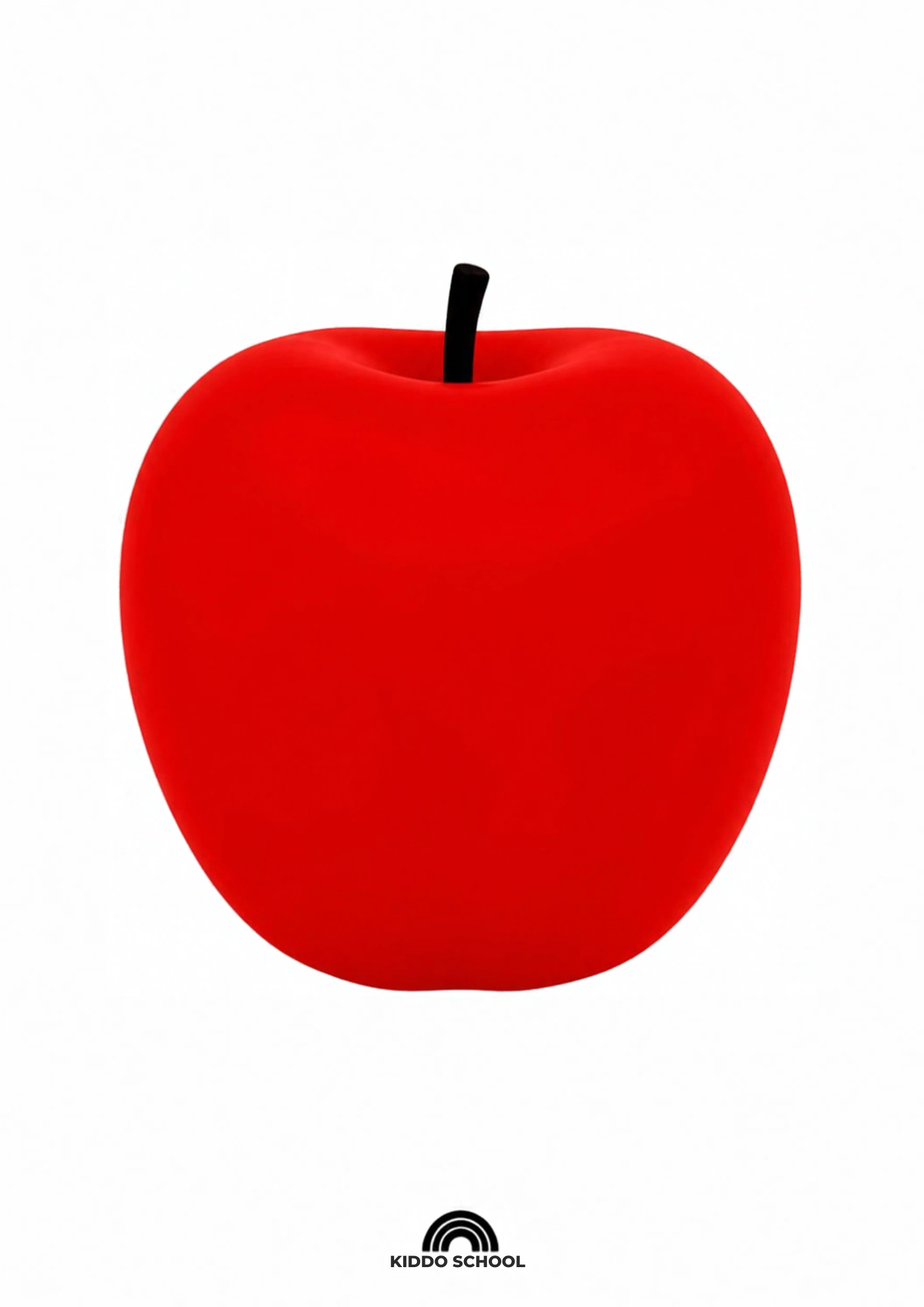
What is this?
An apple is a round tree fruit that lives in kitchens and lunchboxes, red or green. Your baby cannot eat one yet — but learning its name now means the word is waiting when the first apple slice arrives.
What does it mean?
Kitchen words grow fast because the kitchen is where babies already look: high chairs face the action, and food moves constantly. Naming a food before the baby eats it builds a bridge — when weaning starts, apple will be an old friend wearing a new form.
What does the child need to know?
Hold the fruit right next to the card and invite your baby’s eyes to travel between them — one word, happily covering both. Then put the fruit away and finish with the picture. No tasting today; the mouth learns this word months from now, at its own milestone.
Why this matters
Every object your baby can name before they can use it arrives at its milestone with a head start. The apple slice at weaning will come attached to a word, a shape and a memory of looking — three advantages, all planted in sessions like this one.
What it teaches
Picture-world transfer, size and colour comparison, fruit-bowl familiarity, and listening vocabulary that will surface again at first tastes.
Words to learn
appleredroundshinyfruit bowlcrunchy
Say this to your child
“"Apple! Here is the picture apple, red and shiny. And here is a real one from our fruit bowl — big, round, heavy. Picture apple, real apple, one word for both. Soon you will hold one of these yourself. What a day that will be."”
Step by step
- Show the card at close range and name it warmly: "Apple. A shiny red apple."
- Give the picture its look — then fetch a real apple, washed, whole and unbruised.
- Hold fruit beside card at matched height and say "apple" once; let the eyes make their own trips between them.
- Rotate the real apple slowly in your hand — a new angle, the same apple — then bring the card back into view.
- Finish on the card, and put the fruit back where it lives; the lesson ends with the picture getting the last word.
Look closer at the picture
The artwork is a bright round apple — say that much. The live noticing: how many gaze-trips between card and fruit today, and did the real apple’s shine or weight collect extra looking? Transfer is quiet work; count crossings, not reactions.
Ask your child
Watch the comparison: does the gaze settle on the fruit, the card, or travel? Does the real apple’s smell earn attention when it comes close? Wonder aloud: "I wonder which apple you think is the real one — I know, but I am curious how you see it."
What your child can say or do
Steady back-and-forth looking, fingers opening towards the real apple, a lean-in at the fruit’s smell, or babbling that pops up during the naming — all of it counts, and none of it needs to become tasting.
Out in the real world
Apples appear constantly: the fruit bowl, your snack, the market stall, the neighbour’s tree. One word at each sighting turns the whole neighbourhood into this card’s practice room.
Try it together
Bowl guest of honour: once a day, lift the apple from the fruit bowl, greet it by name to your baby, and return it. Thirty seconds of ceremony, no card required — the world’s most patient picture book, open on the counter.
Understanding check
Parent self-check: did the real apple stand beside the card today, and did the session end on the picture? The discipline of one-word-two-forms is what keeps kitchen vocabulary crisp instead of mushy.
Parent tips
If your baby mouths towards the fruit, acknowledge the interest warmly and keep the apple out of reach — the interest itself is the learning. Choose the shiniest apple in the bowl for sessions; gloss pulls baby eyes.
Staying safe
Whole apples are hard as stones and stay far from reaching hands — and when solids arrive months from now, apple is served cooked, grated or as a thin slice, never as a chunk. Today, the fruit is a prop, not a snack.
This lesson pairs with the Apple flashcard in the library — print it, show it, keep it on the fridge. Back to First Words & Familiar Things (Infant 2).