

Car — a step-by-step lesson for grown-up and child
All day, cars stream past the window — and for many families this ends up the most-said word in the whole set. This lesson starts the habit with a card that moves.
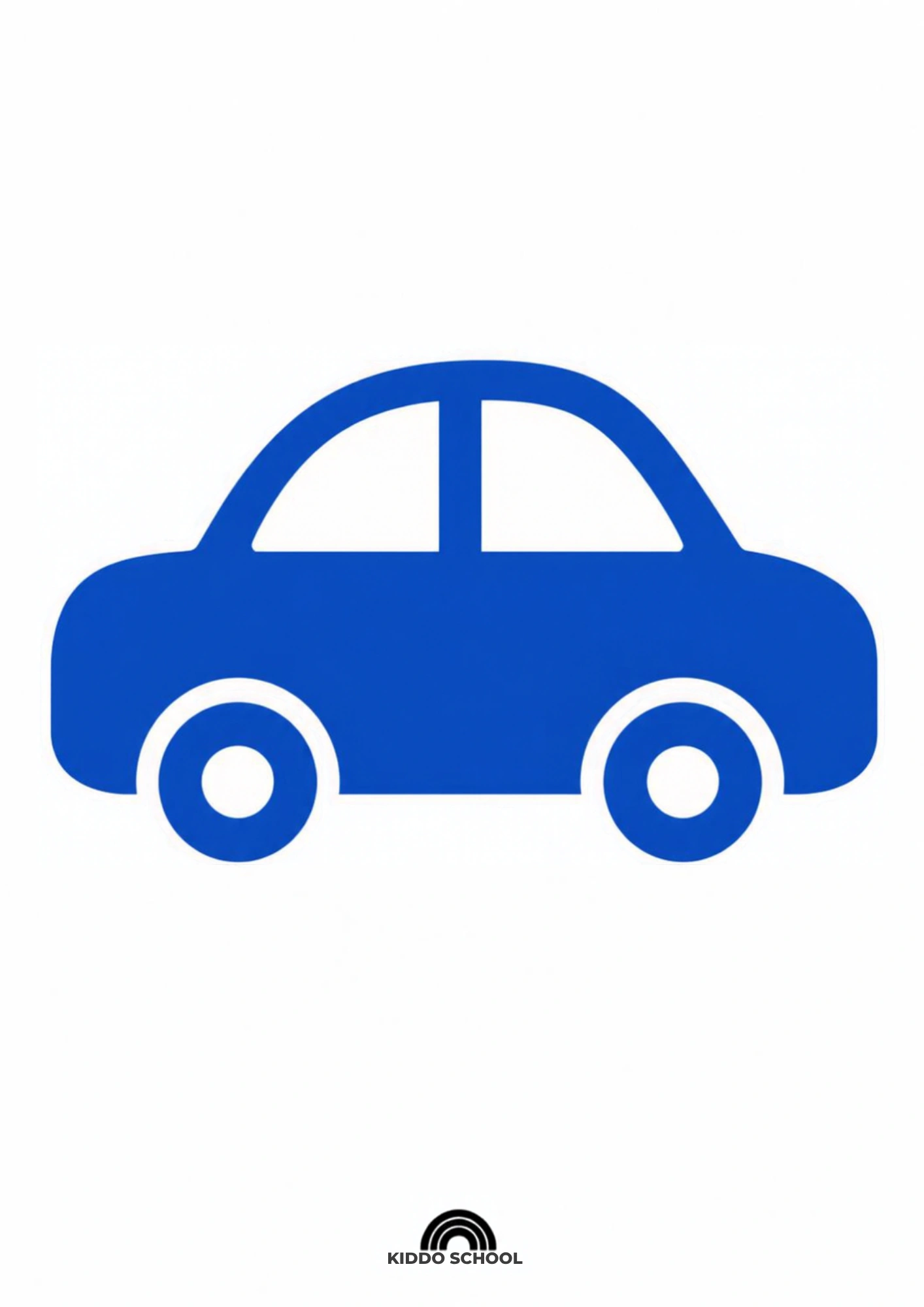
What is this?
A car is a wheeled vehicle that carries people — bright, fast and permanently fascinating from a window. The card gives one a portrait; the lesson gives it motion, sound and a name said at the moment it passes.
What does it mean?
Movement plus sound equals attention: a sliding card and a vroom collect a baby gaze like nothing still can. And passing cars are a gift to vocabulary — they arrive, they get named, they leave, and the word stays behind, ready for the next one.
What does the child need to know?
Send the card gliding through the air like a car going by, then give it one vroom. Watch which things your baby tracks longest — that preference is your baby announcing what they love, and love is the engine of every word that follows.
Why this matters
Car will be heard hundreds of times in your baby’s first years — on walks, in the pushchair, from the window. Giving the word a picture and a sound now means every future sighting lands on prepared ground. Few words offer this much free repetition.
What it teaches
Motion tracking, sound-word pairing, interest-mapping (noticing what your baby chooses to watch), and the habit of naming passing events in real time.
Words to learn
carvroomfastslowgostop
Say this to your child
“"Car! Here is the picture car, all ready to go. Watch it drive... vroom! Off it goes, fast as anything. And look outside — real cars, going past the window, one after another. Car is a very busy word."”
Step by step
- Bring the card up close and open with the name: "Car! A bright, speedy car."
- Point out the wheels — cars are their wheels — and give them a spin with your fingertip.
- Hold the card up and slide it slowly through the air, side to side, like a car passing the window.
- Say "vroom" once at the end of the pass — then park the card on your lap and let it rest there.
- Later, at any real window or street corner, name the passing cars the same way: one word per car, not per minute.
Look closer at the picture
The artwork is a bright simple car — say that much. The live noticing: does the sliding card hold the gaze the whole way, and do real cars collect a look at the window? Tracking a moving vehicle is exactly what these weeks are building.
Ask your child
Watch the pass: does the gaze follow the slide or lose it at speed? Which wins today — fast passes, slow passes, or the parked card? Wonder aloud: "I wonder if you like the going or the stopping better."
What your child can say or do
Eyes glued to the full slide, a startle-grin at the vroom, kicking that starts when the card launches, or a head-turn towards real traffic sounds — the last one means the word has left the card and moved into the world.
Out in the real world
Cars never stop coming: the school run, the delivery van, the neighbour reversing. Each pass is a one-word replay, and the pushchair becomes a moving classroom wherever you walk.
Try it together
Slow and speedy: slide the card twice — once painfully slow ("sloooow car"), once quick ("fast car!") — and watch which pass earns more. You are not just naming; you are finding out what kind of motion your baby loves, which is data for every future game.
Understanding check
Parent self-check: did the card actually move today, and did one real passing car get its word? The sliding is what makes the picture mean motion; the street replay is what makes the word mean car.
Parent tips
Vary the slide’s direction across days — left to right, then right to left — so both directions get tracking work. If the vroom delights your baby, keep it exactly as it is; do not upgrade to louder. This word runs on rhythm, not volume.
Staying safe
Street-side naming happens from the pushchair or your arms, well back from the road — the lesson lives at windows and pavements, never kerbsides. The card gets a rest after its flights; bent cards still work, torn ones retire.
This lesson pairs with the Car flashcard in the library — print it, show it, keep it on the fridge. Back to First Words & Familiar Things (Infant 2).