

Cat — a step-by-step lesson for grown-up and child
Cats fill books, streets, screens and half of all baby toys, which makes cat a genuinely useful early word. This lesson gives it a picture and a sound your baby can hold onto.
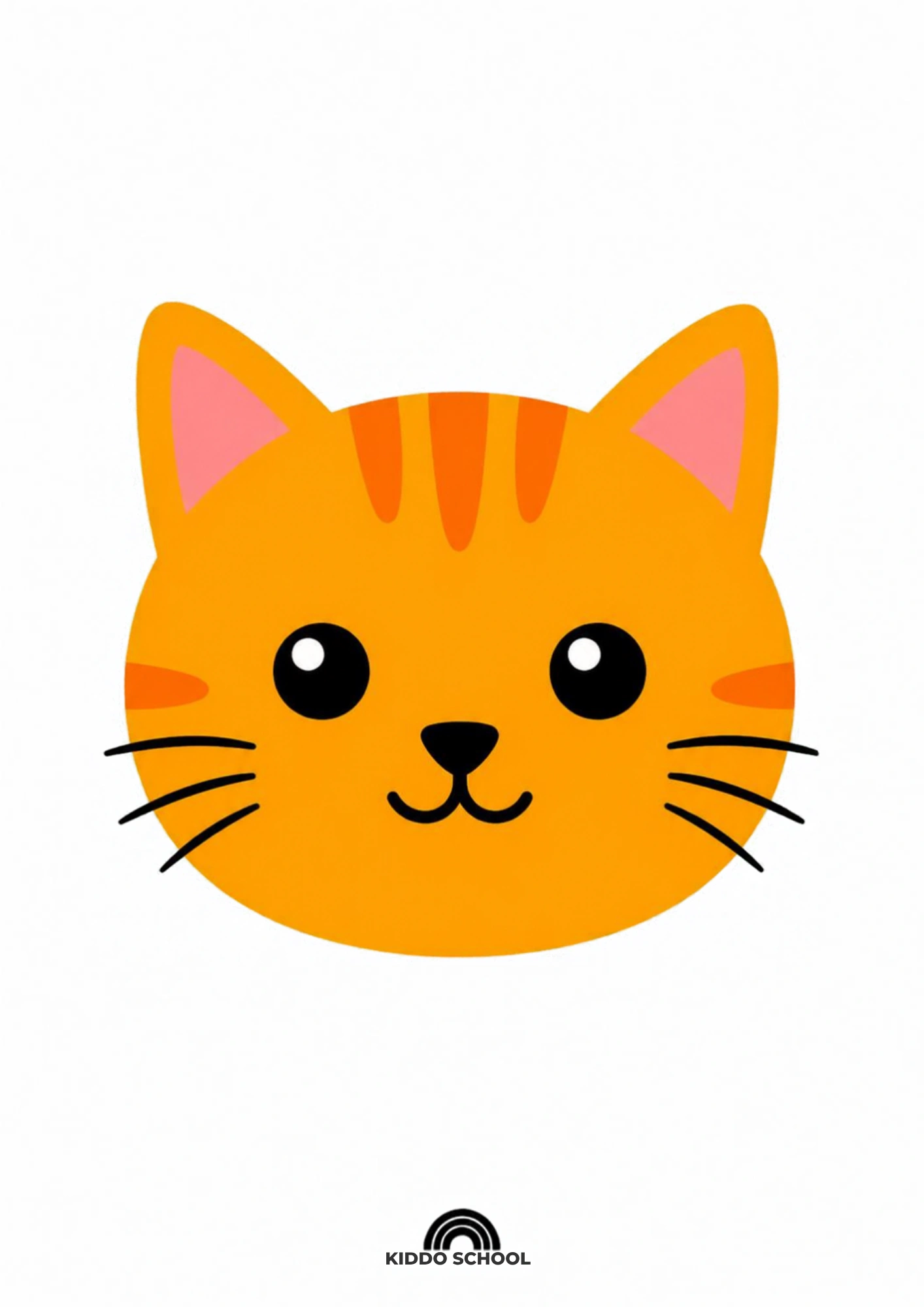
What is this?
A cat is a small, soft, whiskered animal — famous for independence and for one very sayable sound. Whether a real cat patrols your hallway or not, the word travels through your baby’s whole world of books and toys.
What does it mean?
Animal words carry sound-effects for free, and sound is a memory hook: meow gives the word a second handle, a musical one. Babies remember words better when the word arrives with a noise their own mouth can almost try.
What does the child need to know?
Add the meow — soft, not startling — and wait. Any reaction counts as participation: a startle, a grin, a kick, a babble. If a real cat strolls past later in the day, the word gets one more outing; the replay in the wild is where it becomes permanent.
Why this matters
Animal words are usually among the first a child understands, because animals move, make noise and star in everything aimed at babies. Cat is the friendly ambassador of that whole family — small, familiar-shaped, and equipped with its own soundtrack.
What it teaches
Animal recognition, sound-word pairing, reaction-to-novelty (startle that settles is healthy development), and memory hooks through repeated sound effects.
Words to learn
catmeowsoftwhiskerskittygentle
Say this to your child
“"Cat! Here is the picture cat, with its pointy ears and whiskers. A cat says meow — can you hear it? Meow, meow, soft and friendly. Cats are everywhere — in books, on the street, on your sock. Cat is a word worth knowing."”
Step by step
- Start with the card at close range, saying the name warmly: "Cat! A soft, whiskery cat."
- Trace the ears and whiskers on the card while your baby studies the face.
- Add the sound: a soft, friendly "meow" — then wait, and let whatever happens back be the reply.
- If interest holds, run the pair again: the word, the meow, a beat of quiet. Two rounds is plenty.
- Later in the day, replay it in the wild — a cat on the street, a cat in a book, a toy cat on the shelf — with the same word and sound.
Look closer at the picture
The artwork is a friendly cat in clear simple features — say that much. The live noticing: what does the meow earn? A blink, a startle that melts into a smile, a leg-kick — reactions to animal sounds are real developmental information.
Ask your child
Watch the sound: does the meow collect more attention than the picture alone? Does the reaction shrink the second time as the sound becomes familiar? Wonder aloud: "I wonder when the meow will stop being a surprise and start being a joke."
What your child can say or do
A startle-blink at the first meow, a gummy grin by the third, arm-waves or leg-kicks in reply, or a babble that tries out the same shape of sound — m-m-m noises after cat sessions are your baby rehearsing the family of sounds.
Out in the real world
Cats prowl through daily life: the neighbour’s cat on the wall, cats in every picture book, the cat on the milk carton. Each sighting is a replay — word, sound, done — until cat becomes permanently yours.
Try it together
Meow-and-wait: say the word, do the meow, then pause with an expectant face. Whatever your baby offers — a sound, a movement, a stare — answer warmly as if it were conversation. Because at this age, it is.
Understanding check
Parent self-check: did the meow stay soft, and did you wait after it rather than filling the silence? The waiting is where your baby’s turn lives; fill it and the conversation dies before it starts.
Parent tips
If your home has a real cat, the card gains a live co-star — but keep sessions calm and the animal always in control of its own participation. No cat at home? Books and toys carry the word perfectly well.
Staying safe
Real cats and babies meet only under close supervision, with the cat free to leave and claws out of the equation — the card carries the lesson; the animal is a guest, never a prop. Keep the meow gentle: startled babies learn less.
This lesson pairs with the Cat flashcard in the library — print it, show it, keep it on the fridge. Back to First Words & Familiar Things (Infant 2).