

Nose — a step-by-step lesson for grown-up and child
The nose card is the set’s comedian: short, silly and endlessly repeatable. This lesson runs the boop ritual that makes the word unforgettable — and keeps it gentle enough to stay funny.
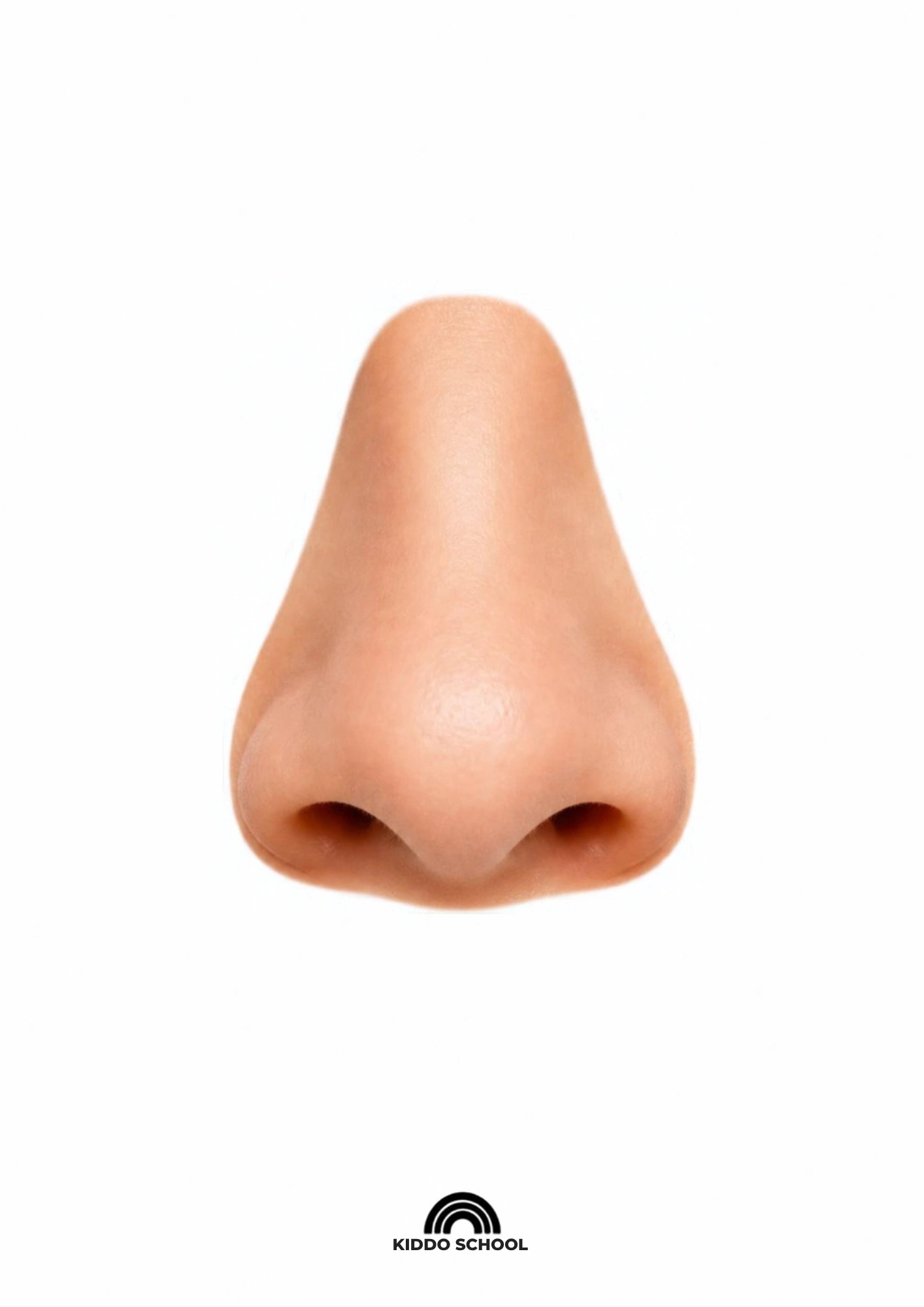
What is this?
A nose is the breathing, smelling, boopable bump in the middle of the face. The card shows a small round nose; your face and your baby’s supply the other two, and the boop — a feather-light fingertip tap — supplies the fun.
What does it mean?
Babies remember words that arrive with a feeling, and the nose boop pairs a word with a touch, a surprise and usually a laugh. That three-for-one deal is why nose so often ends up among the first body words a baby truly knows.
What does the child need to know?
Keep the boop light and the ritual identical every time: card, you, baby, the word at each stop. Predictability is the joke — many babies start grinning before the third boop lands, which tells you the sequence has been learned.
Why this matters
Ritual games do more than teach one word: they teach that interactions have a shape, that the shape repeats, and that your baby can predict and enjoy it. That expectation is the foundation humour, language and turn-taking all stand on.
What it teaches
Body-part vocabulary, tactile awareness, anticipation and prediction, and turn-taking — boop, giggle, boop again.
Words to learn
noseboopsniffroundgentleagain
Say this to your child
“"Nose! Boop — a nose on the card. Boop — my nose. Boop — your nose. One little round nose, sniff sniff. Everybody has a nose, and yours goes boop the best."”
Step by step
- Show the card and land the first boop on the picture: "Nose. Boop!"
- Boop your own nose: "My nose. Boop!" Exaggerate the word, never the poke.
- End the tour with the softest tap on your baby’s nose: "Your nose. Boop." Then stop and watch.
- If a grin arrives, run the round again in the same order — card, you, baby — because the pattern is as much the lesson as the word.
- Finish with a sniff towards the card: "Nose!" Some babies copy the sniff with their whole face; that is a bonus act, not the goal.
Look closer at the picture
The artwork is a small round nose, drawn plain and friendly with nothing busy around it — say that much and no more. The rest of the show is touch: three real noses, one word, and whatever the third boop shakes loose.
Ask your child
Watch the third stop: does the grin arrive before your finger lands — prediction — or after — surprise? Wonder aloud: "I wonder when you started knowing what comes next."
What your child can say or do
A giggle starting before the third boop, a hand rising to boop your nose in return, a whole-face sniff attempt, or a leaning-in that clearly asks for another round — all of it is the nose card working exactly as designed.
Out in the real world
Noses are everywhere and always attached to someone worth booping: the mirror, a sibling, a grandparent on a video call — boop the screen, gently. One word covers every face in the family.
Try it together
Reverse boop: take your baby’s hand and help it boop your nose, then their own. Guided first, independent later — the hand-over-hand version is how this game becomes theirs.
Understanding check
Parent self-check: did the ritual stay identical — same order, same feather touch — and did your baby laugh or try a boop back? If the word nose now pulls a grin all by itself, the card has landed.
Parent tips
Keep boops feather-light and stop while it is still funny; a nose game that runs long stops being a game. If your baby is snuffly or tired, skip the touch and simply point at the three noses — the word still lands.
Staying safe
Boop the tip of the nose only, never inside the nostrils, and check your own fingernails before face games. If your baby pulls the card towards their face, take it back — a paper corner near an eye is the one real risk here.
This lesson pairs with the Nose flashcard in the library — print it, show it, keep it on the fridge. Back to First Actions & Body Parts (Baby 2).