
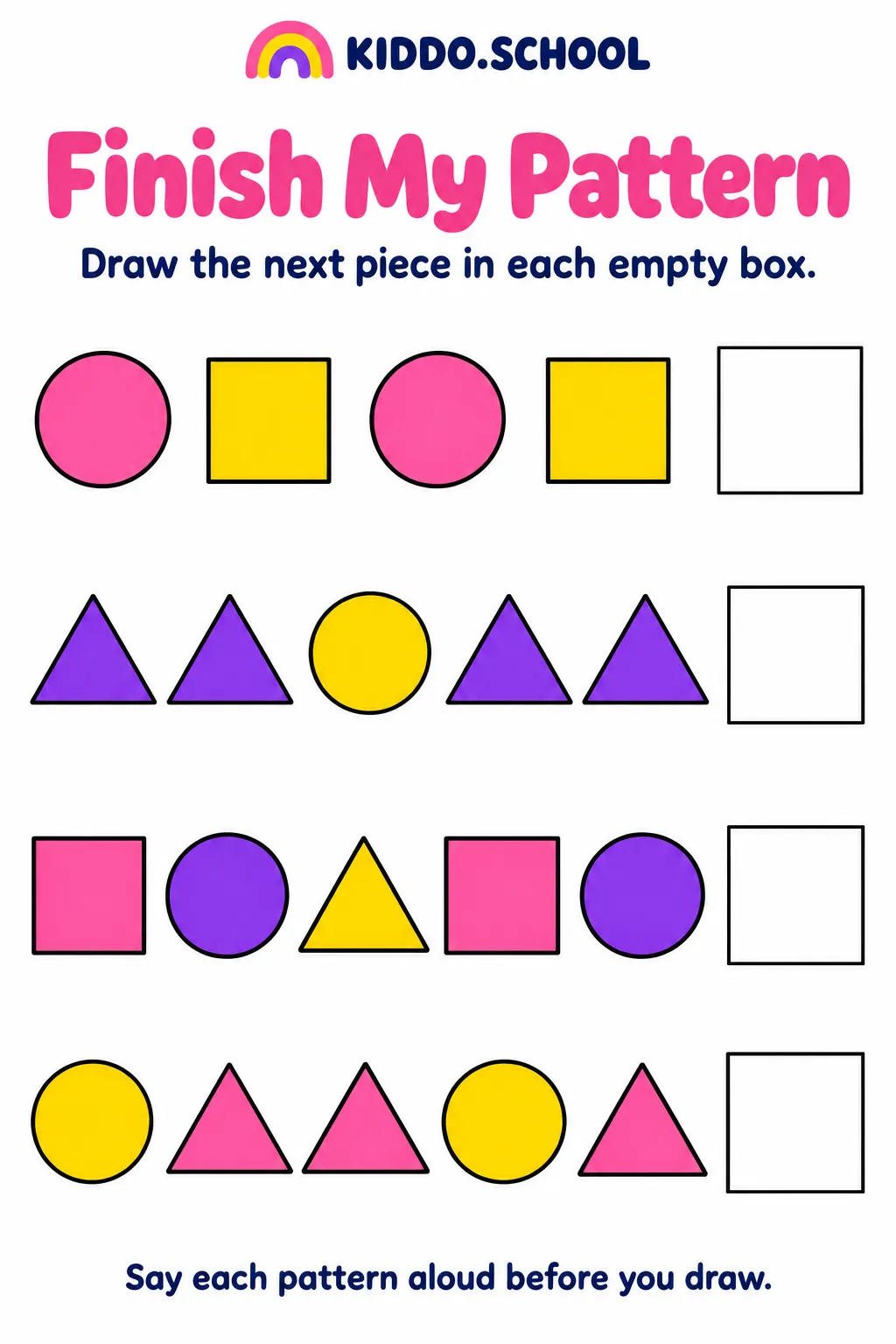
Look, then try.
Each row hides its own rule. Say the pieces out loud before you draw: circle, square, circle, square. The part that keeps returning is the repeating unit. Row one repeats two pieces, row two repeats in a different way, and rows three and four use longer units. Draw your answer in the empty box on the sheet or in the drawing space below. The answers stay off the worksheet; a grown-up can reveal them on this page when you are ready to check.
An adult helps with cutting the pattern cards. Keep paper scraps away from younger children. Move gently during movement patterns: seated movements work too, and no jumping is needed.
Use a finger, stylus or mouse in each drawing box. Type below it, or ask a grown-up to write your words. Your work stays in this tab. Save before refreshing or leaving.
Rows one and two
Draw the next piece for row one and row two, then name each rule.
Rows three and four
These units are longer. Draw the next piece, then check together with the reveal below.
Your ideas belong here. There is no score.
What are we learning?
Finding the repeating unit lets you predict what comes next. Units can be two, three or more pieces long, and growing units make prediction a little harder each time.
Prefer a worksheet?
Open the individual cartoon activity sheet to print or save. Use portrait orientation and fit to page.
Open worksheet to save ↓Try another pattern activity.
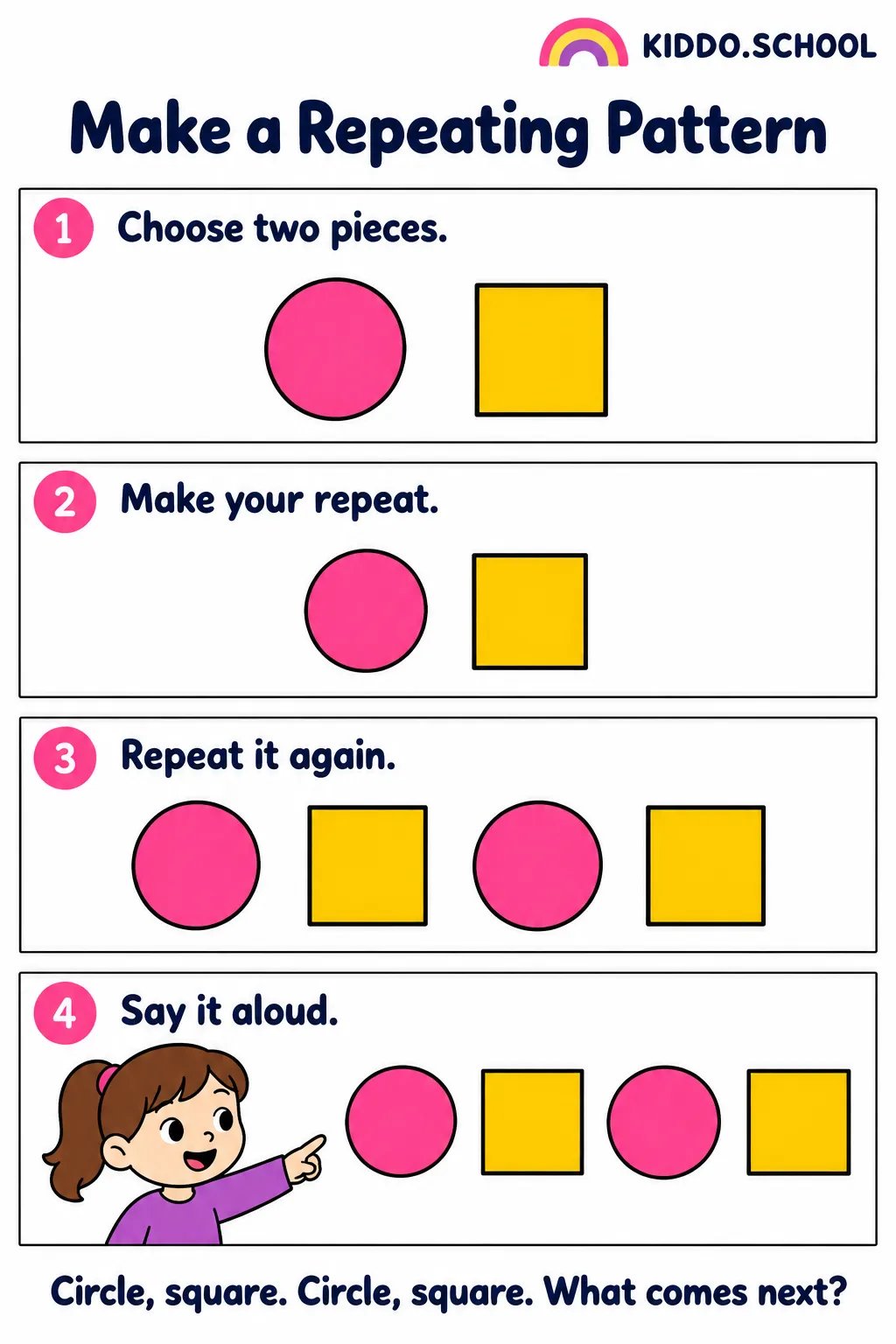 How to Make a Pattern
Choose two pieces, lay down your repeat and keep it going.
Draw · Type · Save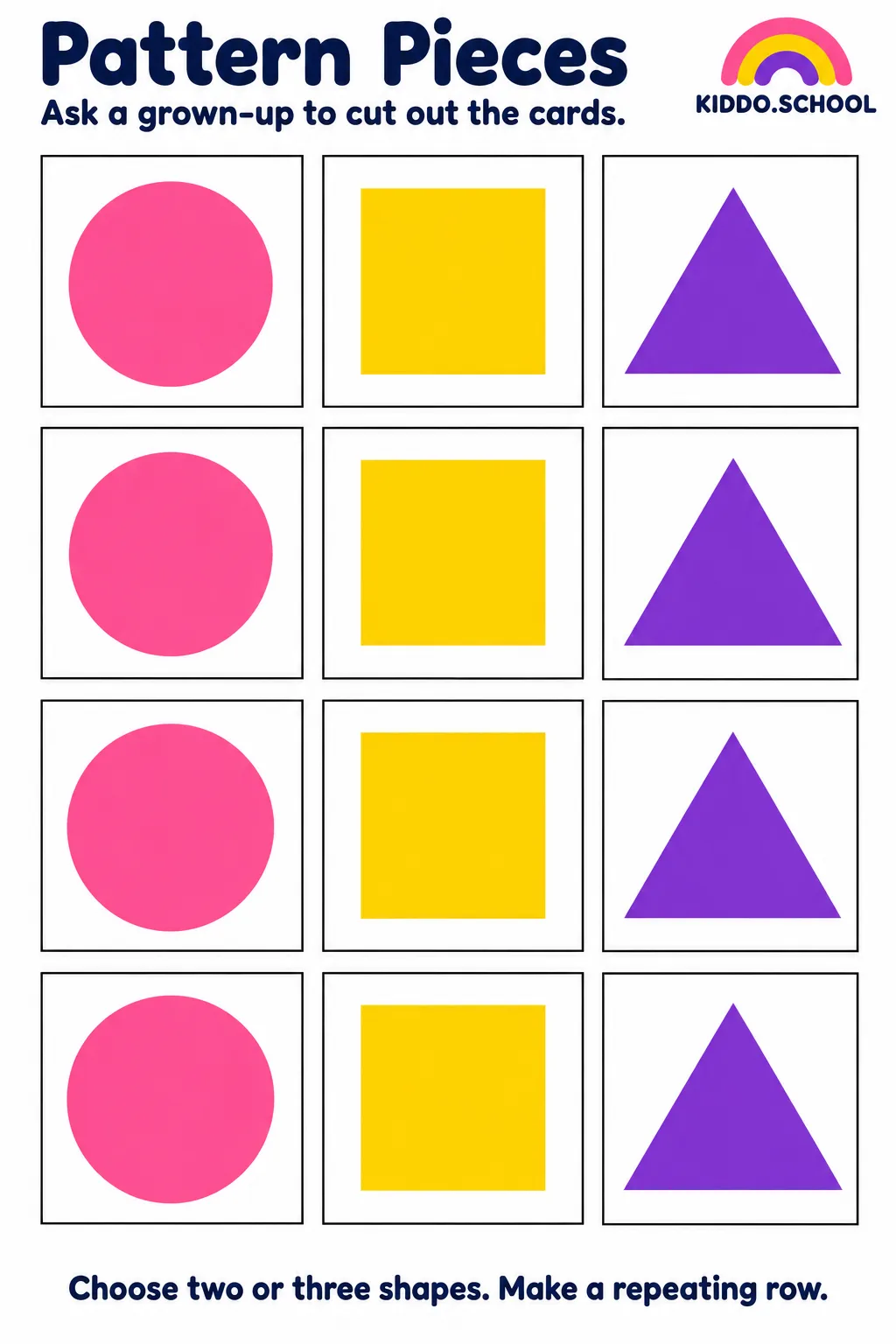 My Pattern Pieces
Sort your shape cards, build long rows and swap patterns to solve.
Draw · Type · Save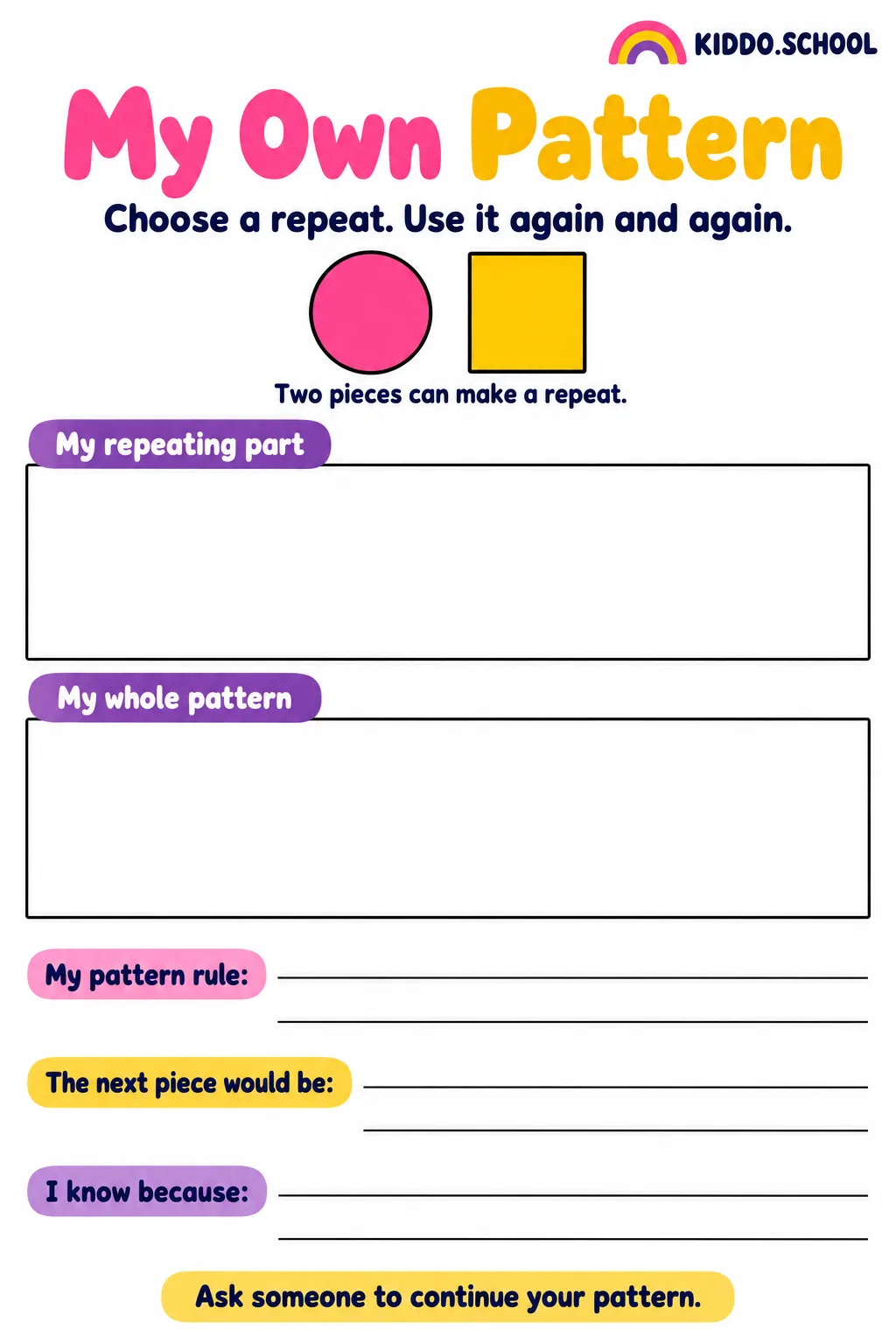 My Own Pattern
Invent a repeating part that is all yours, then challenge someone to continue it.
Draw · Type · Save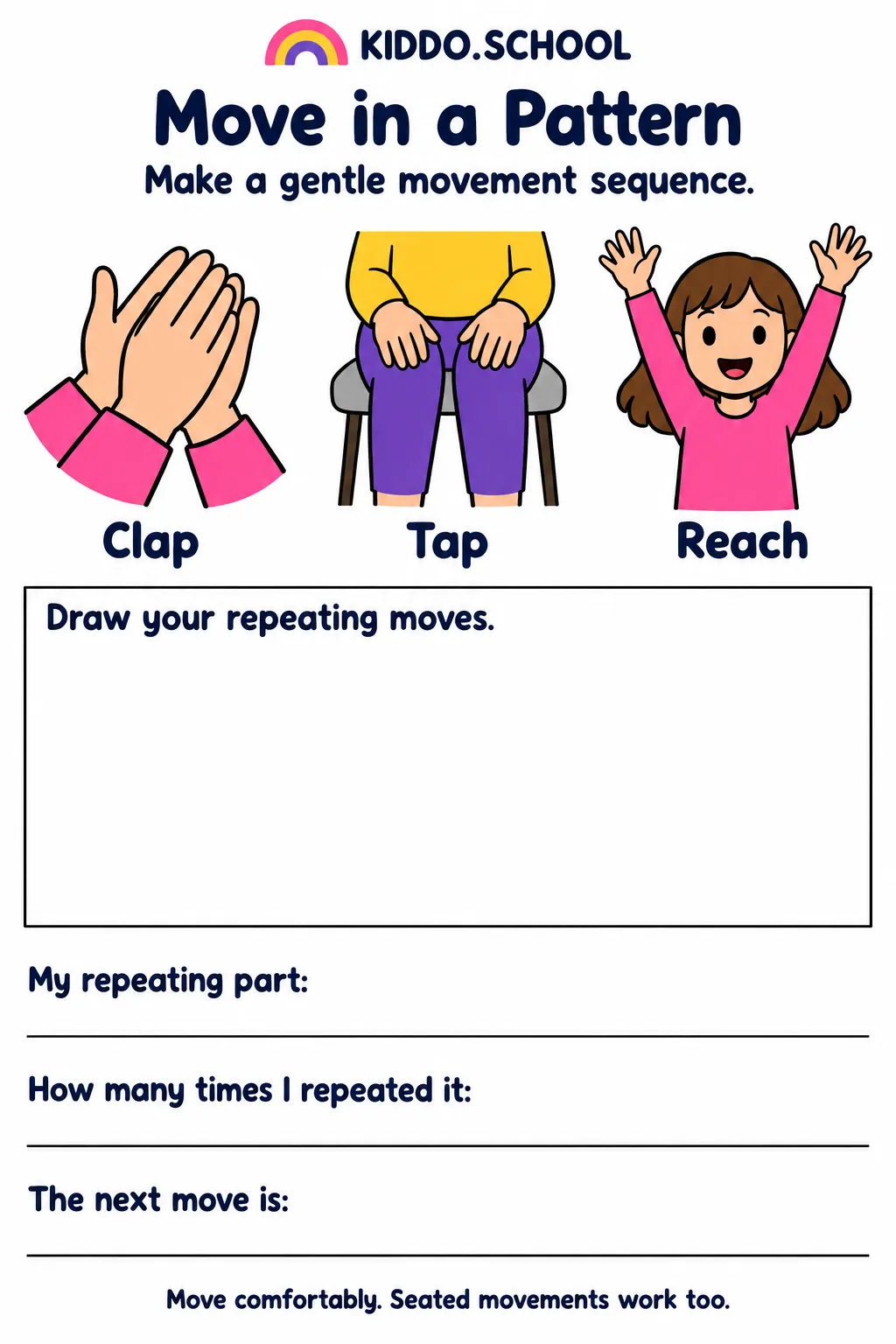 Move in a Pattern
Turn a pattern into gentle moves: clap, tap, reach.
Draw · Type · Save