
Listen — a step-by-step lesson for grown-up and child
This lesson teaches the quiet half of music: listening. Before any instrument speaks, somebody’s ears must be open — and listening is a skill you can practise like a game.
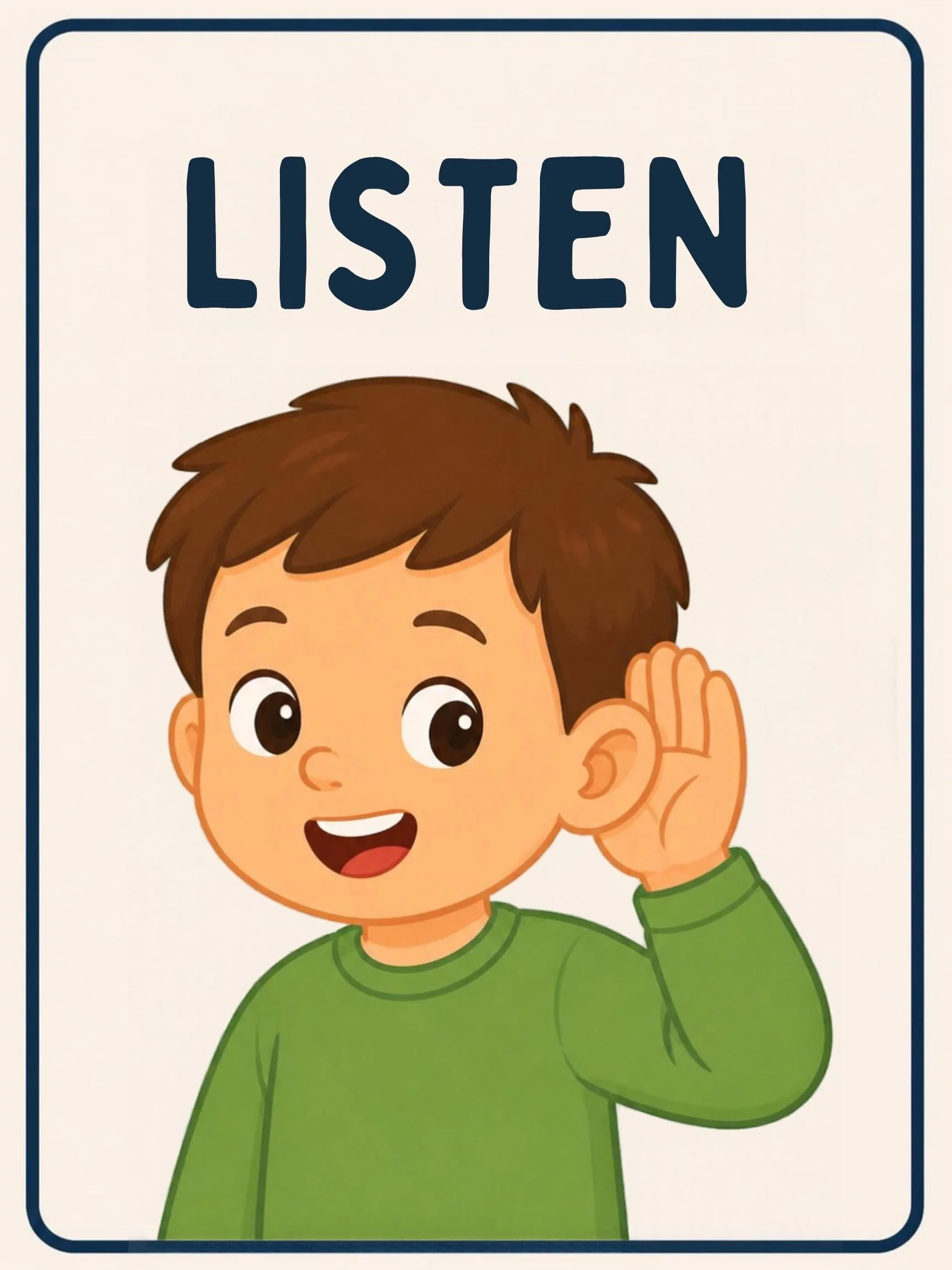
What is this?
Listening is receiving sound with attention: eyes closed, body still, ears wide. In music it means hearing what is actually there — high and low, loud and soft, near and far — instead of letting sounds wash past.
What does it mean?
Every lesson on this shelf depends on this one: the echo needs a listener, the harmony needs an ear, the beat needs a catcher. Listening is the invisible instrument — and it grows with practise, exactly like the drums do.
What does the child need to know?
Your child needs three listening ideas: stillness helps — ears work best when the body is quiet; sounds have knobs — high/low, loud/soft, near/far — and the hunter names them; and waiting is part of hearing — some sounds only arrive for patient ears.
Why this matters
Active listening is the root of attention itself — and the sound hunt turns it into a game children beg to play again, which is the entire trick of teaching attention at four.
What it teaches
Attention stamina, sound-discrimination (high-low, loud-soft), auditory figure-ground (finding one sound inside many), and the patience of waiting for quiet sounds.
Words to learn
listenearsstillhuntloudsoftpatient
Say this to your child
“"Listening is music’s quiet half — the half nobody plays and everybody needs! Sit still, close your eyes, and HUNT: what do you hear? High sounds, low sounds, loud ones, shy ones — every sound has knobs, and big ears name them. And some sounds are shy — they only arrive for patient waiters. Still body, wide ears: go."”
Step by step
- Show the card: "This is listen — music’s quiet half."
- The stillness: ears work best in quiet bodies. Sit still, close your eyes, and simply listen for ten seconds — the room is louder than you thought.
- The knobs: name what you hear — high or low? loud or soft? near or far? Every sound has knobs; hunters name them.
- The patient ear: some sounds are shy — the clock tick, the fridge hum. They arrive only for waiters. Wait for one.
- Play the sound hunt below and close: "still body, wide ears."
Look closer at the picture
On this card the word "Listen" stands in big navy capitals inside the rounded frame, with a friendly listening illustration below — exactly as the wide ears look.
Ask your child
"When do ears work best — wiggling or still? What knobs does every sound have? What kind of sounds arrive only for waiters?"
What your child can say or do
Your child might say: "Still body, wide ears!" "The fridge hums — low and shy!" or the hunter: "I heard THREE sounds with my eyes closed!"
Out in the real world
Big ears are free: the garden at dusk, the car window, the hallway’s quiet minute before bed. The sound hunt works anywhere — and children who hunt sounds at four hear music in layers forever.
Try it together
Sound Hunt: eyes closed, one minute, count the sounds you hear — then open up and list them together: clock, bird, fridge, footsteps, breath. Name each one’s knobs: high/low, loud/soft. Then the hiding game: one player makes a single sound — a tap, a hum, a shuffle — and the hunters say WHAT and WHERE. Big ears, big patience, big fun.
Understanding check
Ask: "What helps ears work best? Name a sound’s knobs. What do shy sounds need?" Stillness, high-low and loud-soft, patience — three answers and the ears are wide.
Parent tips
Model the stillness yourself — a listening grown-up is the best advertisement. And keep hunts short and triumphant: three sounds found beats ten sounds missed.
This lesson pairs with the Listen flashcard in the library — print it, show it, keep it on the fridge. Back to Music Room (Class 23).