

Different face — a step-by-step lesson for grown-up and child
Show this card beside the happy face over the week and your baby starts sorting the world’s first category: faces that are the same, and faces that are not.
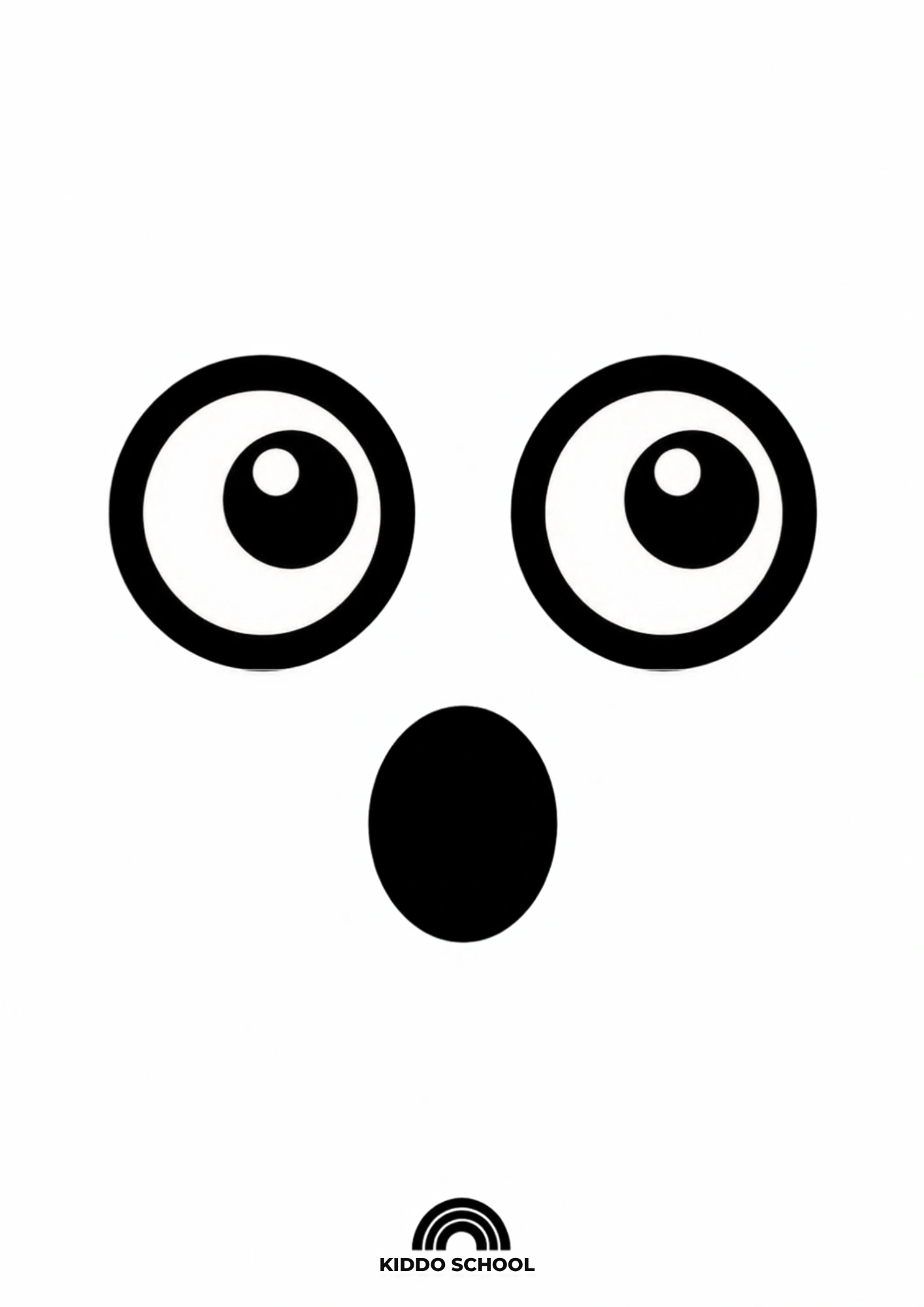
What is this?
This card carries a second face whose expression differs from the smiling one. Side by side they make a tiny set — same idea, different face — and noticing that gap is the very beginning of comparing, sorting and preference.
What does it mean?
Babies do not need words to compare. When two images take turns in view, the brain tracks what stays (eyes, mouth, face shape) and what changes (the expression). That quiet bookkeeping is categorisation in its first clothes.
What does the child need to know?
You do not need to teach "same" and "different" — you only need to offer both cards across a few days. Preference is the evidence: many babies this age lock onto one face and give the other a glance, and either choice is a finding.
Why this matters
Every later skill — sorting socks, telling the cat from the dog, telling b from d — stands on this first distinction: things that look alike are not all alike. Faces are the friendliest place to start, because babies already care about them.
What it teaches
Visual discrimination, early comparison, memory for images seen before, and the social idea that different people wear different expressions.
Words to learn
facedifferentagainlookthis onethat one
Say this to your child
“"Two faces! This face and that face. They are not the same — look closely. One says hello with a big smile, and this one has a different thing to say. Which face is looking at you today?"”
Step by step
- On day one, show only this card and name it plainly: "A different face. Hello, new face."
- On day two, bring the smiling card back and let your baby meet them in turn — one, then the other, with plenty of seconds apart.
- Hold the pair side by side at focusing distance and let the eyes travel; a slow sway of one card restarts the looking.
- Narrate the difference without teaching it: "This one smiles wide. This one looks different." Then stop talking and watch.
- Note which face wins the longer gaze and lead with that one next time — your baby’s preference is the syllabus now.
Look closer at the picture
The artwork shows a second bold face whose expression differs from the smiling one — same high-contrast style, different mood. Describe only that: the shape of the mouth, the feel of the look. The real experiment is your baby’s eyes, choosing.
Ask your child
Watch which card the gaze returns to after visiting both, and whether the return changes by day or by mood. Wonder aloud: "I wonder what makes you choose — the shape, or the one you saw first?"
What your child can say or do
Longer fixation on one face, a frown of concentration while comparing, a smile reserved for just one of the pair, or restless looking that means "too much" — all four are answers, and one of them is data.
Out in the real world
Difference fills the day: two grandparents with two voices, the family cat and the neighbour’s dog, your two hands. Naming pairs casually — "one shoe, other shoe" — keeps the comparing game running between sessions.
Try it together
Two-voice game: hold one card each side of your baby’s view and greet your baby in a different voice for each face — low and slow on the left, bright and quick on the right. Eyes and ears compare together.
Understanding check
Parent self-check: did the two cards actually meet this week, and did you catch which one held the longer look? If not yet, lay them out after the next nap — the comparing is your baby’s to do, not yours.
Parent tips
Resist labelling expressions beyond what you see ("grumpy", "naughty" and friends can wait years). Swap card order between days so position does not decide the winner. A blank day means nothing; preferences at this age are weather, not climate.
Staying safe
Keep both cards in adult hands and out of reach — at this age everything heads for the mouth eventually, and a soggy card grows mould. Session length stays short: two faces is a lot of information for twelve weeks.
This lesson pairs with the Different face flashcard in the library — print it, show it, keep it on the fridge. Back to Faces & Visual Tracking (Newborn 2).