

Eyes — a step-by-step lesson for grown-up and child
This lesson turns the eyes card into a calm two-to-five-minute session: where to hold it, what to say, and which tiny baby responses count as real work.
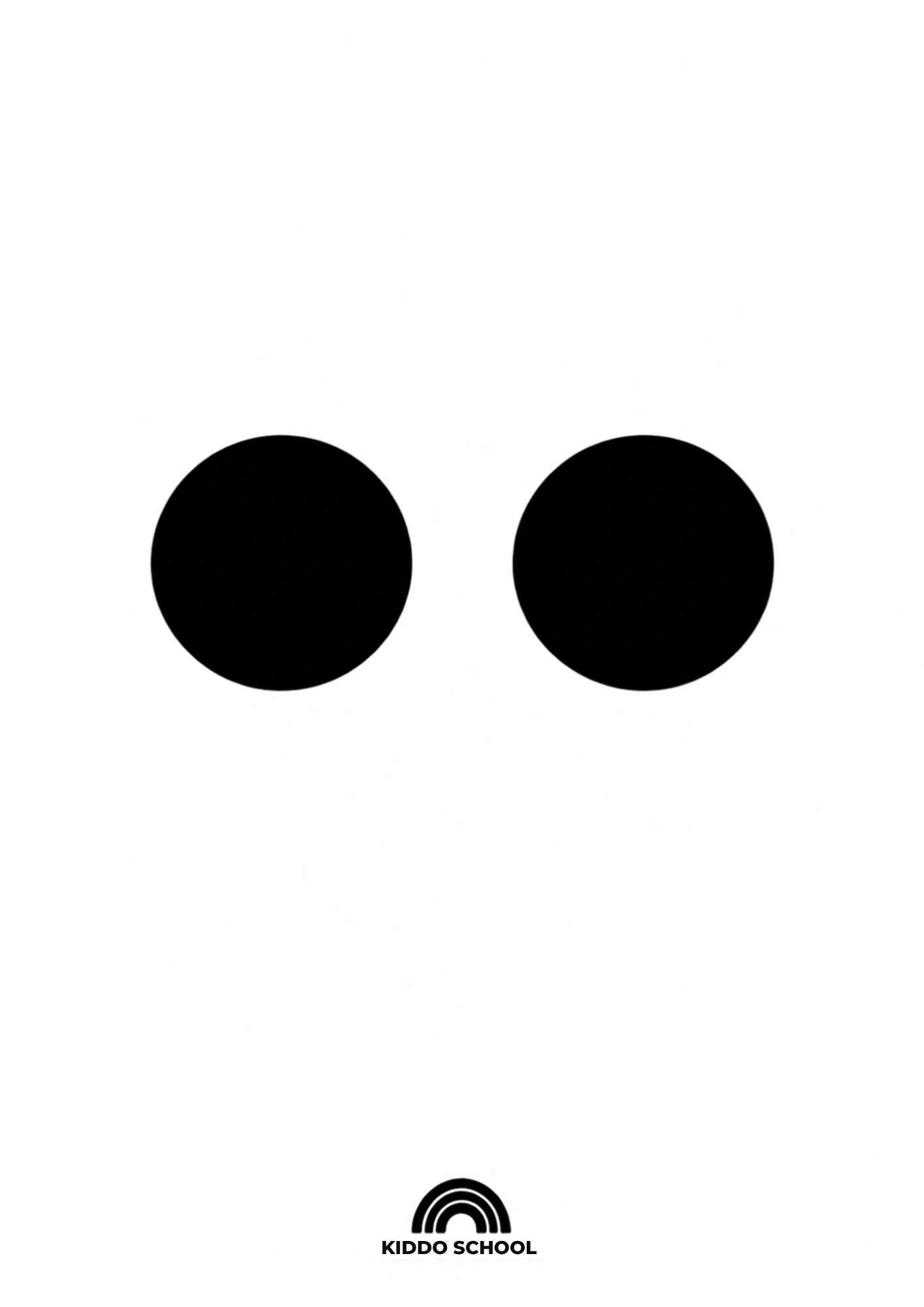
What is this?
Eyes are the part of the face people look with — and at 6–12 weeks they are also the part of YOUR face your baby finds most magnetic. The card puts two big friendly eyes in bold black and white, the easiest thing for brand-new vision to lock onto.
What does it mean?
Newborn sight is blurry except at close range, and dark bold shapes against white give the sharpest signal available. Eyes sit inside that sweet spot: high contrast, face-shaped, and usually attached to someone who loves your baby.
What does the child need to know?
Hold the card 20–30 cm away — about the distance from your elbow to your fingertips, where baby vision focuses best. Expect staring, going still, small starts and quick glances away; all of it is working, not boredom.
Why this matters
Looking at eyes is the first step of every conversation your baby will ever have. Eye contact feeds bonding, and every second of steady fixation exercises the eye muscles that tracking, focusing and, years later, reading will be built on.
What it teaches
Visual fixation (holding a gaze), early attention, eye-muscle control, and the social loop — look, be looked back at — that all conversation grows from.
Words to learn
eyeslookblinkhellofacepeek
Say this to your child
“"Look, eyes. Two big eyes looking at you. Here are my eyes — I am blinking, blink, blink. Hello, little one. Your eyes and my eyes are saying hello."”
Step by step
- Settle your baby in your lap or lying alert on a firm surface, then show the card at elbow-to-fingertips distance, straight in the line of sight.
- Name it warmly and slowly: "Eyes. Look — eyes." Two or three times is plenty; the words ride on your voice, not the other way round.
- Go quiet and watch. Fixation may last seconds or a minute; either way your baby is aiming their gaze, and that aiming is the whole skill.
- Lean in so your own face sits beside the card and blink slowly — first the card’s pair, then yours, so your baby can compare.
- Finish at the first yawn, squirm or glance away, and jot down which response you saw; tomorrow you are watching for its repeat.
Look closer at the picture
The artwork is verified simple: two large eyes, stark black on white, nothing else on the card. Point out the round pupils and the curve of the lids — then turn to the more interesting artwork: your baby’s face.
Ask your child
Watch for: does the gaze lock on quickly or drift? Does a slow blink from you pull a blink or a startle back? Wonder aloud, to yourself or the baby: "I wonder which eyes you like best — the card’s or mine?"
What your child can say or do
Your baby might hold a long, unblinking stare, soften and still as they find your eyes, give a first wobbly smile, or look from card to you and back — the first version of checking something twice.
Out in the real world
Eyes are everywhere your baby looks: yours at every feed, a sibling’s across the bath, grandparents on a video call. Each time someone leans close and gets held in a gaze, the card is happening live.
Try it together
Peek-a-boo, newborn edition: hide your eyes behind your palm for one second, then uncover them with a soft "peek". At this age the reappearance itself is the joke — no sound effects needed.
Understanding check
A parent self-check: can you name the focusing distance for this age, and did you catch one clear moment of fixation or eye contact today? Two yeses and the lesson landed.
Parent tips
Short beats long: two minutes of real looking beats ten of tired glancing. If a session fizzles, try again after a nap rather than pushing on. The card is a prop; your face is the main event.
Staying safe
Keep sessions hands-on and supervised — a card near a newborn means a grown-up holding it, never propped in a cot or left within grabbing range. Choose calm, alert windows, and let looking away end things; an overstimulated baby needs quiet, not more input.
This lesson pairs with the Eyes flashcard in the library — print it, show it, keep it on the fridge. Back to Faces & Visual Tracking (Newborn 2).