
Duck — a step-by-step lesson for grown-up and child
This lesson takes to the water. Quack is short, sharp and made for shouting — and the card holds a secret worth telling: the yellow bird on it is a duckling, a baby duck, and baby ducks do not quack yet at all.
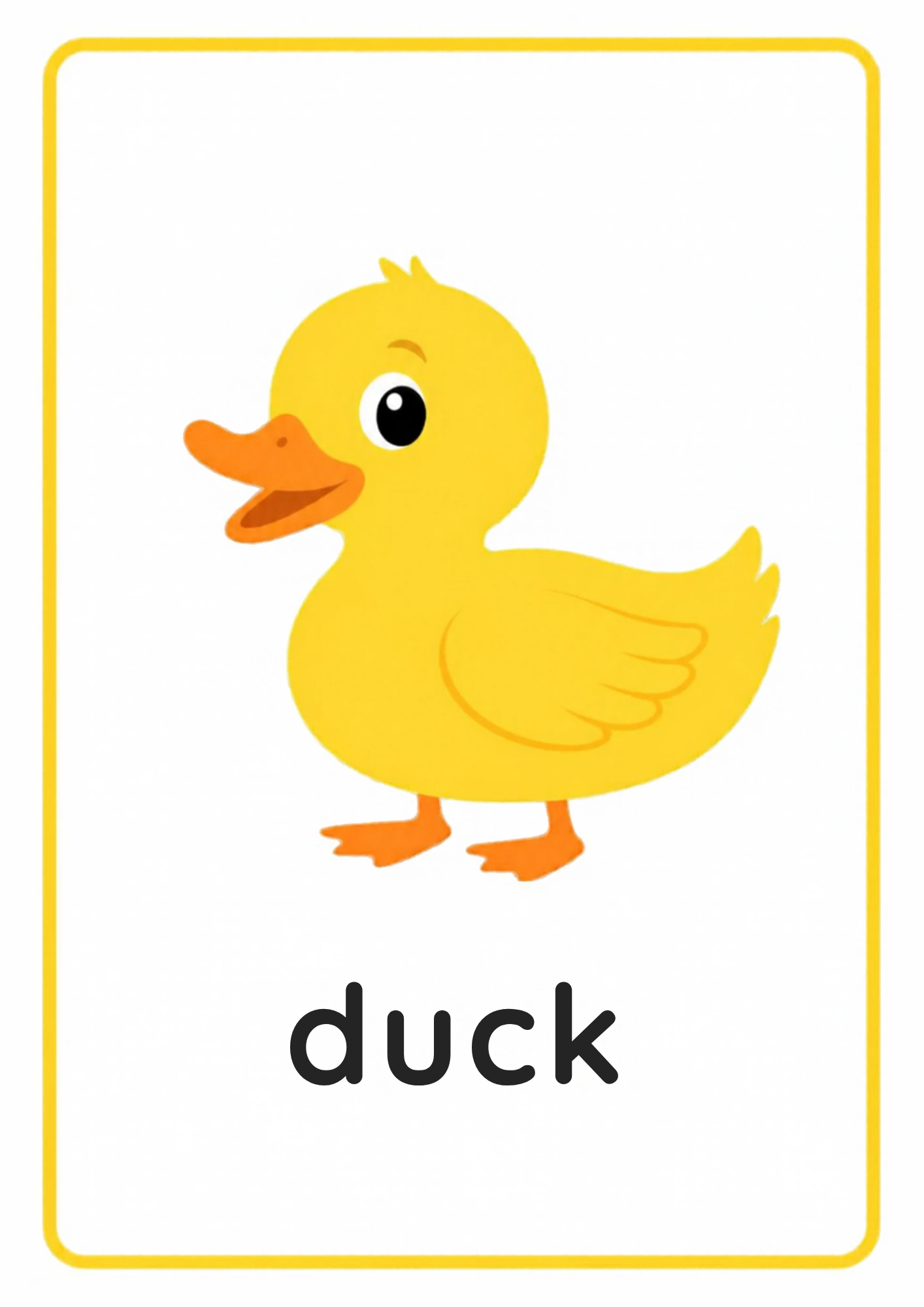
What is this?
A duck is a water bird with flat feet, a flat bill and a body built for paddling. When grown-up ducks call across the pond, people copy the sound as quack: short, sharp, over and over, like a conversation you can count.
What does it mean?
Quack is our copy of the duck’s call. And here is the secret on the card: the bird pictured is a duckling — a baby duck — and ducklings peep instead of quacking. The peep grows into the quack as the duck grows up, exactly the way your child’s voice is growing too.
What does the child need to know?
Your child needs to know: the duck’s sound is written quack in English, a baby duck is a duckling and says peep, ducks paddle on water with flat feet, and real ducks are chatty — a pond is full of quack conversations.
Why this matters
The duckling secret teaches something big in a small package: animals have babies, and babies change. A child who can explain that the duckling will grow into its quack has grasped growing-up itself — and will apply it to kittens, puppies and, sooner or later, themselves.
What it teaches
Animal family vocabulary (duck, duckling), the concept of baby animals changing as they grow, rhythm and counting in the waddle games, imitation of a short sharp sound, and pond-side observation skills.
Words to learn
duckquackducklingpondbillpaddle
Say this to your child
“"The duck says quack! Quack, quack — short and sharp, like the duck is laughing! And the baby on our card is a duckling: peep, peep! The peep grows into the quack as the duckling grows up. Can you do baby duck and big duck? Peep… QUACK!"”
Step by step
- Show the card and ask what the little yellow bird says. Accept quack — then spring the secret: this is a duckling, and ducklings say peep!
- Make both sounds: the tiny peep of the baby and the big sharp quack of the grown-up. Your child just learned the whole duck life story in two noises.
- Say the pair — the duck says quack — and make it staccato: quack, quack, quack, like laughter with feathers.
- Waddle together: flat feet, side-to-side sway, two steps and a quack, two steps and a quack. Ducks walk like this because of where their legs sit.
- Visit real ducks if there is a pond nearby: sit at a distance, watch the paddling feet, and count the quacks together. Feeds bread? Leave it at home — ducks do their best with their own pond food.
Look closer at the picture
Look at the picture together: what color is the little bird? Does it look big or small — grown-up or a baby? What word sits with it? Where would a bird like this go swimming?
Ask your child
"What does the duck say?" "What does the baby duck say instead?" "How does a duckling grow into a quack?" "How do ducks walk — show me!"
What your child can say or do
Your child may quack every morning for a week, explain the peep-to-quack story to anyone who stands still, or waddle down the hallway flat-footed and proud — sound, walk and baby-secret all on display.
Out in the real world
Ducks live at nearly every park pond, and ducklings follow their mother in spring in a line your child will never forget. Quacks drift up from the water all year — each one a round of name-that-sound.
Try it together
Waddle-and-quack parade: the whole family lines up behind a leader and waddles through the house, quacking in rhythm — two steps, quack, two steps, quack. Change the leader often; every new leader gets to set the quack speed, and counting the steps sneaks in the maths.
Understanding check
Ask: "What does the duck say? What does the baby say? Show me how a duck walks." The sharp quack, the tiny peep and the side-to-side waddle — that is the lesson landed.
Parent tips
The peep-versus-quack contrast is the game that keeps giving — whisper-baby and shout-grown-up is volume control in disguise. At the pond, keep the watching at arm’s length: wild ducks are look-at animals, and the best pond visit ends with dry shoes.
Staying safe
Pond edges are the hazard: hold hands near the water, stay behind railings where there are any, and let the quacking happen from a safe step back. Wild ducks get watched, not chased — chasing scares them, and the water is deeper than it looks.
This lesson pairs with the Duck flashcard in the library — print it, show it, keep it on the fridge. Back to Animals & Their Sounds.