
Horse — a step-by-step lesson for grown-up and child
This lesson rides out with the tallest animal on the cards. Neigh starts high and falls away — a sound your child can ride — and the hooves underneath it supply the clip-clop beat that turns the whole house into a stable.
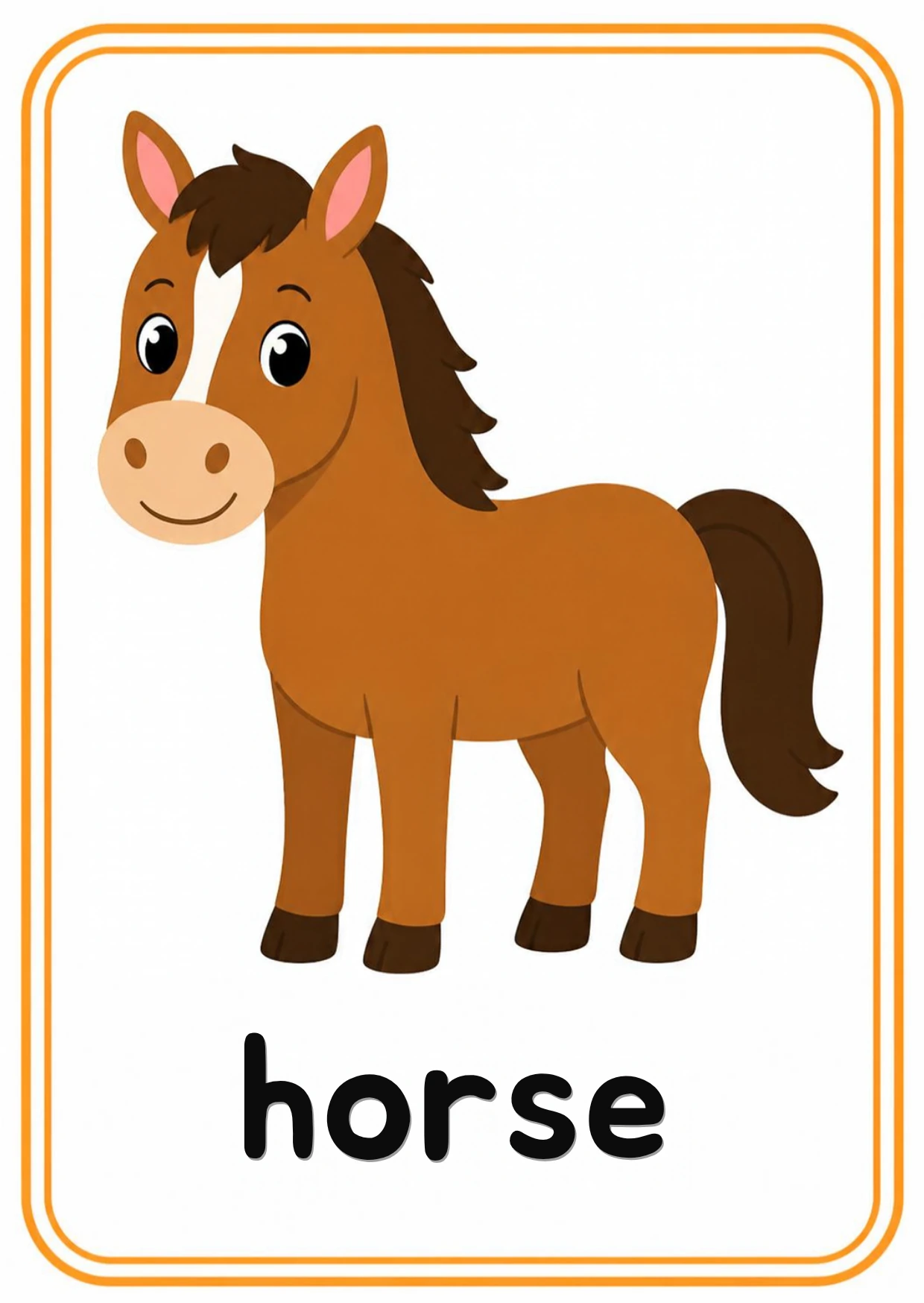
What is this?
A horse is a big, strong animal that people ride and drive. It stands on long legs, eats grass and hay, and has a loud sliding voice: the call people write as neigh — a whinny, in grown-up words.
What does it mean?
Neigh is our copy of a horse’s call: a squealy, sliding sound that starts at the top and falls to the bottom. A horse calls like this to find its friends across a field — a loud where-are-you? — and the hooves answer from far away with a clip-clop.
What does the child need to know?
Your child needs to know: the horse’s sound is written neigh in English, horses carry riders and pull carts, their feet are called hooves and they go clip-clop, and a horse’s mane is the long hair on its neck that blows when it runs.
Why this matters
The neigh is a two-skill sound: a slide from high to low trains pitch control, and the clip-clop that goes with it trains rhythm. Together they are a mini music lesson wearing a horse costume — plus the gallop, which is gross-motor gold at this age.
What it teaches
Pitch control (high to low sliding), rhythm and steady beat in the clip-clop games, gross-motor galloping, animal vocabulary (mane, hooves, rider), and expressive loudness with a soft ending built in.
Words to learn
horseneighhoovesgallopmanerider
Say this to your child
“"The horse says neigh! Nnnneigh — start up high, slide all the way down. Neigh is our word for the horse’s big call. And listen underneath: clip-clop, clip-clop, those are the hooves! Climb on my back, we are going for a ride — clip-clop, clip-clop!"”
Step by step
- Show the card and ask what the tall animal says. Then give the slide: nnnneigh, starting high and coming down like a slide.
- Say the pair — the horse says neigh — and slide it together, high to low, two or three times. The fall at the end is the fun.
- Look at the picture: a brown horse standing tall. Trace the mane down its neck and count the four legs standing on the ground.
- Add the rhythm section: click your tongue for clip-clop, tap your knees in the same beat, then trot your fingers across the table.
- Gallop: one foot leads, the other chases, clip-clopping around the rug. A whole lap is the finish line — then a slow, proud walk back to the stable.
Look closer at the picture
Look at the picture together: what color is the horse? Where does the long hair grow — on its neck? What word sits with the horse? Do its legs look long or short?
Ask your child
"What does the horse say?" "Which way does the neigh slide — up or down?" "What sound do the hooves make?" "What does a horse eat?"
What your child can say or do
Your child may neigh down the slide at the playground, clip-clop through every hallway on two legs, or ask for a shoulder-ride with the promise of being the rider this time — sound, beat and gallop all in the stable now.
Out in the real world
Horses appear at riding schools, city police mounts, farms and fairs — often with hooves audible before the animal is visible. Each clip-clop you hear is the rhythm game inviting itself along, and each field of horses is a neigh contest waiting.
Try it together
Clip-clop parade: you are the horse, your child is the rider, and the route loops the sofa. Rider’s job: keep the beat going — pat-pat on your shoulders in rhythm. Swap roles so your child gallops and you ride. The beat belongs to whoever is ridden, which is funnier than it sounds.
Understanding check
Ask: "What does the horse say? Which way does it slide? What do the hooves say?" The falling neigh, the answer and a confident clip-clop — that is the lesson landed.
Parent tips
Model the slide with your hand — high fingers falling to low — because the visual makes the pitch drop clickable. And keep the gallop on rugs and grass: hard floors are trotting country. The knee-tap beat is the quiet version for restaurants and waiting rooms.
Staying safe
Real horses are ridden or fed only with a grown-up in charge — those long legs move fast, and a horse’s height is exactly why small children meet them from the fence side, with permission.
This lesson pairs with the Horse flashcard in the library — print it, show it, keep it on the fridge. Back to Animals & Their Sounds.