
Gray — a step-by-step lesson for grown-up and child
Gray rarely wins a child’s first-favorite vote, which is exactly why it deserves a lesson: once the word arrives, pigeons, kerbstones and storm clouds all start introducing themselves. The lesson points the word at the splash, parks it on the gentle elephant, and then marches it home, because gray comes with its own walk and its own sound.
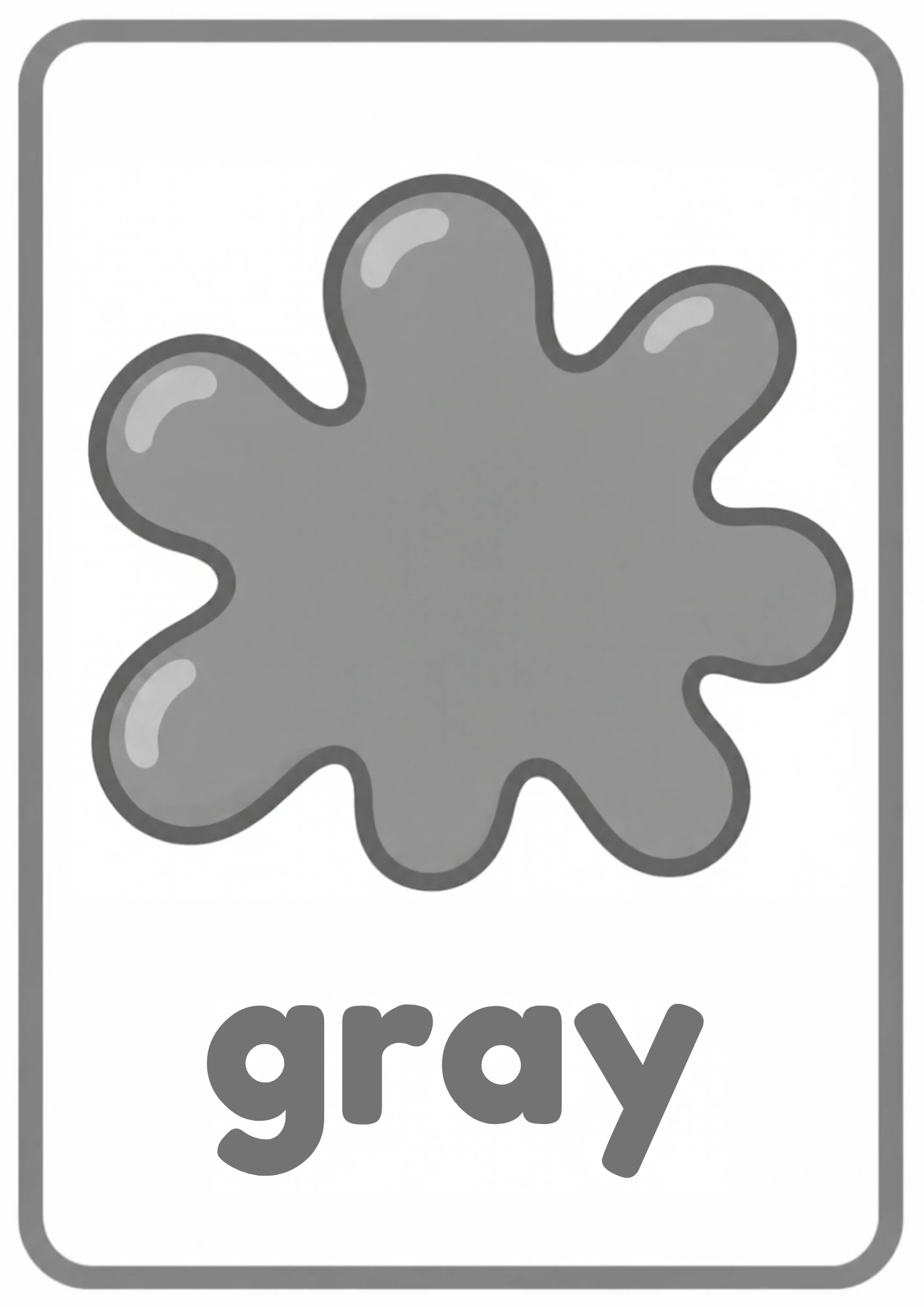
What is this?
Gray is the name for the in-between color of rain days: elephants, pigeons, storm clouds, cobblestones, Grandma’s coat. The splash card shows gray by itself; the picture card shows a gentle gray elephant. Gray is also black and white’s baby — mixed together, the two make it, which is a mixing fact worth saving for craft time.
What does it mean?
Gray carries weather: grey days used to be dull days, but once the word arrives, grey days become elephant days, pigeon days, spotting days. Naming a color changes how a child meets the weather it rides on — the same sky becomes interesting instead of cancelled.
What does the child need to know?
Your child needs the word at the splash, one elephant twin, and one full elephant march — big slow steps, one arm for a trunk. Keep expectations flexible on shade: silver, charcoal and storm-gray all answer to gray at this age, and the pigeon outside is a free, self-renewing twin.
Why this matters
Gray-hunting works in bad weather, which makes it the set’s rainy-day insurance: pigeons and pavements deliver finds when green and yellow stay home. A color with an all-weather hunting ground keeps the lesson running every day of the year.
What it teaches
Shade flexibility (many grays count as gray), gross-motor imitation in the elephant march, weather vocabulary, sound play with the elephant trumpet, and observation of common urban wildlife — pigeons are underserved teachers.
Words to learn
grayelephantrainpigeonstompfind
Say this to your child
““Gray! Like a big gentle elephant — can you stomp like one? One big gray step... and another! Gray is the color of rainy days and pigeons and this whole card. What else can you find that wears gray? The pavement counts! The pigeon counts! Everything slow and gray counts!””
Step by step
- Show the splash card and say gray — then swing your arm like a trunk and let your child guess the animal before you show it.
- Reveal the picture card: a gentle gray elephant. Say the word again, then attempt a trumpet together — the sound is half the fun.
- Elephant march across the room: heavy gray steps, one swinging arm for a trunk, the word said at every stomp.
- Window hunt: pigeons, parked cars, the pavement, the sky — find three gray things without leaving the glass.
- Save the mixing fact: black paint and white paint stir into gray, and your child can mix a whole herd of slightly different elephants at craft time.
Look closer at the picture
Put the two cards next to each other: the splash card is one big gray splash with the word gray on it, and the picture card shows a gentle gray elephant with the word too. Ask your child what the elephant’s trunk is doing, and whether the splash has a trunk anywhere.
Ask your child
“Is the elephant bigger than our house?” “What gray bird visits the pavement?” “What does black paint plus white paint make?” “Is today a gray day — what does the sky say?”
What your child can say or do
Your child might march and trumpet at random hours, greet every pigeon by its color, or report that “today is gray, like the elephant” — a weather report and a color lesson arriving in the same breath, which is exactly the plan.
Out in the real world
Gray is the city’s color and the sky’s mood: kerbstones, squirrels, storm clouds, the neighbor’s car. The finds need no sunshine, which keeps this word in daily rotation — and every pigeon is a repetition with wings.
Try it together
Herd of elephants: mix gray paint at the table (black plus white, stirred slowly), paint one big elephant, then mix a slightly different gray and paint a smaller one beside it. A herd of subtly different grays is shade-vocabulary the children make themselves.
Understanding check
Ask: “Show me gray. Which animal is gray? What two paints make it?” The splash named, the elephant trumpeted and “black plus white” delivered — that is the color landed.
Parent tips
Do not fuss if silver, charcoal and “rain color” all get called gray — the big word comes first and the fine shades can wait years. A generous gray is a well-loved gray, and the pigeons do not mind.
This lesson pairs with the Gray flashcard in the library — print it, show it, keep it on the fridge. Back to Colors & Color Mixing (Preschool).