
Orange — a step-by-step lesson for grown-up and child
Orange is the only color that shares its name with a food, which makes this lesson nearly effortless: put a real orange in your child’s hands and the word proves itself. This lesson pairs the splash and the fruit card, then peels its way through snack time, naming the color at every stage.
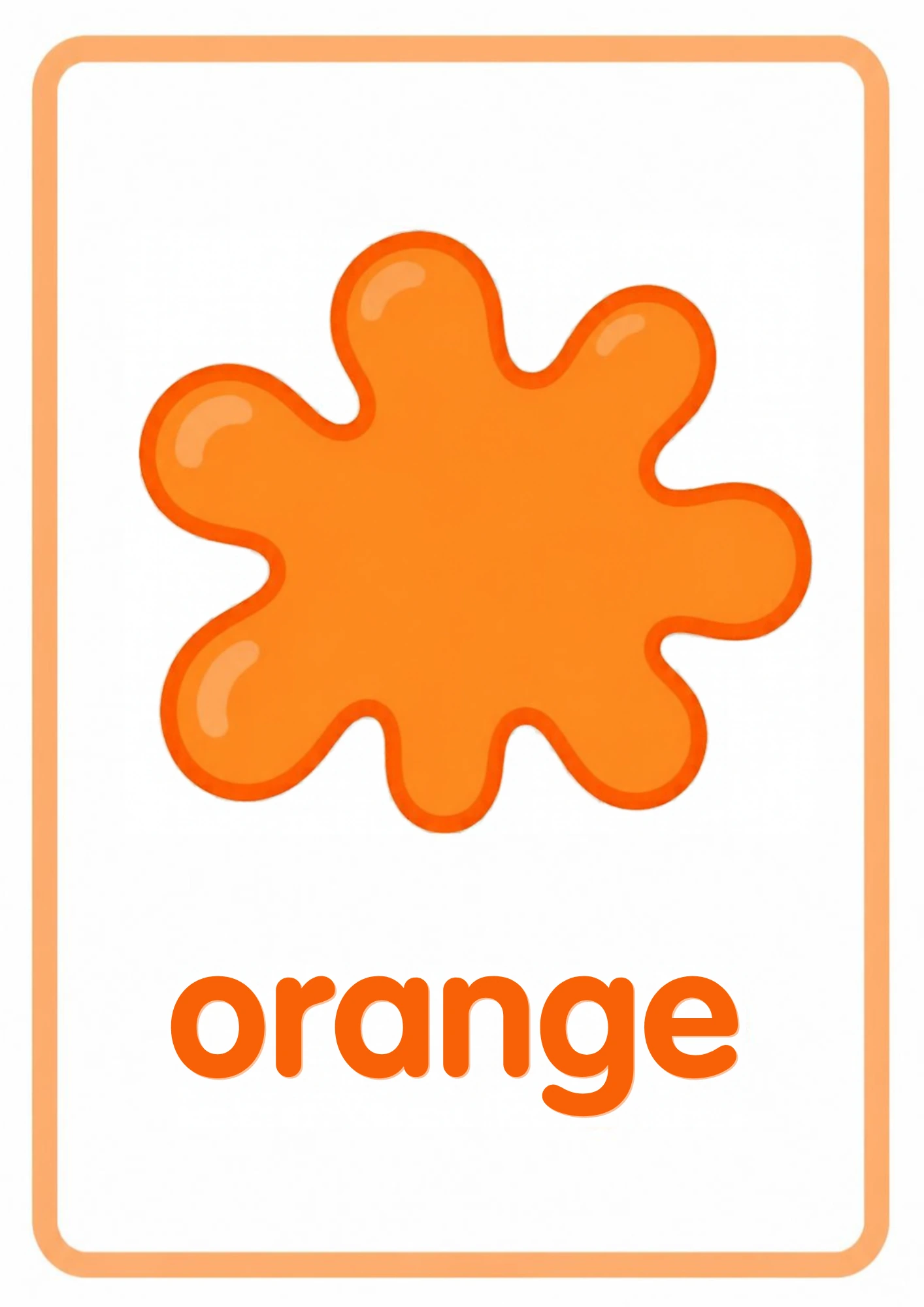
What is this?
Orange is the name for the color between red and yellow: carrots, pumpkins, fire, traffic cones, tiger fur and this card’s round fruit. The splash card shows the pure color; the picture card shows a round orange with a green leaf — the very thing the color was named after.
What does it mean?
Orange demonstrates where words come from: the fruit existed first, and the color borrowed its name. A three-year-old does not need that history, but they feel its effect — saying “orange” while holding an orange is word-learning with the props included, and props make vocabulary stick.
What does the child need to know?
What your child needs from this lesson: the word at the splash, a real orange twin — the fruit itself, unpeeled — and the experience of naming the color while it is being peeled and eaten. Also worth tucking away: red paint mixed with yellow paint makes orange, which is the mixing game waiting later in this class.
Why this matters
Naming a color you are simultaneously peeling, smelling and eating is multi-sense learning — sight, smell, touch and taste all carrying one word. Lessons that load more senses load more memory, and orange is the set’s best opportunity for it.
What it teaches
Multi-sensory learning (color plus smell plus taste), fine motor work peeling and pulling segments, mixing-colour knowledge for later art, and the naming confidence that comes from holding the proof in your own hand.
Words to learn
orangefruitpeelroundnamesame
Say this to your child
““Orange! The fruit that named its own color. Feel how round it is. Now we peel it... more orange! Every piece is orange. Can you say it with a mouthful? Or-ange!””
Step by step
- Show the splash card and say orange — then hold a real orange next to it and let your child check that the colors match.
- Turn to the picture card: a round orange fruit with a green leaf. Say the word once at the card and once at the real fruit.
- Peel it together, slowly, naming the color as each strip comes off: orange peel, orange fruit, orange fingers afterwards.
- Share the segments out and count them before they disappear — orange is the snack that teaches while it feeds.
- End with the mixing secret: red stirred into yellow turns orange — an experiment for craft time later this week.
Look closer at the picture
Set the cards side by side: the splash card is one big orange splash with the word orange on it, and the picture card shows a round orange fruit with a green leaf. Ask your child which card the real fruit matches, and what the leaf on the fruit card is not.
Ask your child
“Is the peel a different orange than the inside?” “What else is orange — can you find two things?” “What happens when red and yellow mix?” “Is a carrot orange all the way through?”
What your child can say or do
Your child might hold the fruit against the splash card to prove the match, chant “orange, orange, orange” while peeling, or narrate their orange fingers — all of it is the word attaching itself to the evidence.
Out in the real world
Orange shows up loud and useful: traffic cones, carrots at dinner, the post van, tigers in books. Each find keeps the word warm between lessons, and the fruit bowl keeps a twin permanently in stock.
Try it together
Orange-and-friend sorting: set out a bowl of mixed snack pieces — orange segments, apple slices, banana rounds — and let your child sort the orange from the not-orange. Sorting food by color is a game children can eat at the end, which is excellent for morale.
Understanding check
Ask: “Show me orange. Which fruit is orange? What two paints make it?” The splash named, the fruit matched and the mixing secret half-remembered — that is the color landed.
Parent tips
If your child mixes paints and gets a muddy brown instead of orange, blame the amounts, not the idea: more yellow, a careful drop of red, and try again. Mixing is chemistry, and early failed batches are how chemists learn.
This lesson pairs with the Orange flashcard in the library — print it, show it, keep it on the fridge. Back to Colors & Color Mixing (Preschool).