Age 3 YearsClass Preschool 2Subjects Counting & number recognition
Ten counting cards, printable number sheets to solve and a pocketful of real-life counting ideas. This class follows Alphabet & Letter Sounds on the preschool path — same calm pacing, now with numbers.
You do not need to reach ten today. Counting one to three with a pointing finger is a genuine maths lesson at three; five is a triumph; ten is a party. Let your child set the pace.
Start Today’s Class ↓Grown-up nearby, little one on the lap or hopping like a frog — both work.
TODAY’S CLASS
How today’s class works.
Four little steps, in any order that suits you: a welcome from your teacher, the number cards, solving the number sheets together, an off-screen hunt, and a warm goodbye. Stop after any step — that is a complete class, and there is never a score at the end.
1 Teacher welcome
2 Learn the numbers
3 Solve the sheets
4 Take it off screen
5 Class complete
TEACHER WELCOME
“Hello, my friend — and hello to you, grown-up helper! Today we’re counting. We’ll look at numbers and count pictures together. Start with the numbers your child enjoys.”
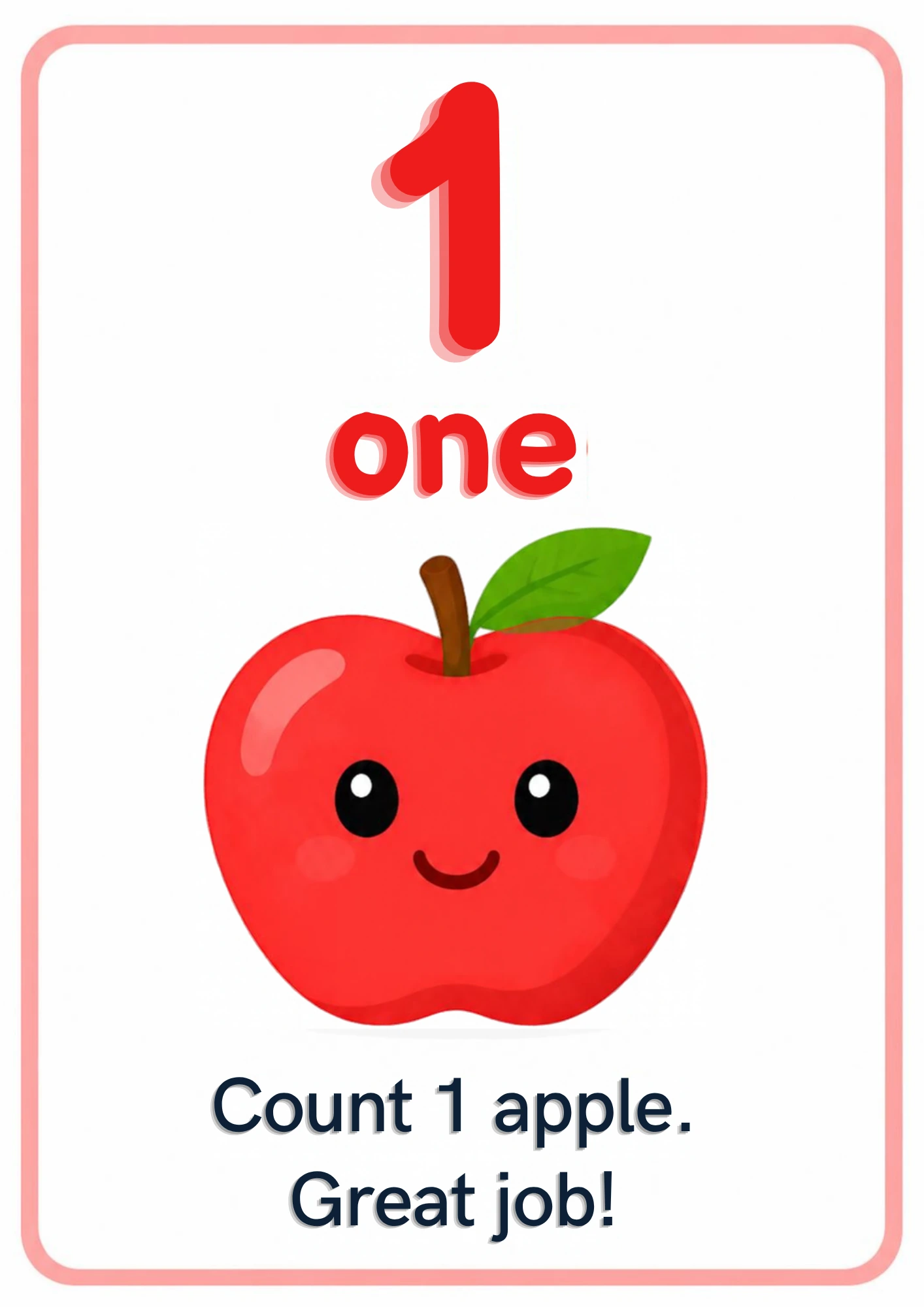
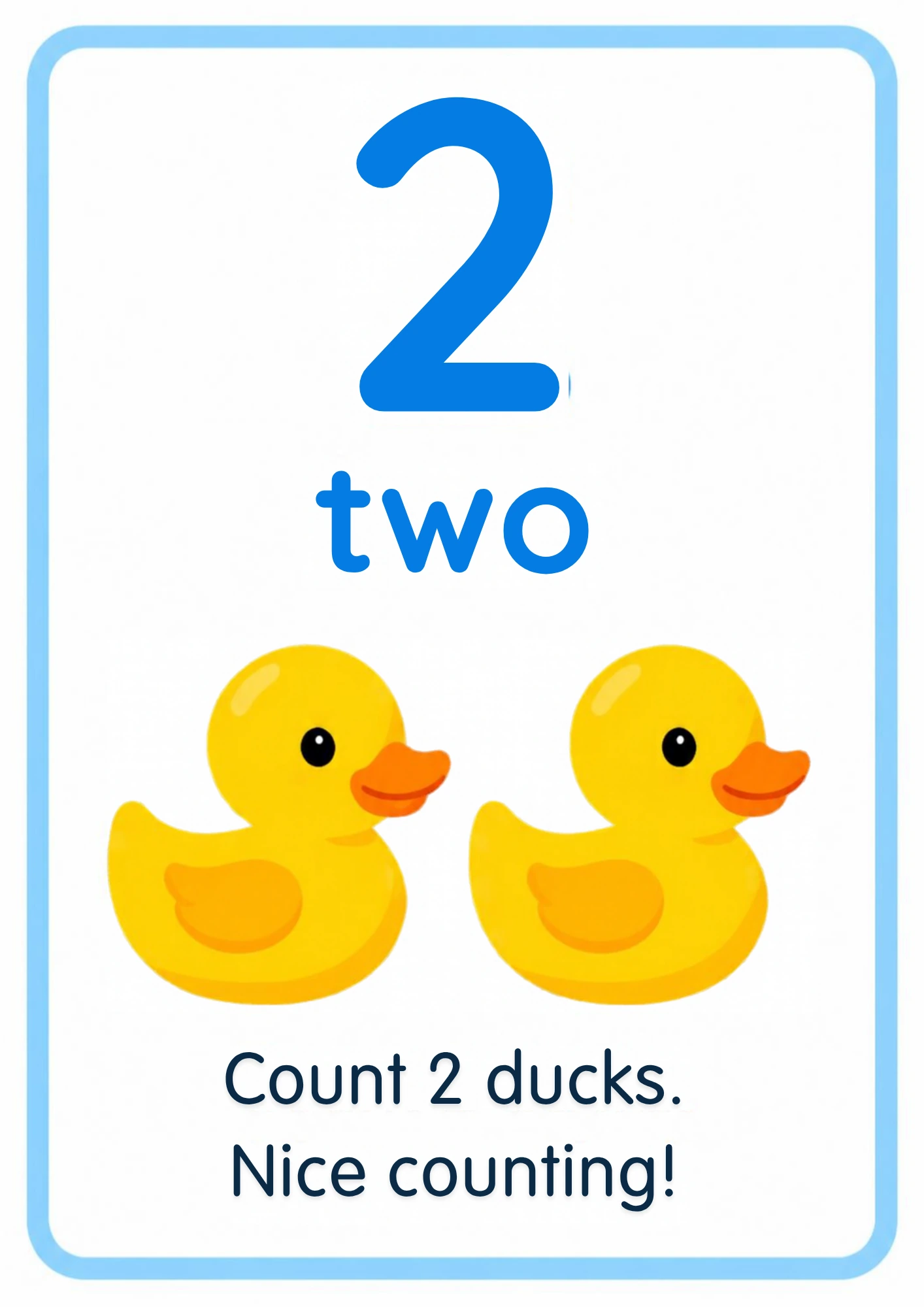
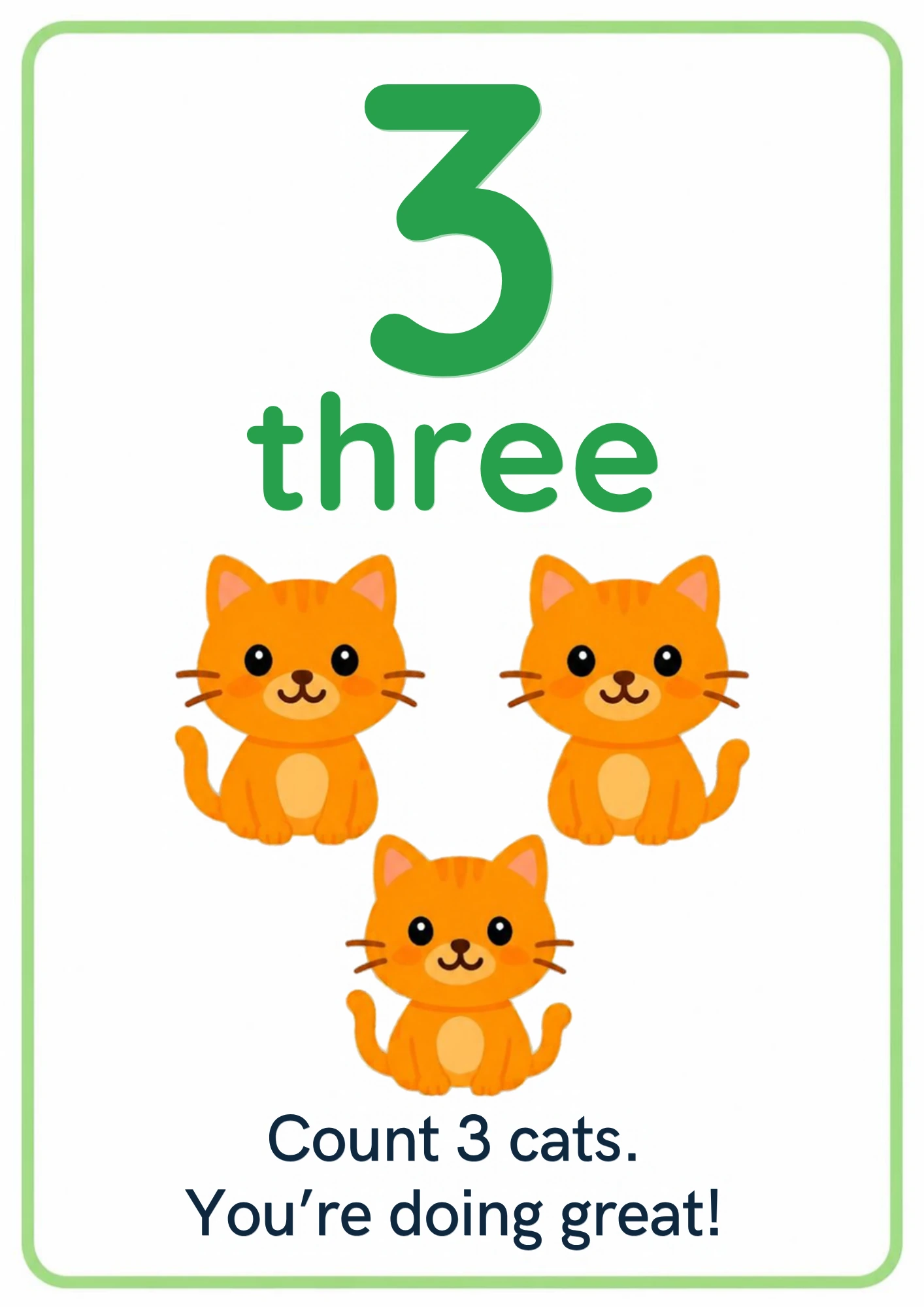
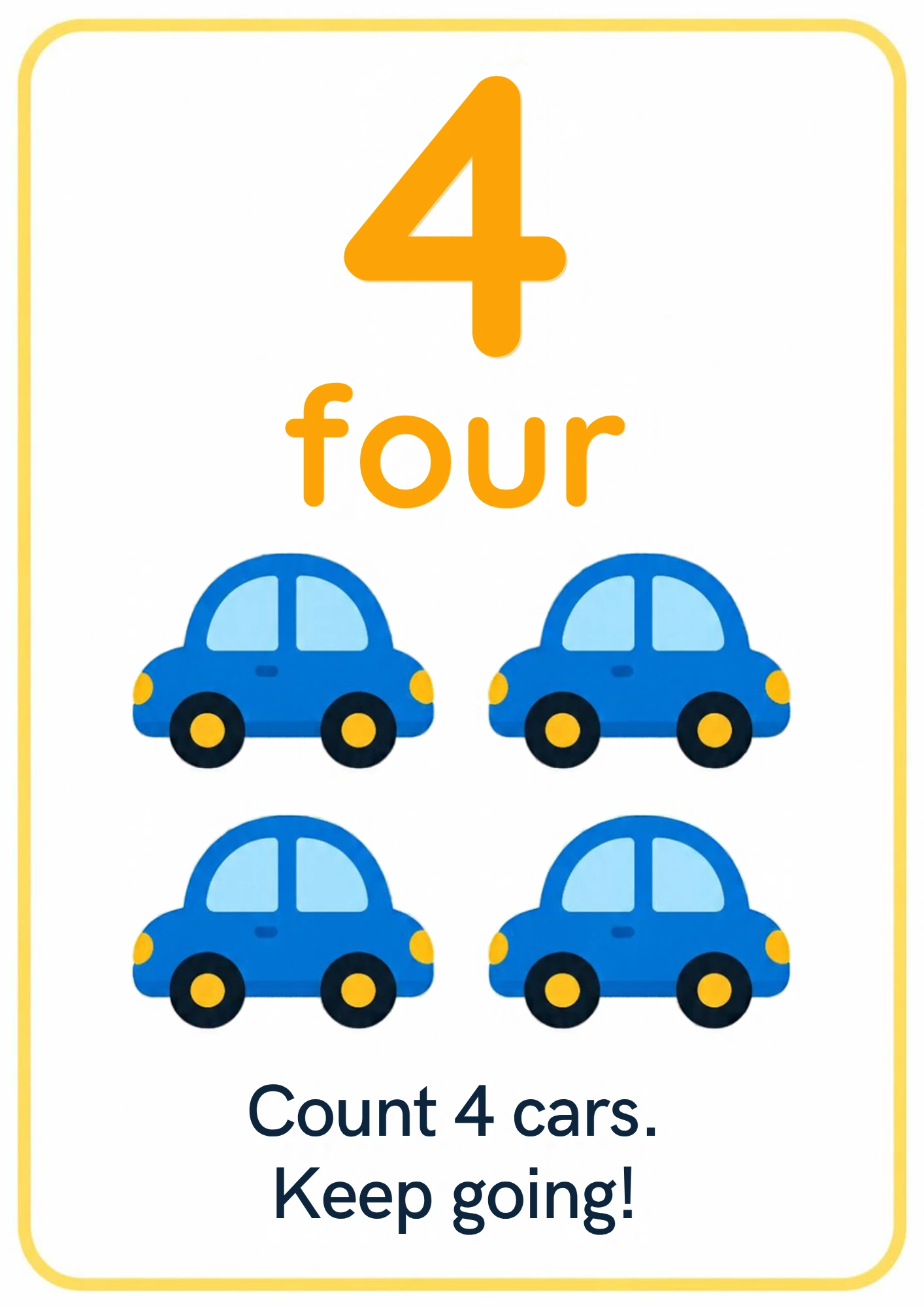
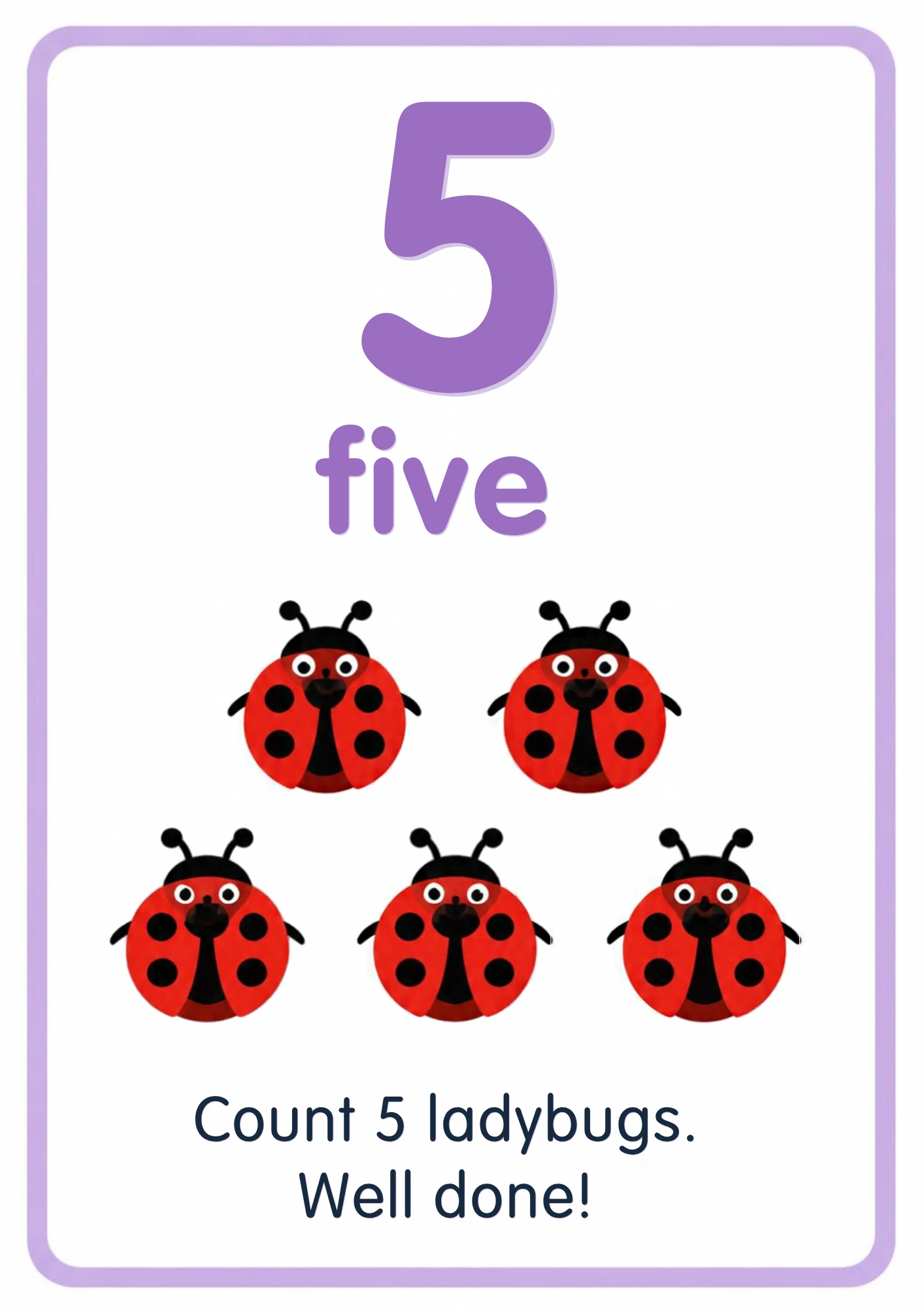
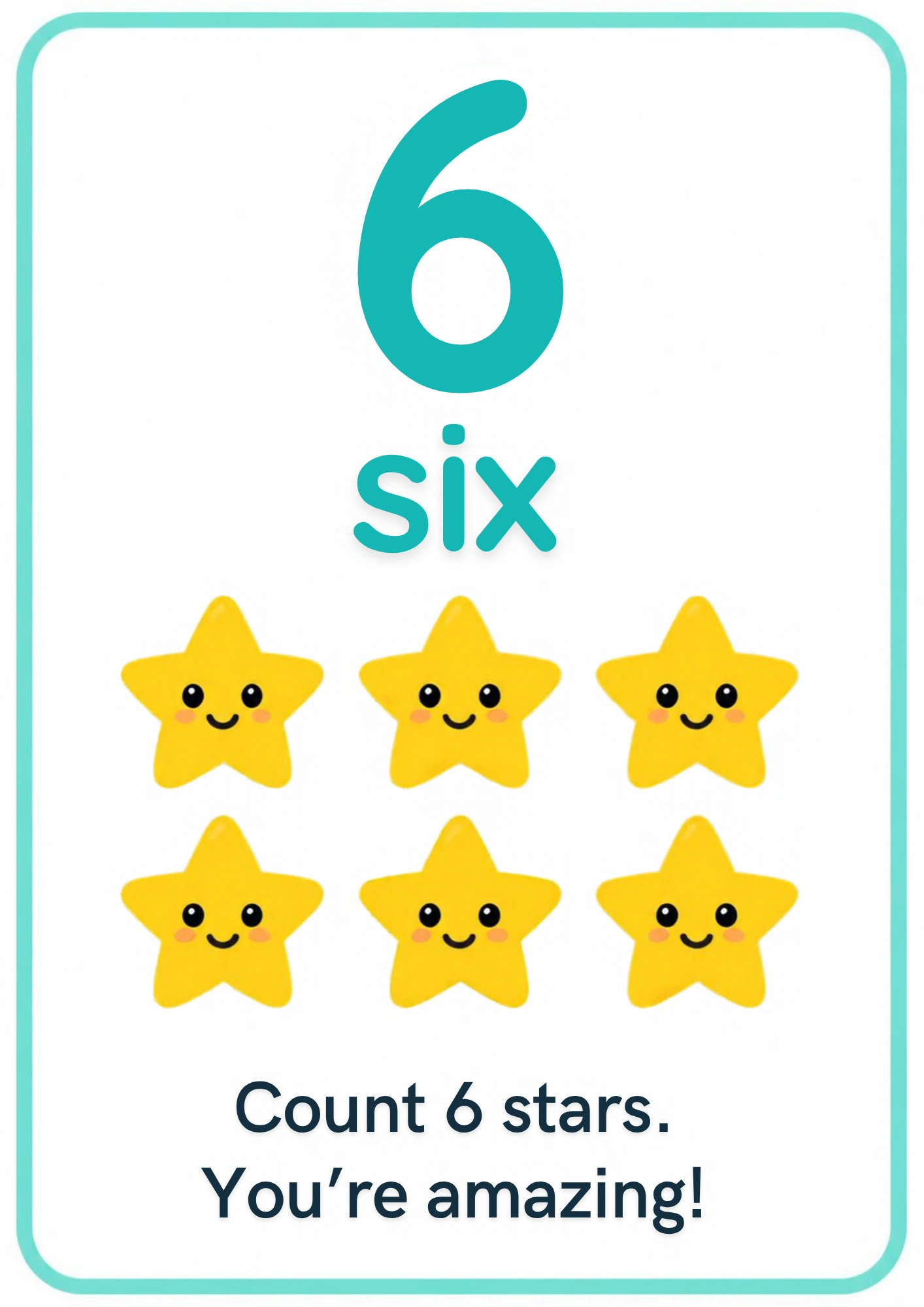
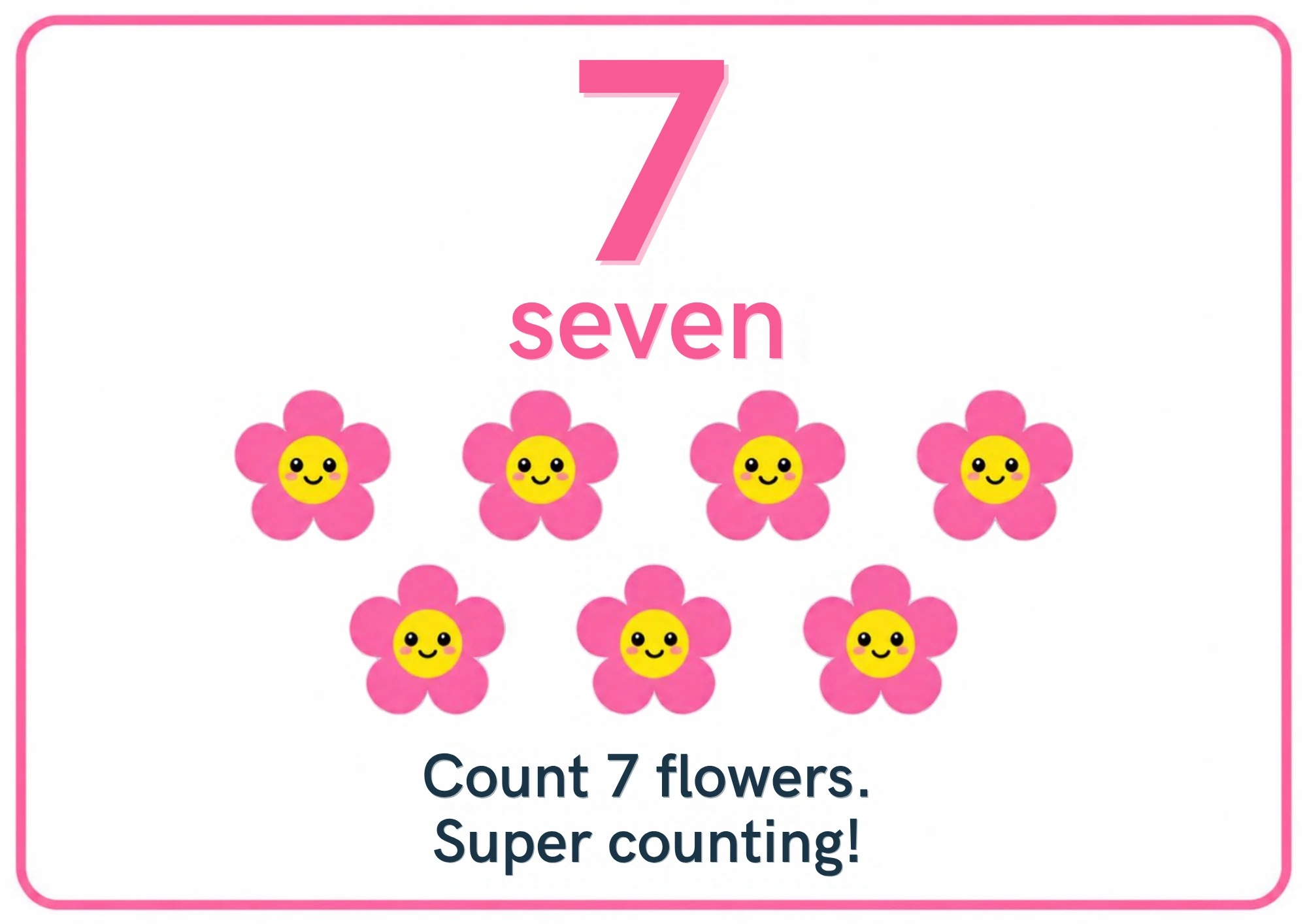
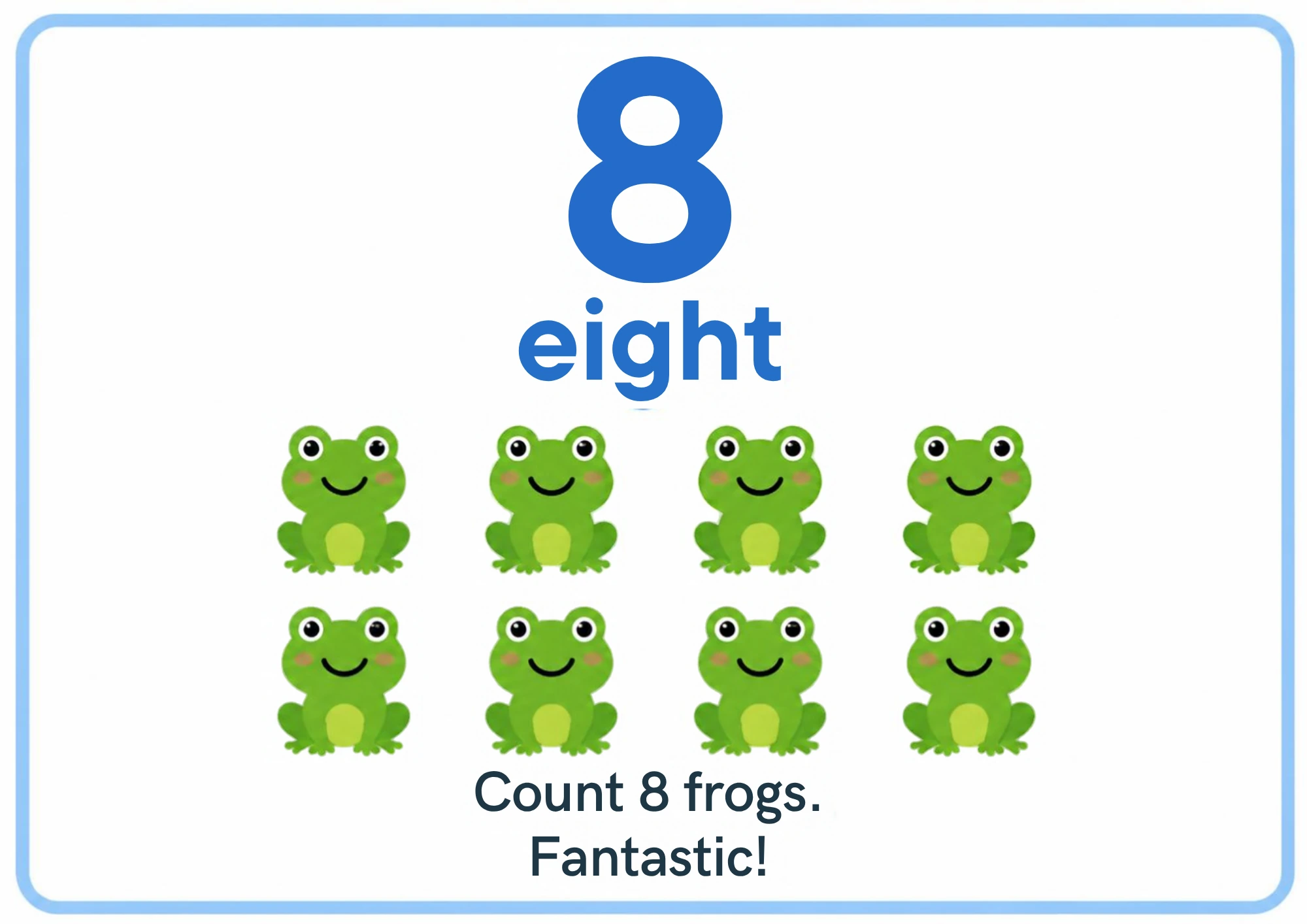
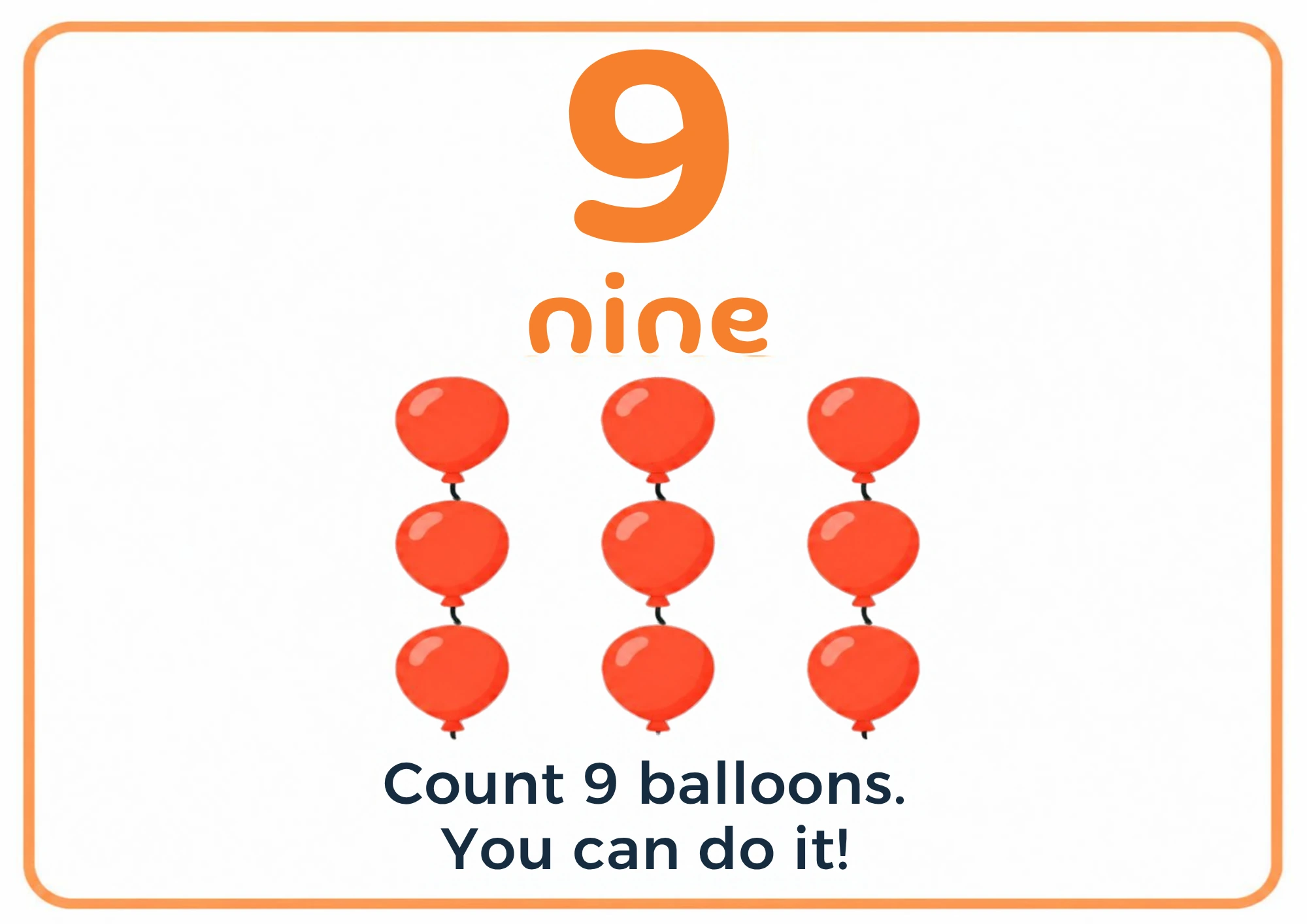
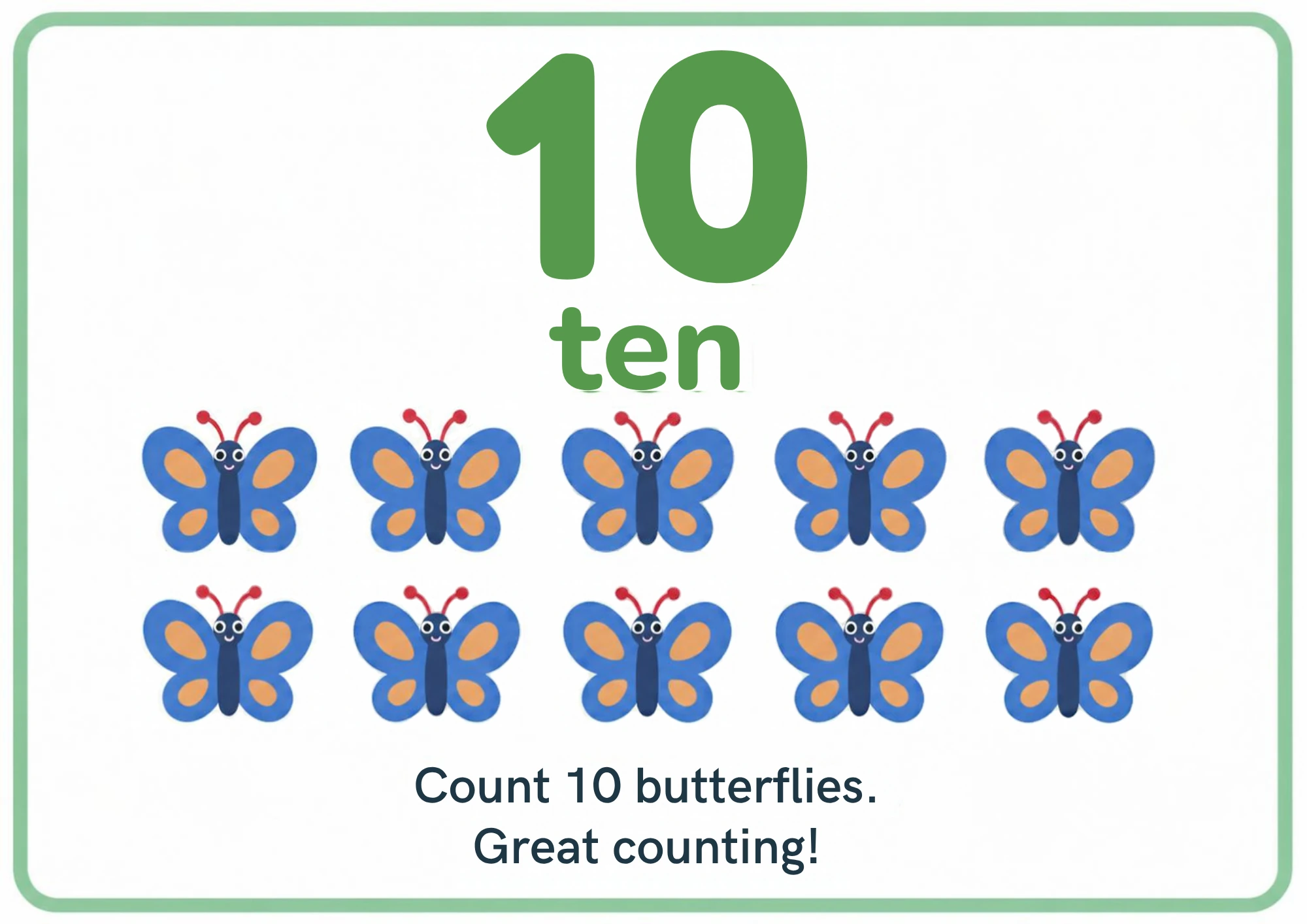
Every card shows a big numeral, the number word and the right number of things to count. Use the arrows to wander through them in order — or tap a group below to count just a few at a time. Counting to five and stopping is a complete visit.
Card 1 of 10
Or simply scroll: all 10 cards are below.
SOLVE THE SHEETS — ON PAPER OR ON SCREEN
Solve the number sheets together.
The ten number cards print two to a page, straight from your browser. Printed, cut and counted, they are the class’s real worksheets — and on screen, every card page can be drawn on directly.
01
Print the cards
Open the printable cards and print all ten, two to a page. Cut them out together, counting up as each number is cut.
02
Count the pictures
Each card carries its own little group — one apple, two ducks, three cats. Count the pictures aloud together before naming the numeral.
03
Build the staircase
Lay the cards in a line from 1 to 10 on the floor. Gaps and swaps are welcome — putting right a wobbly staircase is the thinking work.
04
Match card to things
Pick a card and find its count in the house: one spoon, five ladybugs on a page. Then trace the numeral on the card page with the Write & Color layer.
Every card page has a Write & Color layer: your child can draw right on the card with a finger, a stylus or the mouse, then save the finished work. Nothing is uploaded anywhere.
TAKE IT OFF SCREEN
Counting that lives in your house.
Real counting sticks best away from the screen, in short playful moments with things you already own. Pick one of these — two minutes is plenty — and follow your child’s lead.
Count three toys
Line up three favourite toys and count them slowly, pointing at each one.
One number per toy is the whole game — the toys do not need to sit still for long.
Count steps together
Stairs, garden steps, hallway hops — count them out loud as you go.
“One... two... three!” with every step turns any staircase into a counting game.
Count fingers
Hold up one hand and count each finger slowly — five is the hand number.
Finish with a high-five: “Five! High-five!” The clap makes it stick.
Count blocks as you stack
Stack blocks one by one and say the number every time one lands.
When the tower falls, count again — rebuilds are free extra lessons in disguise.
Five in a row
Put five safe objects in a row — pebbles, spoons, cars — and point to each while counting.
A straight line helps your child see what has been counted and what is left.
Stay close, keep it playful and stop while it is still fun. There is nothing to finish here.
PRINT THE CARDS
Take the numbers to the kitchen table.
All ten counting cards can be printed two to a page, in order, straight from your browser — no PDF, nothing to install.
Printed cards love fridges, bedroom doors and kitchen tables. The same cards also live in the flashcards library, each with its own page.
TEACHER NOTE
One last word from class.
“You did some lovely counting today. Try spotting numbers together while you play — on doors, on clocks, in the shops. Numbers are everywhere once you start looking.”
— Your Kiddo School teacher
A NOTE FROM THE PRINCIPAL
For the grown-ups.
At three, counting is rhythm, not arithmetic: one number per object, said slowly, is the entire curriculum. If your child skips a number or recounts the same duck twice, that is completely on track — the pointing-and-saying skill grows through play, and every gentle recount is real practice. The games here give calm feedback with no scores, and every dot group in Count and Match is mathematically exact, because counting accuracy matters more than decoration.
Whether you counted to three or all the way to ten, that was the whole class — and stopping early is always allowed. The numbers will be right here whenever you come back.
Sit together for the card viewing, and let your child do the pointing and the tapping in the games — even when the answer looks obvious to you. The finger teaches the eye, and being the one who knows is the fun part.
Count everything slowly, with one number per thing: apples, ducks, fingers, stairs. If a count goes wrong, simply start again from one with a smile — nobody is keeping score, least of all the cards.
Age 3 is a guide, not a deadline. If today’s class was two numbers and a staircase, today’s class was a success.
FAMILY FEEDBACK
How was this activity?
Your feedback helps us make Kiddo School better. This is feedback about the activity, for the grown-ups who make it — it is never about a child.
Comments from our school community
FLASHCARDS
Prefer printed cards?
The cards from this class also live in the flashcards library — every card has its own page with the picture, the words to say together and a download button, ready for away-from-screen time.



Comments from our school community