
Baker — a step-by-step lesson for grown-up and child
This lesson follows flour to warm bread — measure, knead, wait, bake — and ends with rolls your child shaped themselves.
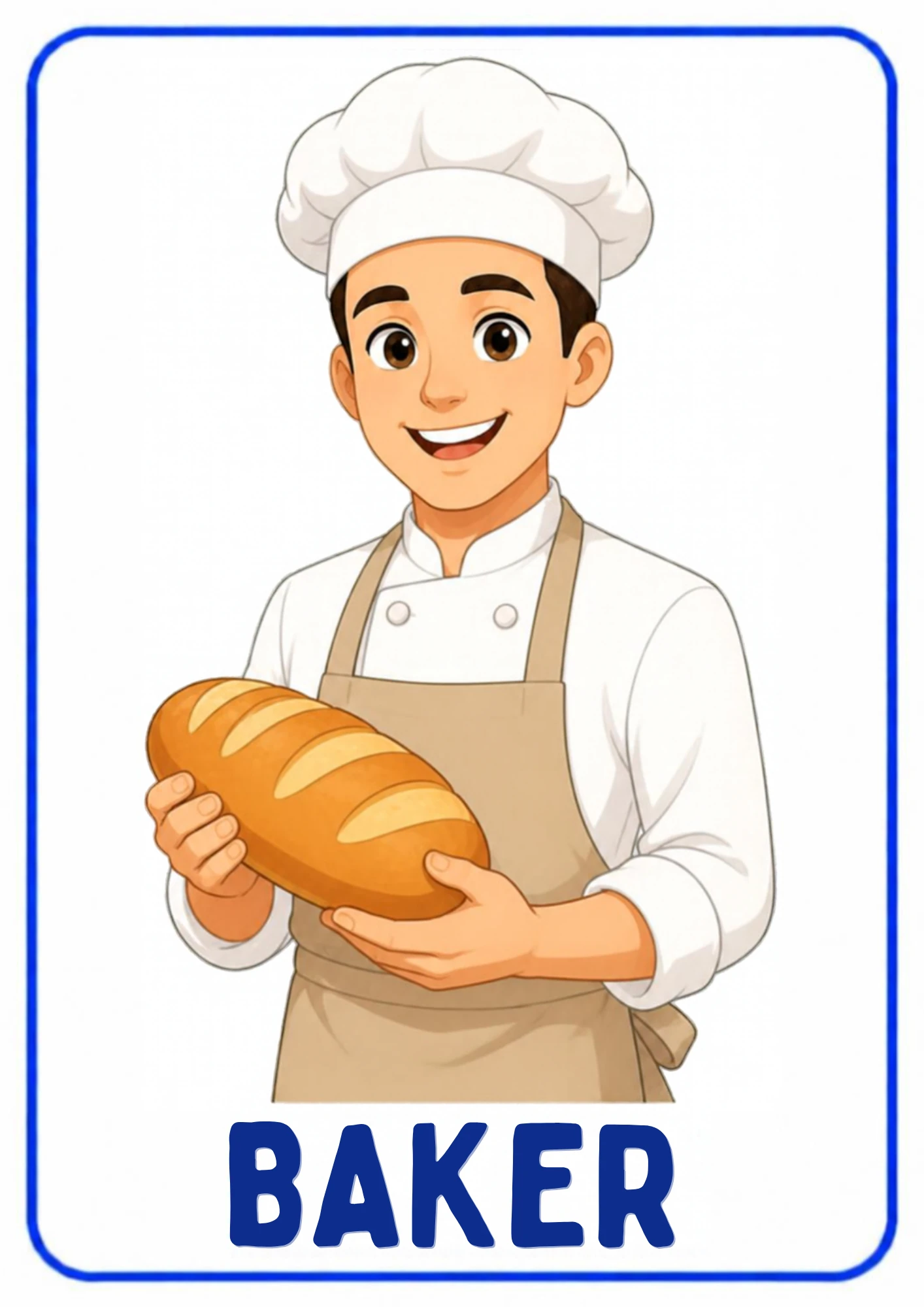
What is this?
A baker is a bread helper who makes bread, buns and cakes fresh every day, starting long before we wake.
What does it mean?
Bakeries have big ovens, floury tables and shelves that fill up by morning. Bakers measure, mix, knead, shape and bake — and yeast makes dough rise like a pillow.
What does the child need to know?
Bread know-how: dough needs kneading, resting (yeast works while we wait!) and a hot oven; ovens and hot trays are grown-up territory.
Why this matters
Baking is a science experiment you can eat: measuring is maths, rising is biology, kneading is muscle work. And the smell of your own bread is a memory glued for life.
What it teaches
Measurement and counting with purpose, patience in two acts (kneading and rising), sensory language (soft, springy, warm), sequencing, and fine-motor strength.
Words to learn
bakerdoughkneadyeastriseoven
Say this to your child
“"The baker mixes flour and water and kneads the dough — push, push, fold, fold. Then we wait while the yeast makes it fluffy. Then it bakes, and the whole house smells like morning."”
Step by step
- Show the card: "This is a baker. Bakers make our bread while the whole street is still asleep."
- Find the bread, the oven, the flour. "Flour, water and a little yeast — that is the whole secret."
- Tell the dough story: mix → knead (push, fold, push, fold) → wait (the yeast puffs it up!) → shape → bake → smell → eat.
- Explain the mystery simply: yeast is a tiny helper that makes bubbles in the dough — that is how soft bread happens.
- Bake rolls together this week: your child measures, kneads and shapes; you handle the oven.
Look closer at the picture
Ask: what has the baker made so far? Can you find the oven? What shape are the loaves? What time of day do you think it is — and why?
Ask your child
"What does the baker make? What does kneading feel like? Why do we wait before baking? Which part is for grown-ups?"
What your child can say or do
The knead chant: "Push, push, fold, fold!" And the waiting line: "The yeast is working — the dough is sleeping and growing."
Out in the real world
Walk past a bakery before breakfast and just breathe. At the shop, find breads by shape: long, round, braided. Every loaf was shaped by hands.
Try it together
Bake bread rolls: your child measures cups, kneads half the dough, shapes snakes, snails and knots on the tray. Watch the rise through the oven door together, then eat warm with butter. Repeat monthly — the ritual is the curriculum.
Understanding check
Ask: "What does the baker make? What makes dough rise? Whose hands shape the rolls?" Bread + yeast-bubbles + your child’s = pass.
Parent tips
The waiting is the hardest and best part — set a timer and check the dough’s growth together at each beep. Flour mess is the tax on wonder; a damp cloth closes the lesson.
Staying safe
Ovens and hot trays are grown-up only. Wash hands before baking; let bread cool before small fingers tear it. No nibbling raw dough with yeast.
This lesson pairs with the Baker flashcard in the library — print it, show it, keep it on the fridge. Back to Community Helpers & Our Neighborhood (Class 33).