
Nurse — a step-by-step lesson for grown-up and child
This lesson teaches who nurses are, what they do all day beside doctors, and gives your child a caring job to practise at home.
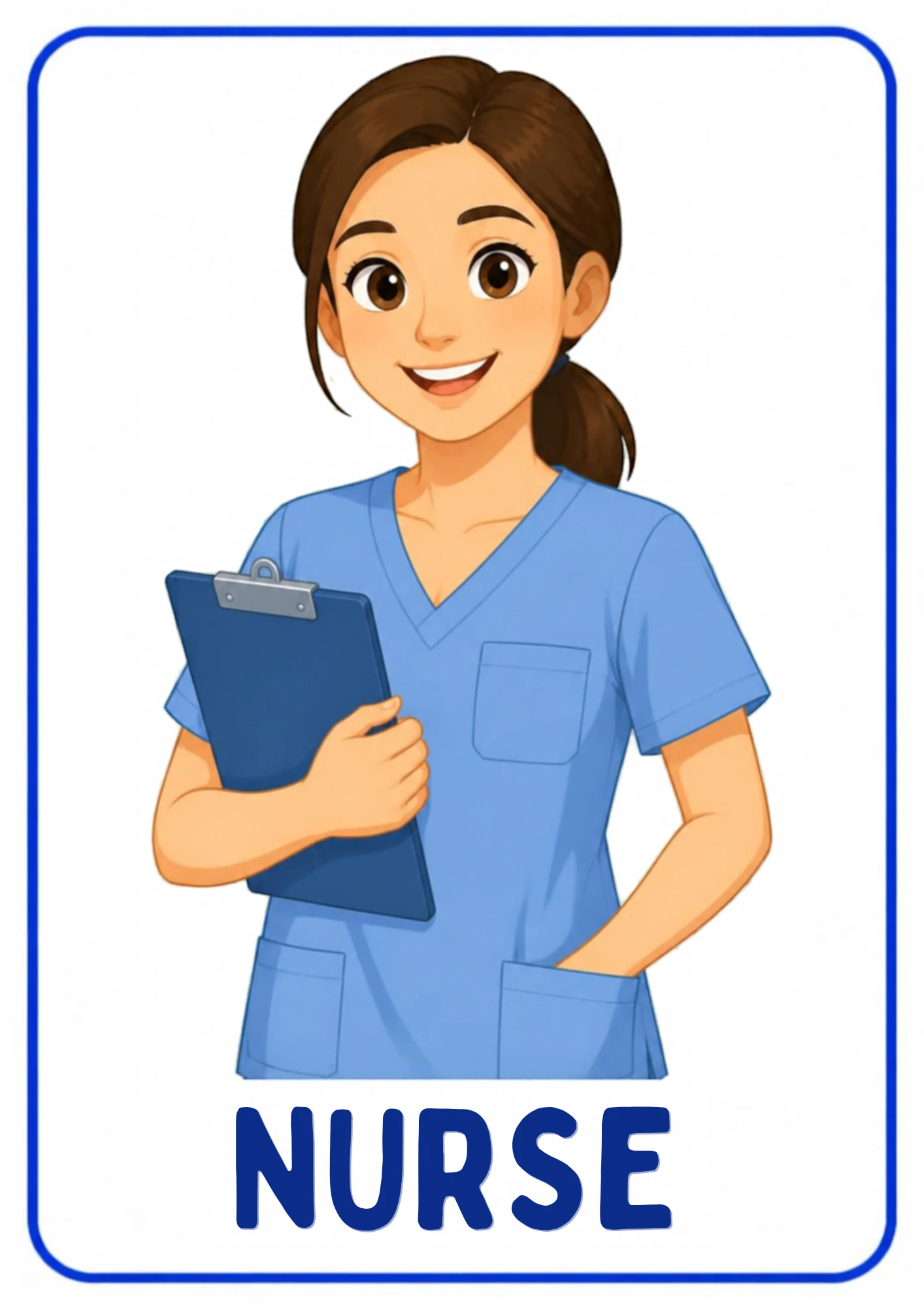
What is this?
A nurse is a caring helper who looks after sick and hurt people — checking them, comforting them and explaining everything.
What does it mean?
Nurses work in hospitals, clinics, schools and vaccination vans. They measure temperature, wrap bandages, give the medicine doctors prescribe, and teach families how to keep healing at home.
What does the child need to know?
Nurses stay with patients the longest — they are the ones who explain, comfort and check again. When your child knows the nurse by role, check-ups gain a familiar friendly face.
Why this matters
Nursing is visible kindness: calm voice, gentle hands, careful checking. Children absorb that caring is something people DO — and copy it on dolls, siblings and pets.
What it teaches
Empathy, gentle-touch control, sequencing (check → comfort → explain), health vocabulary, and the confidence to ask "what are you doing now?" during real care.
Words to learn
nursepatientthermometerbandagecomfortgentle
Say this to your child
“"Nurses help the doctor take care of you. They check how you are, they make hurts feel better, and they explain every single thing they do. Nurses have gentle hands and kind voices."”
Step by step
- Show the card: "This is a nurse. Nurses take care of people — with the doctor and on their own."
- Point out the picture: what is the nurse holding? What is on the walls? Who is being cared for?
- Walk the nurse’s day: check temperature → wrap the arm → explain each step → smile. Act it with your hands as you say it.
- Teach the caring script: "I am going to check you now, all right? Tell me if it feels strange."
- Practise on a patient who cannot talk — a teddy — so all attention goes to the gentle hands.
Look closer at the picture
Ask your child: what is the nurse doing first? What is on the tray or in the pockets? Can you find a smile — on the nurse or the patient? What tells you this nurse is being careful?
Ask your child
"What does a nurse check first?" "What would you say before you wrap a teddy’s paw?" "Who takes care of you when you are poorly?" "How can our hands be nurse-hands?"
What your child can say or do
Practise the caring lines out loud: "I will check you now — tell me if it feels strange," "All wrapped up, all better," and the asking line: "What are you doing now?"
Out in the real world
Nurses are everywhere once you look: the school first-aid drawer, the clinic waiting room, the vaccination nurse, bandage boxes at home. Each spotting moment is a mini-recap.
Try it together
Caring corner: one blanket "bed", one doll or teddy, toilet-paper bandages, a paper "thermometer". Your child is the nurse — check, wrap, explain, comfort. Ten minutes of this is a whole social-emotional lesson.
Understanding check
Ask: "Who checks people beside the doctor? What do nurses wrap hurts with? Show me your gentle nurse hands." The hands will tell you everything.
Parent tips
Praise the caring behaviours you see ("you checked Ted so gently") — nurse talk makes gentleness cool. If a real check-up is coming, tell your child the nurse will explain first; knowing that halves the wobbles.
Staying safe
Bandage play is pretend — real hurts need a grown-up’s eyes first. Medicine, even "just once more", is a grown-up job only.
This lesson pairs with the Nurse flashcard in the library — print it, show it, keep it on the fridge. Back to Community Helpers & Our Neighborhood (Class 33).