
Police Officer — a step-by-step lesson for grown-up and child
This lesson introduces police officers as neighborhood helpers and reheases the one plan every child should own: what to do if you ever get lost.
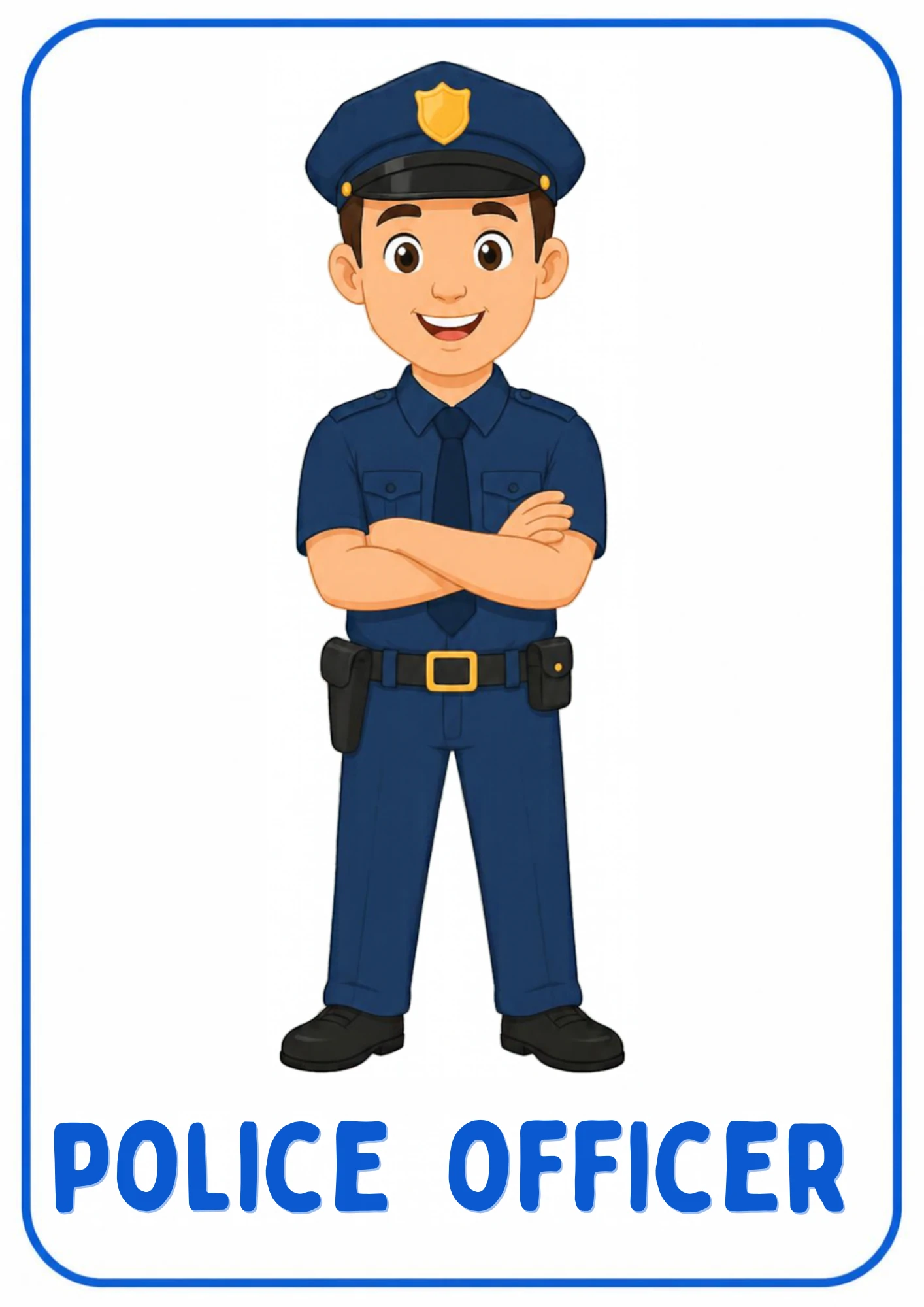
What is this?
A police officer is a safety helper for everyone in the neighborhood — the person to find when someone is lost, scared or in trouble.
What does it mean?
Officers patrol on foot, on bikes and in marked cars. They help lost children, stop dangerous driving, sort out arguments and find out what happened after accidents. A badge and a radio are their tools.
What does the child need to know?
Two messages, in balance: officers are helpers we can trust — AND in any worry, our first job is to find a grown-up we know. Practise both; they work together.
Why this matters
"Find the badge" is a concrete, findable plan for a small person in a big scary moment. Concrete beats abstract at four.
What it teaches
Community trust, safety scripting, self-talk under stress ("I am lost, I will find a helper"), plus personal-information memory: your name, your grown-up’s name, your street.
Words to learn
police officerbadgesafelosttrustradio
Say this to your child
“"Police officers are helpers. If we are ever lost, we stay where we are and ask a grown-up with a badge: ‘I am lost — my grown-up is…’ And we always tell someone we trust, too."”
Step by step
- Show the card: "This is a police officer. Officers keep our neighborhood safe and help anyone in trouble."
- Find the badge and the radio. "The badge tells everyone: this is a helper. The radio talks to other helpers."
- Tell one helping story concretely: an officer found a lost child and walked them back to their grown-up.
- Learn the get-found plan today: stay where you are → look for a grown-up with a badge or a parent with children → say "I am lost" + your grown-up’s name.
- Rehearse it as a game with teddies — then quietly again next week.
Look closer at the picture
Ask: can you find the badge? The radio? What is the officer wearing? Does the officer look kind? What might the officer be looking at?
Ask your child
"Who do officers help?" "What would you say if you were lost?" "What does the badge mean?" "Who are the grown-ups YOU trust?"
What your child can say or do
The key sentence, spoken twice, loud and clear: "I am lost — please help me find my grown-up." Plus your family’s grown-up name and street, practised until easy.
Out in the real world
Wave to officers you pass; visit a station open day. Toy police cars in the bath become helping stories when you narrate who they rescue.
Try it together
Teddy is lost in the "shop" (another room). Your child the officer finds him, kneels down, and teddy practises the sentence. Swap: your child is lost, you are the officer. Repetition is the safety net.
Understanding check
Ask: "What does a police officer do? What would you say if you were lost? What is my first name?" Clear sentence + your name = lesson landed.
Parent tips
Keep it warm, never scary: officers are helpers, not monsters and not magicians. Balance matters — "we look for a known grown-up first, and a badge is a good find". Avoid threat-based policing talk entirely.
Staying safe
Rehearse calmly, never with threats. Agree the family rule together and repeat it on every busy-street outing: stay put, find a helper, say the sentence.
This lesson pairs with the Police Officer flashcard in the library — print it, show it, keep it on the fridge. Back to Community Helpers & Our Neighborhood (Class 33).