
Eat Healthy Food — a step-by-step lesson for grown-up and child
This lesson takes healthy eating out of lecture territory and into the child’s hands: what "strong food" is, why plates look like rainbows, and how a shopper’s choice at the shop becomes a braver fork at dinner.
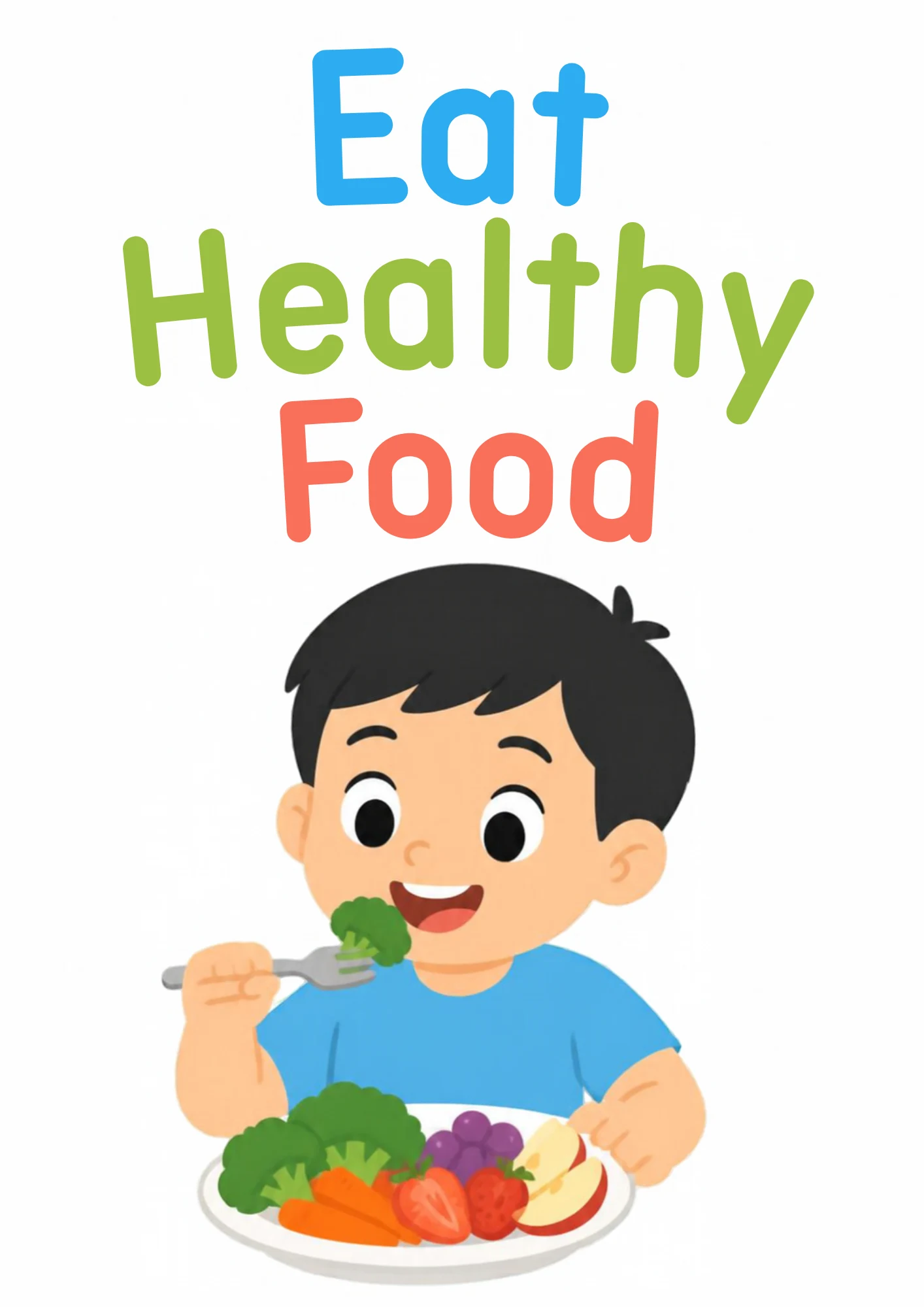
What is this?
Eating healthy food means filling your plate with things that grow — vegetables, fruits, grains, proteins — the "every day" foods that build bodies, alongside small "sometimes" treats.
What does it mean?
Different foods do different jobs: some build muscles, some give quick energy, some help eyes and skin. A plate with many colors usually means many jobs getting done at once.
What does the child need to know?
The division of jobs: grown-ups choose and serve the food; children decide what and how much to eat from what is offered. New foods may need to appear ten times before the first bite — that is normal, not stubborn.
Why this matters
Eating habits form in the preschool years and last. A child who helps choose, wash and name vegetables eats braver — and a family with the every-day/sometimes language stops arguing about treats, because the rule is the rule, not the mood.
What it teaches
Vocabulary for food and colors, sensory bravery (look, smell, touch, lick, taste — in that order), decision-making within limits, and the body-awareness of noticing which foods make play feel strong.
Words to learn
vegetablesfruitrainbowtastestrongsometimes-food
Say this to your child
“"Rainbow food makes bodies strong. Your job is to taste; my job is to serve. You never have to love it — you just have to say hello to it. Say hello with your eyes, your nose, your fork — and one day, your mouth."”
Step by step
- Show the card: name every food you can actually see on the boy’s plate — the green broccoli trees, the orange carrots, the purple grapes, the red strawberries, the apple slices.
- Ask which of those your child ate this week, and which is the "never tried one" — every plate has one.
- At the next shop, let your child choose ONE new fruit or vegetable; children eat braver when they chose the food themselves.
- Put the chosen food on the plate without pressure — serving it is the win, eating it is theirs.
- Keep the every-day/sometimes language alive at every meal: "broccoli is an every-day food; cake is a sometimes food."
Look closer at the picture
Ask your child: what is the boy eating from his fork? How many foods can you count on his plate? Which ones are green? Which one is purple? Has he taken a bite already — how can you tell?
Ask your child
"Which foods on this plate have you tried?" "What does a new food smell like before it gets a taste?" "What is an every-day food? What is a sometimes food?" "Which food would you pick at the shop?"
What your child can say or do
"I tried one bite!" "That’s a sometimes food." Your child may rank plate colors — "two greens today!" — or report that their new vegetable said hello back.
Out in the real world
The shop is the classroom: the vegetable aisle is a color hunt, the fruit scale is a weighing game. Cooking adds more — washing tomatoes, tearing lettuce, stirring batter — hands in the food make mouths braver about the same food.
Try it together
Rainbow dinner chart: a paper plate with six color wedges; each meal, your child stickers the wedge for every color eaten. The game ends when nobody needs it — the rainbow has become the habit.
Understanding check
Ask: "Whose job is serving and whose is tasting? How many times might a new food say hello before we taste it? Name one every-day food and one sometimes food." Parent serves, ten hellos, two right answers = landed.
Parent tips
Never bribe with dessert — it teaches that vegetables are the bad part. Keep portions child-sized; a mountain of new food guarantees a no. Model eating the food yourself with visible enjoyment; children copy appetites before they copy advice.
Staying safe
Grown-ups cut grapes, cherry tomatoes, nuts and other round, hard foods into small pieces — whole ones are a choking risk at four. Wash fruit and vegetables before eating, and keep raw dough and unpasteurised drinks off the menu.
This lesson pairs with the Eat Healthy Food flashcard in the library — print it, show it, keep it on the fridge. Back to Life Skills & Good Habits (Class 32).