
Keep Your Room Safe — a step-by-step lesson for grown-up and child
This lesson makes your child the safety inspector of their own room: spotting trip hazards, knowing the never-touch list, and learning the rule that keeps small people safe around big problems — report, never touch.
What is this?
Keeping your room safe means clearing the floor of trip hazards, keeping toys in their homes, and telling a grown-up about anything broken, spilled or dangerous — without touching it.
What does it mean?
Most room accidents are floor accidents: one block on the rug at night is a stumble waiting. And some problems are not child-sized — broken glass, spilled drinks, wall sockets — where the safe move is distance plus a loud report.
What does the child need to know?
The inspector walk: patrol the room and ask "what could someone trip on? What must never be touched?" The never-touch list: sockets, cords, heaters, broken things, spills, big people’s tools. The report line, practised until it flows: "GROWN-UP, come see!"
Why this matters
A child who reports is a child who stays safe — and who makes the whole house safer. The report-instead-of-touch rule also pre-empts the dangerous cleanup instinct: four-year-olds WANT to fix what they broke, and this lesson redirects that instinct to the person equipped.
What it teaches
Hazard perception (spotting risk before it bites), rule categorisation (touch/report), responsibility for a shared space, clear emergency sentence-building, and the good kind of pride — the helper who kept everyone on their feet.
Words to learn
safetripfloorbrokenspillreport
Say this to your child
“"Your room is yours to keep safe. Toys off the floor so nobody trips — the box is their home. And here is the big rule: if something is broken, spilled or scary-looking, you do NOT touch it. You step back and call: ‘Grown-up, come see!’ Broken things are grown-up jobs to touch and child jobs to report — and reporting is the brave job."”
Step by step
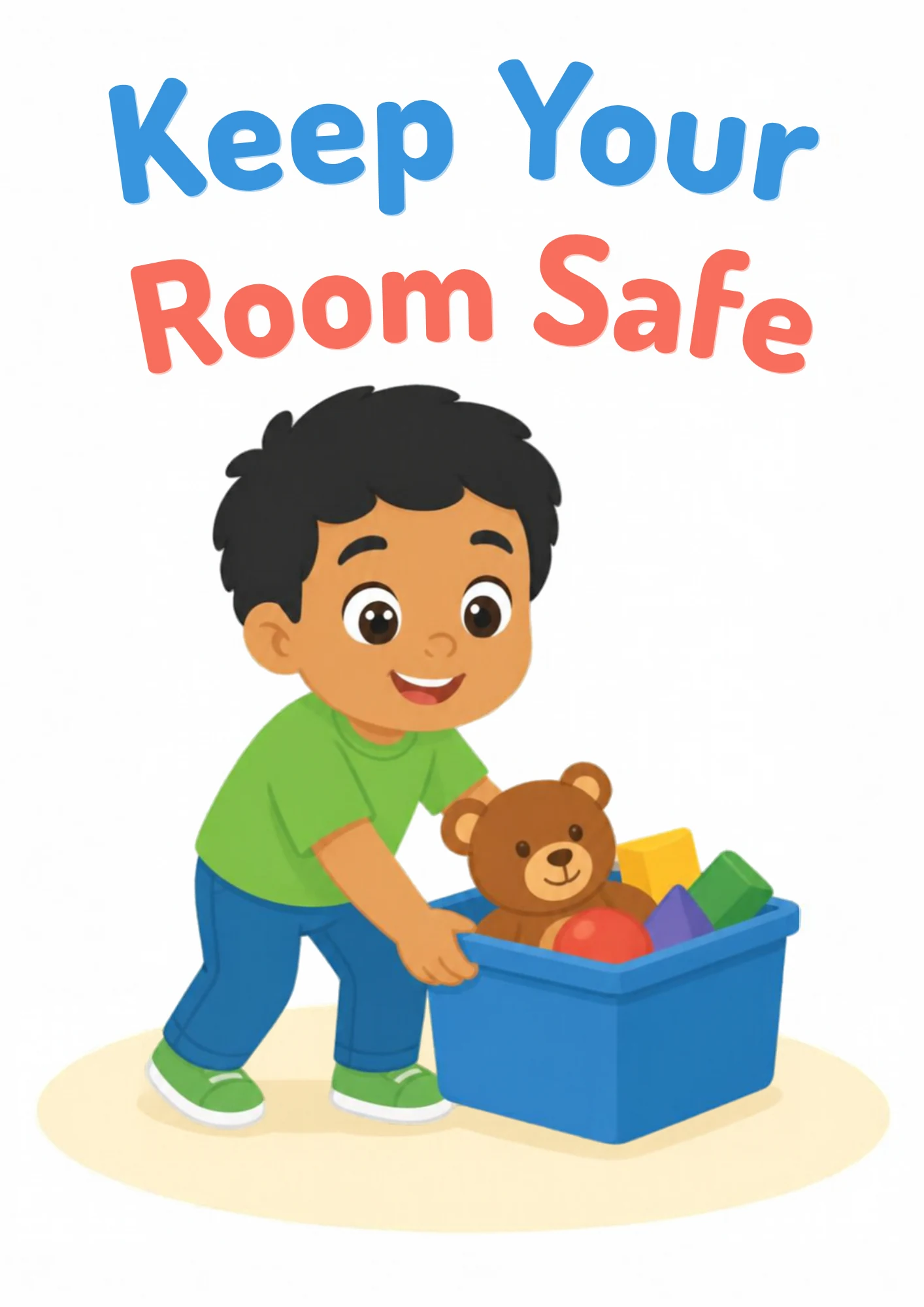
- Show the card: the boy is lifting a blue toy box — teddy, a red ball and blocks inside — off the floor. Name the move: toys off the floor, into the box, floor clear.
- Walk the room together as inspectors: your child points at trip hazards, you decide the fix together. Finding is their job; deciding is yours.
- Build the never-touch list out loud, room by room: sockets, cords, heaters, broken glass, spilled drinks, scissors that are not theirs.
- Teach and rehearse the report line with drama: "GROWN-UP, come see!" — loud, from a distance, never bringing the broken thing TO the grown-up.
- Practise the report on purpose: stage a "broken" crayon box tomorrow and see if the line fires. It will — and it will again when it matters.
Look closer at the picture
Ask your child: what is the boy lifting — what is inside the box? Can you find the teddy? The red ball? Where will the box go? Is the floor behind him clear or messy? What do YOU see on YOUR floor tonight?
Ask your child
"What could someone trip on in your room?" "What goes on the never-touch list?" "What do we shout when something breaks?" "Why do we step back instead of picking it up?"
What your child can say or do
"Toys off the floor!" "GROWN-UP, come see — it’s broken!" Your child may inspect the hallway uninvited, report a wobbly chair leg with pride, or patrol grandma’s rug like a health-and-safety officer.
Out in the real world
Safety eyes travel: the bathroom’s wet floor, the kitchen’s spilled juice, the garden’s scattered rake, the hotel room’s mystery cords. Inspector walks work in every room of every house — and your child now owns the move.
Try it together
Safety-inspector badge: paper badge, clipboard walk of the whole house, one "hazard" you have staged per room (a shoe, a toy, a rolled sock — nothing real). Each found hazard earns the report line and a fix. The badge goes home to their door.
Understanding check
Ask: "What do we do with floor toys? Name two never-touch things. What is the report line?" Box-home, two right answers, the loud line = landed.
Parent tips
Thank every report warmly — a child whose report is met with a sigh learns to hide breakage, and hidden breakage is the dangerous kind. Never punish the reporting of an accident; the calm response IS the lesson. Keep the list short and real: five things remembered beat twenty listed.
Staying safe
This lesson is the safety lesson: sockets get covers, cords get chased along walls, and any real glass breakage means the child leaves the room first, barefoot never. Batteries — especially button batteries — and magnets join the never-touch list; they look like sweets and do not forgive curiosity.
This lesson pairs with the Keep Your Room Safe flashcard in the library — print it, show it, keep it on the fridge. Back to Life Skills & Good Habits (Class 32).