
Put On Your Shoes — a step-by-step lesson for grown-up and child
This lesson turns the doorstep battle into a skill your child owns: how shoes tell you which foot they belong to, the sticker trick, and the timing rule that keeps the practice alive.
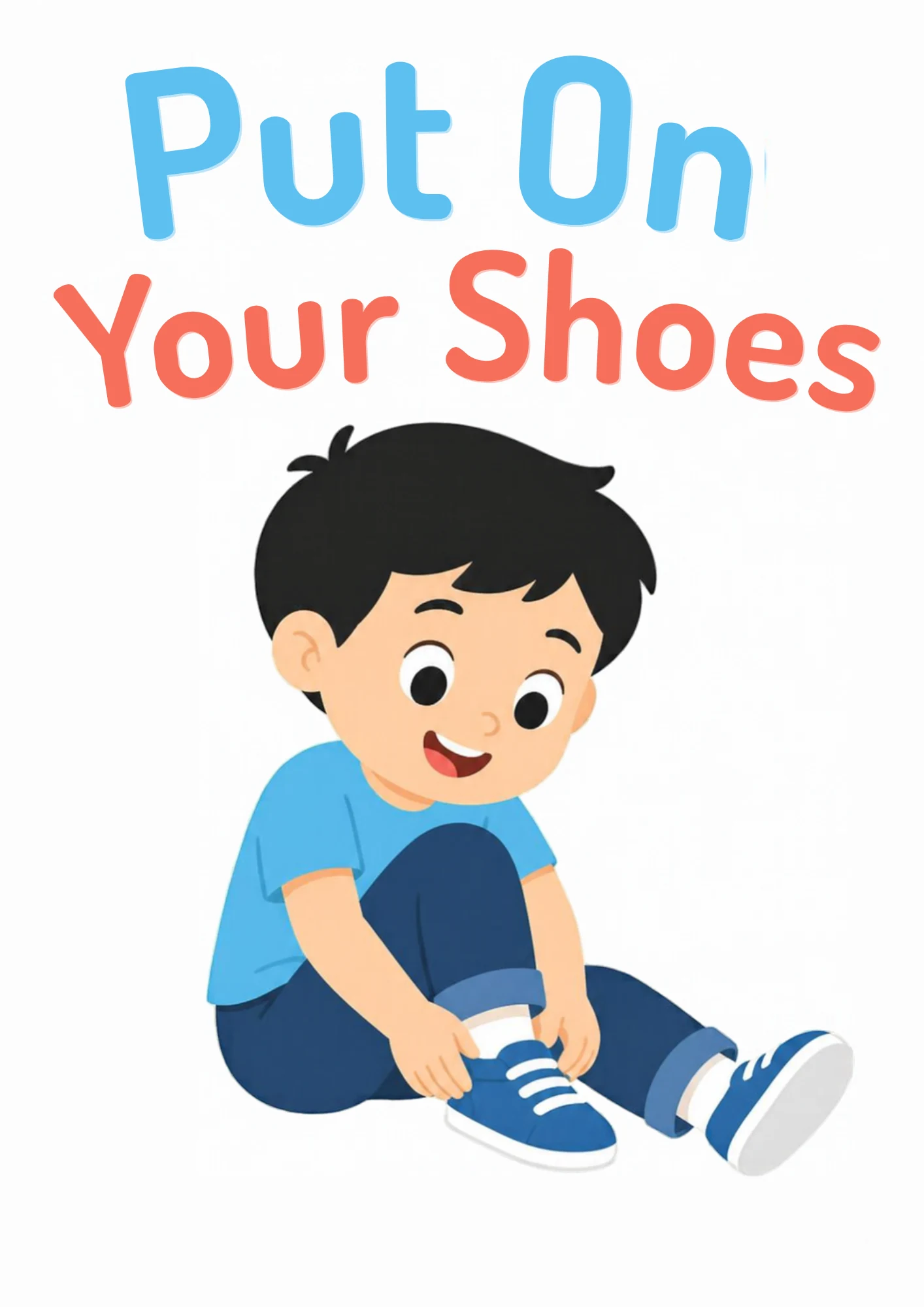
What is this?
Putting on shoes means opening the shoe’s tongue, sliding the toes in, pressing the heel down and closing the strap — the right shoe on the right foot, every time.
What does it mean?
Shoes carry clues: the tongues lean toward each other like a closed book, the soles curve inward to match the feet. Velcro straps close with a satisfying rip; laces need fingers that are still under construction.
What does the child need to know?
The check: toes reach the front, heel sits down, strap closes flat. The sticker trick — one sticker cut in half, half in each shoe — turns "which foot?" into a matching puzzle: when the halves meet, the shoes are right.
Why this matters
Shoes are the gateway to outside. A child who needs an adult for shoes waits for the adult; a child who does shoes alone just — goes. The self-launch matters more than the neatness of the strap.
What it teaches
Fine-motor strength (opening the tongue, pressing heels), left-right body awareness, matching and puzzle logic, and perseverance — shoes resist, and the third attempt that succeeds is where the real learning lives.
Words to learn
shoestongueheelvelcrorightleft
Say this to your child
“"Tongue open wide, toes march in, heel sits down, strap goes RIP. When the sticker halves kiss each other, your shoes are on the right feet — check them yourself. If one fights back, take a breath and try again; shoes always give in third try."”
Step by step
- Show the card: the boy is sitting on the floor, working a blue sneaker onto his foot with both hands — name how he is sitting DOWN to do it, because sitting makes shoes easy.
- Play "which foot?" with both shoes: the tongues lean together when the shoes sit right.
- Teach the sequence out loud: tongue open, toes in, heel down, strap closed. Then let your child do it — slowly is allowed.
- Add the sticker halves if left-and-right keeps confusing: matching picture beats verbal rule at four.
- Guard the clock, not the task: leave five extra minutes so the practice can happen without anybody rushing.
Look closer at the picture
Ask your child: is the boy sitting or standing? How many shoes are on already? What color are his socks? What are his hands doing right now — can your hands copy them?
Ask your child
"How do the tongues tell us which foot?" "What do we do when a shoe fights back?" "Who checks the sticker halves?" "What comes after the heel sits down?"
What your child can say or do
"Tongue, toes, heel, RIP!" "They match — look!" Your child may hold both shoes up for a sticker check every single time, or teach the sequence to a teddy with impressive strictness.
Out in the real world
Shoe moments happen everywhere: the shoe rack at home, the swimming-pool bench, the soft-play shoe cubbies, the doorstep before the school run. Same tongue, same toes, same heel — a portable skill that starts the outing.
Try it together
Shoe-shop dramatics: line up every family member’s shoes and let your child "fit" them — matching pairs, finding the owner, closing the straps. Sorting, matching and strap practice all hide inside the game.
Understanding check
Ask: "What are the four moves? How do the stickers help? What do we do when a shoe fights?" Tongue-toes-heel-strap, matching halves, try again = landed.
Parent tips
Velcro first, laces much later — resist doing it for them when late; build in the five minutes instead. Praise the re-try louder than the success: "you tried again and WON" is the sentence that survives bad mornings.
Staying safe
Shoes protect feet outdoors — barefoot belongs on grass and indoor mats only. Check the fit every season: pressed toes mean pressed growth. Loose laces and flapping straps get fixed before running, or they become the trip they look like.
This lesson pairs with the Put On Your Shoes flashcard in the library — print it, show it, keep it on the fridge. Back to Life Skills & Good Habits (Class 32).