
Tidy Up Toys — a step-by-step lesson for grown-up and child
This lesson makes clean-up time a game with rounds and a finish line: every toy has a home, the tidying goes in rounds — cars, then animals — and a song gives the mess its ending.
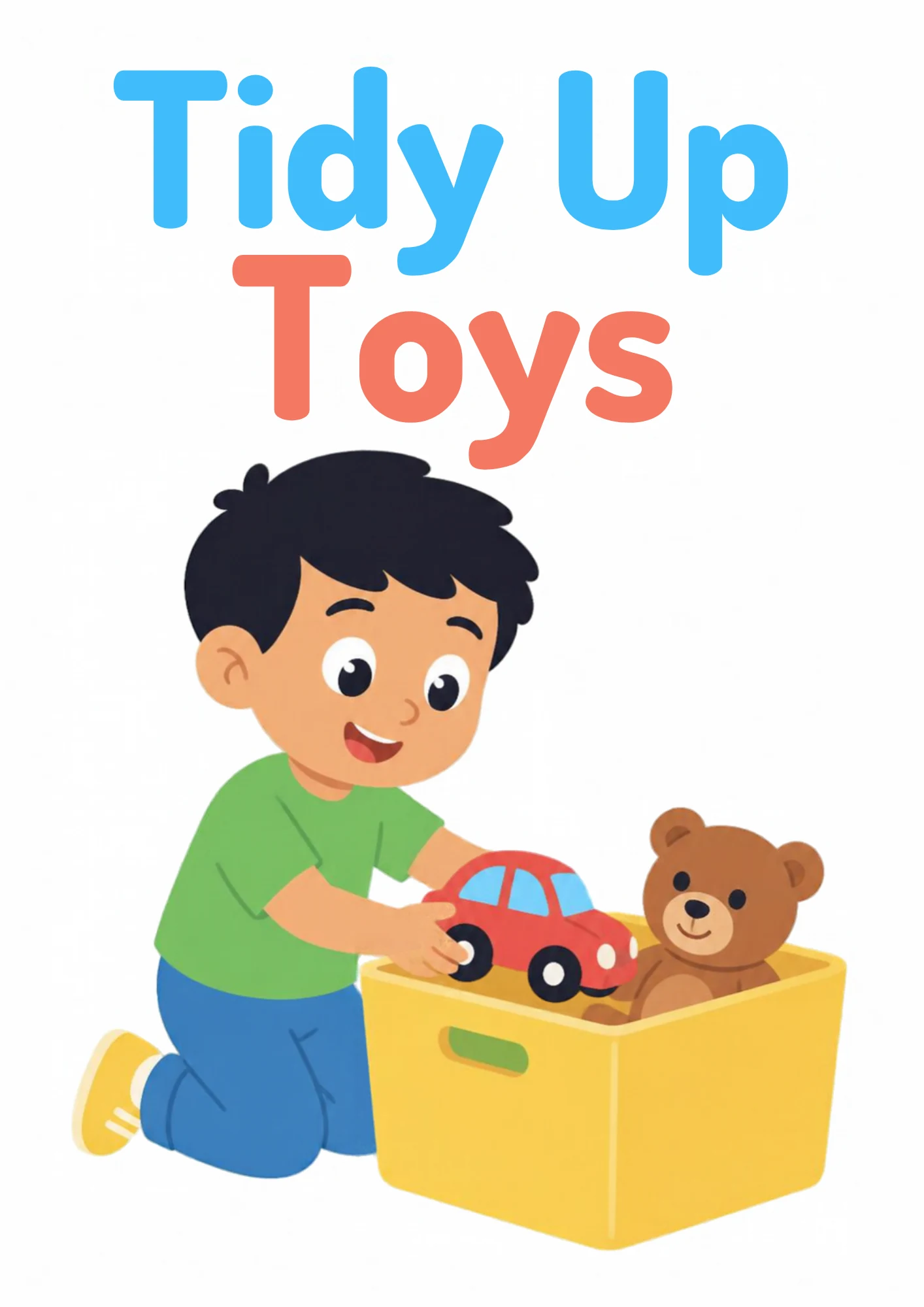
What is this?
Tidying up means putting toys back where they live when play is done — car to the car home, teddy to the teddy home — so the floor is ready for tomorrow’s play.
What does it mean?
Tidying is matching: every toy has a home it belongs to, and the game is walking each one there. Four-year-olds tidy in circles, not lines — they wander, restart and discover — so rounds ("cars home, then animals home") give the wandering a shape.
What does the child need to know?
The method: pick ONE category per round, finish it, then the next. A tidy-up song sets the finish line. Doing it WITH your child matters more than ordering them to — your calm company is the engine at four.
Why this matters
A child who can restore their own play space plays more bravely — big messes are only fun when they know the way back. Tidying also trains the follow-through muscle: play is not over until the room says so.
What it teaches
Categorising (toys by type or home), sustained attention across rounds, sequencing, respect for belongings, and the emotional skill of ending something enjoyable — the hardest transition of the preschool day.
Words to learn
tidyhometoy boxroundfinishfloor
Say this to your child
“"The toys are tired and it is time to walk them home. Cars home first — zoom, straight to the box. Then the animals — hop, hop. When the song ends, the floor is clear and tomorrow’s play is ready. I will take the animals if you take the cars."”
Step by step
- Show the card: the boy is returning a red car to a yellow toy box where a teddy already sits — two toys, two homes, one job.
- Give every toy a named home in your child’s room: "the car home", "the bear home". Unnamed homes do not get used.
- Tidy in rounds: "cars home first" — only cars — then "animals home." Rounds turn a mountain into a staircase.
- Start a tidy-up song when the first round begins; the song is the timer nobody fights.
- Do it WITH them, not at them: you take the animals, they take the cars — company first, order second.
Look closer at the picture
Ask your child: what is the boy putting away — what color is the car? Who is already inside the box? Is the box yellow or blue? Is his mouth smiling or cross? What toys live at YOUR house that need a home?
Ask your child
"Which round comes first at our house?" "Where does the teddy live? The cars?" "When does tidy-up time end — how do we know?" "What happens to toys left on the floor overnight?"
What your child can say or do
"Cars home! Animals next!" Your child may sing the tidy-up song solo with added verses, or comfort a toy while walking it home — "don’t worry, you’ll come out tomorrow."
Out in the real world
Tidying happens beyond the playroom: the blocks at the library, the plates at the picnic, the kit bag after swimming. Same move — every thing back to its home — everywhere, which is why it is worth practising at home.
Try it together
Home-hunt: hold up one toy and ask "where does this one live?" — your child races it home. Reverse it at playtime: "who lives here?" pointing at the empty box. The homes become as familiar as the toys.
Understanding check
Ask: "What are the rounds? What tells us tidy-up is finished? Where does the car live?" Cars-then-animals, the song, the box = landed.
Parent tips
Never tidy a child’s room as punishment — it poisons the skill. Keep floor homes low and reachable; a tidy-up that needs an adult’s arms is not a child’s tidy-up. A photo of the shelf with every toy home is a cheat sheet even non-readers can use.
Staying safe
Toy boxes with heavy lids need slow-close hinges or no lid at all — fingers are faster than lids. Small parts stay away from baby siblings, and the floor path to the bed stays clear for sleepy night-time feet.
This lesson pairs with the Tidy Up Toys flashcard in the library — print it, show it, keep it on the fridge. Back to Life Skills & Good Habits (Class 32).