
Thirteen Pineapples — a step-by-step lesson for grown-up and child
This lesson disarms the most-tripped-over teen: thirteen. Your child counts thirteen pineapples as ten and three, says the word slowly like a secret, and learns that the "-teen" ending simply means "plus ten".
What is this?
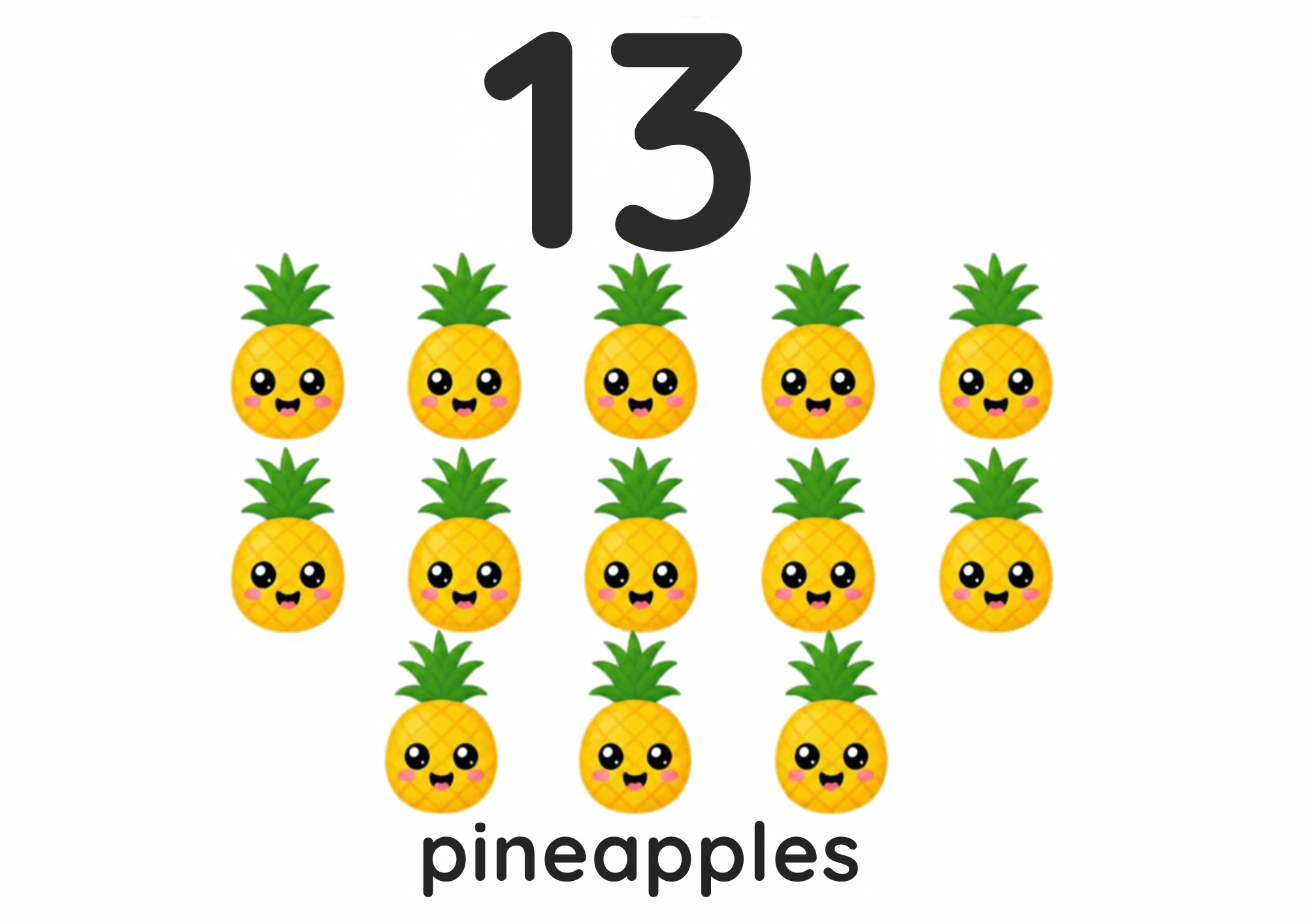
Thirteen is ten and three more — thirteen pineapples with green crowns, grouped five, five and three. The word "thirteen" is famous for tangling young tongues, which is exactly why it gets a whole lesson.
What does it mean?
All the teens end in "-teen" and all the teens mean "ten and some more". Thirteen is where that pattern first becomes words: thir-teen. Saying it in two parts — and counting ten-plus-three — untangles both the word and the number.
What does the child need to know?
Your child needs three thirteens: the two-part word said slowly (THIR-teen); the ten-and-three count; and the row reading — five and five and three, three packs that make one thirteen.
Why this matters
The stumble at thirteen is normal and fixable. A child who can split thirteen into ten and three has learned the master key to every teen number — and the confidence that tricky words yield to saying them slowly.
What it teaches
Word decomposition (thir + teen), number decomposition (ten + three), reading grouped arrangements, and fluency practice — repetition with rhythm, where the tongue learns the word by walking it.
Words to learn
thirteenteenten and threeslowlygroupscrowns
Say this to your child
“"Thirteen — let us say it like a secret: THIR-teen. It means ten and three more. Every word that ends in teen means ten and something, and thirteen is just the first one that sounds funny."”
Step by step
- Show the card: "Thirteen pineapples. This word trips everyone — so we say it slowly: THIR... teen."
- Split the word with your hands: one hand for THIR, one for TEEN. Say both parts, then slam them together: thirteen!
- Count the math way: a full ten pineapples, then three more. Ten and three — thirteen. Tap the ten, tap the three, say the whole word.
- Read the rows: five, five, three. Count each pack, then count them all — the same thirteen wearing three little hats.
- Stair practice if you have steps: count thirteen stairs, one word per step. Stairs slow the voice, and a slow voice never stumbles.
Look closer at the picture
On this card a big black numeral 13 stands over thirteen smiling pineapples with green crowns, grouped five in the top row, five in the middle and three below, and the word "pineapples" is printed below.
Ask your child
"How many pineapples? Say thirteen slowly — what are its two parts?" "What does teen mean at the end of a number?" "How many in each group?"
What your child can say or do
Your child might say: "THIR-teen — ten and three!" "Five, five, three!" or the proud confession-turned-triumph: "I said it without tripping."
Out in the real world
Thirteen shows up where nobody expects it: thirteen stripes on the flag, thirteen candles on a birthday cake someday, thirteen moons in some years of old farming calendars. The famous unlucky-for-some number becomes friendly when a four-year-old can count it cleanly.
Try it together
The thirteen staircase: stairs, stepping stones or couch cushions — thirteen of anything to walk and count, one number per step. Then teen-word claps: clap once for THIR, once for TEEN, then shout the whole word — the clap splits the word the way the hands did.
Understanding check
Ask: "How many pineapples? What does thirteen mean? Say it in two parts." Thirteen pineapples, ten and three, THIR-teen — the tricky teen is tamed.
Parent tips
Never laugh at the stumble; everyone trips here, including adults learning new languages. Two-part saying plus stair-walking fixes thirteen in under a week. Keep the ten-and-three count separate from the word practice — the tongue and the math learn at different speeds.
This lesson pairs with the Thirteen Pineapples flashcard in the library — print it, show it, keep it on the fridge. Back to Numbers, Counting & Early Math (Class 35).