
Twenty Figs — a step-by-step lesson for grown-up and child
This lesson crowns the whole set: twenty, two full tens. Your child counts twenty figs in four rows of five, takes twenty apart and rebuilds it, and celebrates the summit — a wall-worthy finish to a month of counting.
What is this?
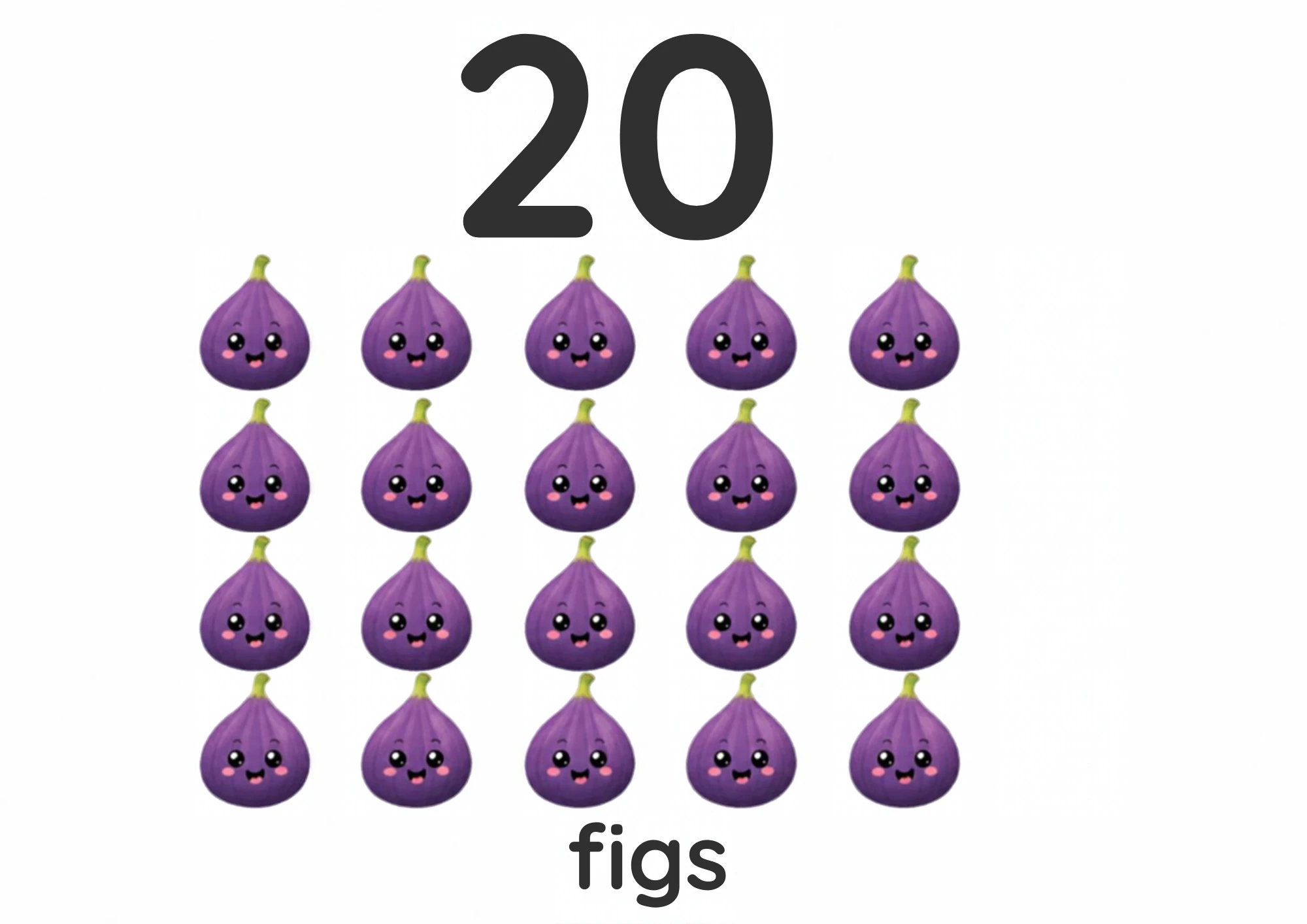
Twenty is two tens — twenty figs in four neat rows of five. It is the biggest number on the whole journey, the second finished decade, and the number every finger-and-toe counter has been walking toward.
What does it mean?
Twenty is where big numbers start to be SEEABLE: two tens, four fives, one big block of fruit. Taking twenty apart — cover a row, count what is left — and rebuilding it teaches that numbers are built things, and built things can be understood.
What does the child need to know?
Your child needs three twenties: the two-tens recipe; the row reading — four rows of five; and the take-apart move — covering some figs, counting the rest, uncovering and counting all.
Why this matters
Twenty completes the journey from a single apple to a structured number you can take apart. That take-apart-and-rebuild move is exactly what arithmetic will ask forever — and reaching twenty earns the celebration that makes counting something a child wants to return to.
Words to learn
twentytwo tensrows of fivetake apartrebuildsummit
Say this to your child
“"Twenty figs — two tens, four rows of five. We can count it, cover it, take it apart and rebuild it — twenty always comes back. You counted all the way from one apple to twenty figs. That is a mountain!"”
Step by step
- Show the card: "Twenty figs — the biggest number on the whole journey! Two full tens, four rows of five. Let us climb it."
- Count by rows: five, ten, fifteen, twenty — land on each row-end with a little drumroll. The row landings ARE counting by fives.
- Recipe count: a full ten figs, then ten more. Two tens: twenty. Say it both ways — rows and tens.
- Take it apart: cover one row of five and count what is left — fifteen! Uncover, count again — twenty. Numbers can be dismantled and rebuilt without fear.
- Summit celebration: hang this card highest, or pin all twenty cards across a wall in order and walk the number line from one to twenty like a parade.
Look closer at the picture
On this card a big black numeral 20 stands over twenty smiling purple figs arranged in four neat rows of five, and the word "figs" is printed below — the summit card of the whole set.
Ask your child
"How many figs? What are the four rows? What is twenty made of — how many tens?" "If I cover one row, how many are left?"
What your child can say or do
Your child might say: "Two tens — twenty!" "Five, ten, fifteen, twenty!" or the summit declaration: "I counted all the way to twenty."
Out in the real world
Twenties run the house: twenty pegs on the washing line, twenty stairs, the number twenty bus, twenty minutes of bedtime story. Deal twenty crackers at a party and the count feeds everybody — numbers this big have jobs.
Try it together
Number line parade: lay all twenty cards across the floor in order and walk them — one step, one number, a full march from one to twenty. Then take-apart theater: cover different rows of the fig card and race to count what remains — fifteen, ten, five — then uncover and rebuild the twenty.
Understanding check
Ask: "How many figs? What is twenty made of? Show me how to take it apart." Twenty figs, two tens, four rows of five — the summit is claimed, and the whole set is learned.
Parent tips
The row landings (five, ten, fifteen, twenty) are skip counting in disguise — say them with a little bounce and the rhythm plants itself. And make the wall parade permanent for a few days: walking their own number line every morning is the victory lap this summit deserves.
This lesson pairs with the Twenty Figs flashcard in the library — print it, show it, keep it on the fridge. Back to Numbers, Counting & Early Math (Class 35).