
Cool Weather — a step-by-step lesson for grown-up and child
This lesson teaches the season between warm and cold: what the fresh nip in the air means, how one good layer solves it, the zip-up skill that makes jackets child-owned, and the honest cheek-check that says when inside is the right answer.
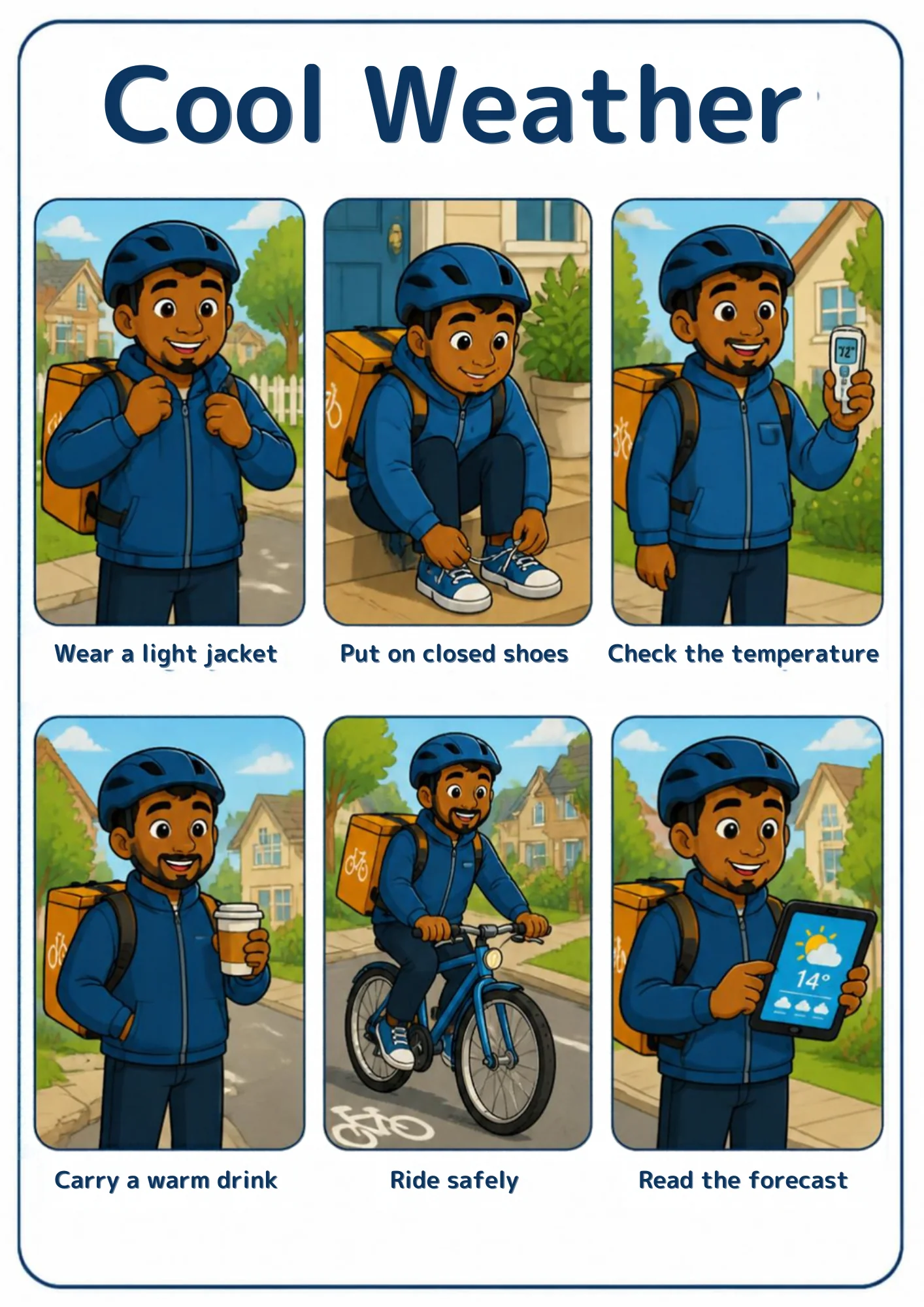
What is this?
Cool weather is fresh, chilly air — noticeably colder than warm, gentler than properly cold. You feel the nip at once, breath may show on the coolest mornings, and one comfortable jacket turns the whole day bright again.
What does it mean?
Cool days are layer days: one zip-up layer, easy to shed when the sun arrives or the game heats up. Moving air makes cool feel cooler still — that is why bike riders and walkers zip right up. Cool weather is the training season for the deep cold to come.
What does the child need to know?
Your child needs three cool-weather ideas: cool air asks for one good layer — jacket, closed shoes; the zip is the child’s own job and own pride; and cheeks tell the truth — rosy is fine, shivery means inside for a warm-up.
Why this matters
Cool weather is decision practice at the perfect difficulty: one layer, felt results. Zip it and feel warm, unzip when running, choose again tomorrow. That loop — decide, feel, adjust — is self-regulation in its most wearable form.
What it teaches
Self-dressing mastery (the zip!), temperature self-assessment, cause-and-effect with clothing choices, fine-motor control, and the independence glow of managing one’s own comfort.
Words to learn
coolcrispjacketziplayerwarm drinkrosybreeze
Say this to your child
“"Cool weather means the air is fresh and a bit chilly. We wear one good jacket — zipped by me! — and closed shoes. If we get warm playing, we can unzip. When we come home with rosy cheeks, that is the cool air saying we did it right."”
Step by step
- Show the card: "Cool weather means the air has a fresh nip — one good jacket makes it perfect."
- Read the picture: the bike courier in a blue helmet zips his light blue jacket, ties his blue sneaker laces on a doorstep, holds a little thermometer that reads 72, carries a takeaway cup of warm drink, rides through the neighbourhood in a bike lane and points at a forecast reading 14 degrees.
- Learn the zip in stages: bottom teeth together, slider down, hold and pull — practise on the coat, then the jacket, until it is solo.
- Do the layer decision together at the door: peek outside, feel the air — jacket today? Which one? Your child picks from the hook.
- End with the cheek check on return: rosy and happy means the layer was right; shivery means we learn and layer up more next time.
Look closer at the picture
On this card a bike courier in a blue bike helmet and a blue hooded jacket: zips the jacket up to his chin, crouches on a doorstep tying the laces of his blue trainers, holds up a small thermometer reading 72, carries a warm drink in a takeaway cup, rides his bicycle along a road with a painted bike lane, and points at a tablet forecast showing a partly-sunny icon and 14 degrees.
Ask your child
"What does cool air feel like?" "How many layers does a cool day need?" "Show me how your zip works." "What do rosy cheeks tell us?"
What your child can say or do
Your child might say: "Cool day — one layer!" "I zipped it all by myself," or the walk report: "My cheeks went rosy and I had a warm drink."
Out in the real world
Feel the cool-air difference on a bike or a fast buggy ride — moving air is colder air. Watch the zip-workers: riders, walkers, runners all zipping at the door. Keep the thermos ritual: one warm walk a week makes cool weather the cosy season.
Try it together
Zip-school: races on your own jacket, then helping teddy with his. Layer-sort relay: which clothes are cool-day clothes, which are cold-day ones? Warm-walk club: thermos of warm drink, crunchy leaves, and the mirror check at home — rosy cheeks earn the cocoa.
Understanding check
Ask: "How many layers for cool weather? Whose job is the zip? What do rosy cheeks mean?" One layer, mine, and all-is-well — cool weather is now child-managed.
Parent tips
Resist dressing your child in two layers "to be safe" — one good layer with a felt result teaches more than double layers with none. And hand over the zip completely: the first solo zip of the season deserves the same celebration as a lost tooth.
Staying safe
Cool plus wind feels much colder — zip up for rides and walks, fingers covered on the chilliest days. Head in when shivers start; rosy is comfortable, shivery is a signal. And on the coolest mornings, breath-mist spotting is fun — but roads stay for walking, never for playing.
This lesson pairs with the Cool Weather flashcard in the library — print it, show it, keep it on the fridge. Back to Weather, Seasons & What We Wear (Class 34).