
Hot Weather — a step-by-step lesson for grown-up and child
This lesson gives your child the hot-weather playbook: what the heat does to bodies, the drink-rest-shade routine that keeps play going all summer, the splashy ways to cool down, and the signals — dizzy, headachy — that always mean grown-up, now.
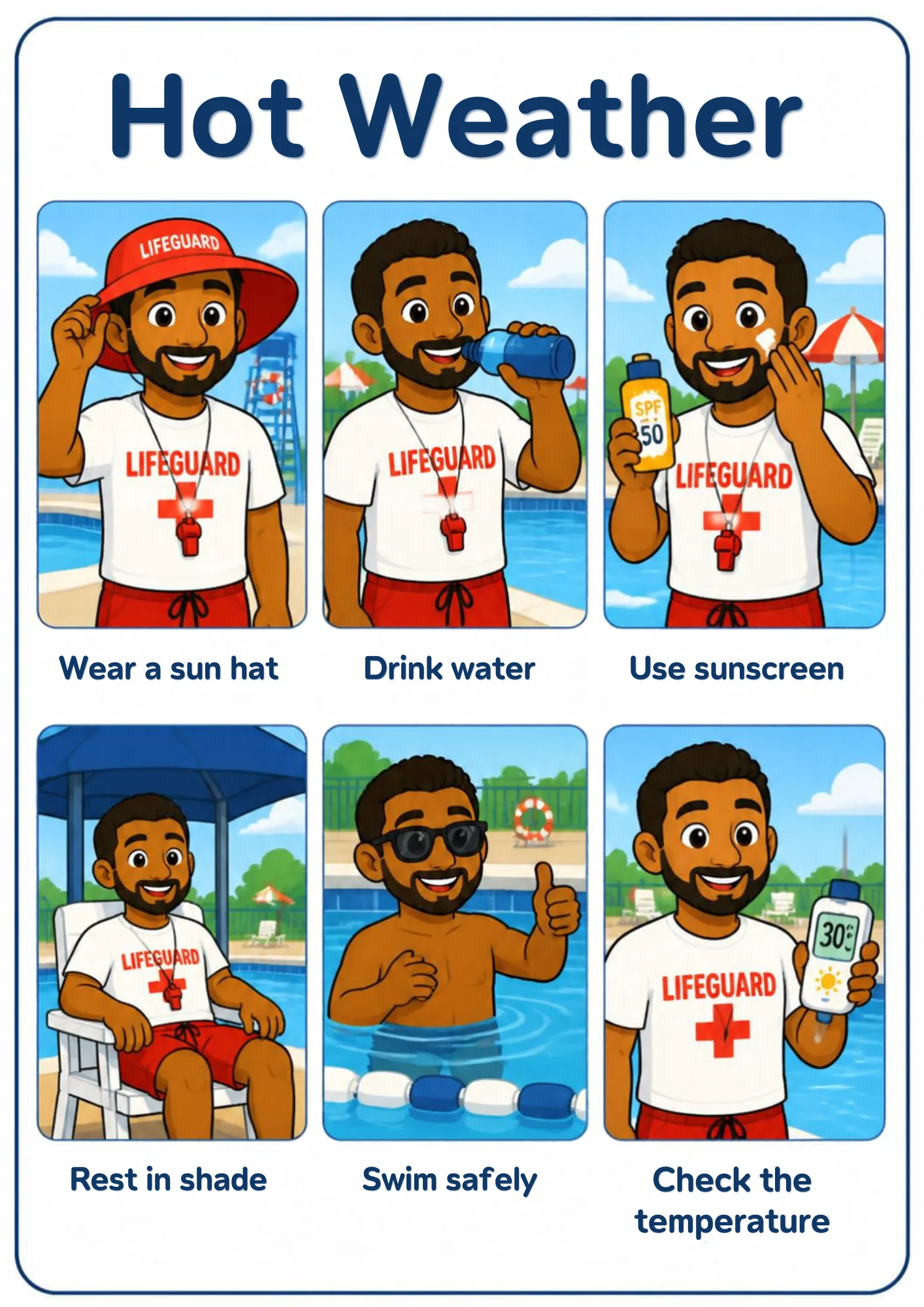
What is this?
Hot weather is when the air stays high-and-hot for days: strong sun overhead, warm wind, hot pavements, and everyone seeking shade, water and the cool side of the pillow.
What does it mean?
Bodies work harder in heat — they sweat to stay cool, and sweating uses up water fast. That is why hot days rewrite the routine: more drinks, slower midday, lighter clothes, cooler games. The heat is not the enemy; running dry is.
What does the child need to know?
Your child needs three hot-weather ideas: hot bodies need water many times a day, not just when thirsty; the midday sun is the strongest, so shade and rests live at the middle of the day; and any dizzy, headachy or sick feeling means stop and tell a grown-up straight away.
Why this matters
Hot weather is the first weather that can genuinely make a small body unwell, which makes it the most important self-care lesson in the class. A child who owns the drink-rest-shade routine — and knows that telling a grown-up about feeling unwell is brave, not whiny — carries a lifelong skill.
What it teaches
Interoception (reading one’s own body signals), routine planning around the sun, honest reporting as bravery, water-science through evaporation play, and the social rules of water safety that summer always rehearses.
Words to learn
hotshadehydratesweatcool downdizzysunscreenmidday
Say this to your child
“"When the weather is very hot, we help our bodies: water many times a day, light clothes and a sun hat, rests in the shade when the sun is strongest, and cool water play with a grown-up watching. If anyone feels dizzy or unwell in the heat, we stop and tell a grown-up right away."”
Step by step
- Show the card: "Hot weather means our bodies need extra help to stay cool and happy."
- Read the picture: the lifeguard by the pool wears a red sun hat, drinks from a big blue bottle, rubs sunscreen from an SPF 50 bottle onto his face, rests in the shade in a white chair, gives a thumbs-up from the pool wearing sunglasses, and holds a thermometer reading 30 degrees.
- Set the routine as three anchors: WATER often — bottle in hand, refills cheered; REST in shade when the sun is highest; HAT and sunscreen before the door.
- Teach the body signals with respect: dizzy, headachy, sick-in-the-heat means sit down, sip water, tell a grown-up immediately — that is not complaining, that is top-class body care.
- Plan one proper cool-down: paddling pool, water table, or a swim where a grown-up and a lifeguard are watching — always watching.
Look closer at the picture
On this card a lifeguard in a white shirt and red shorts works at a sunny pool: he puts on a wide-brimmed red hat marked LIFEGUARD, drinks from a big blue water bottle, rubs sunscreen from a yellow SPF 50 bottle onto his cheek, relaxes in a white chair in the shade of a big umbrella, stands chest-deep in the pool giving a thumbs-up in dark sunglasses, and holds a white thermometer reading 30° with a little sun on it.
Ask your child
"What do our bodies need lots of on hot days?" "Where do we rest at midday?" "What does sunscreen do — and who puts it on?" "What do we say if we feel dizzy in the heat?"
What your child can say or do
Your child might say: "Water break!" unprompted at the park, "Midday is shade time," or the brave line practised once and kept forever: "I feel dizzy — I need a grown-up."
Out in the real world
Spot the heat routines all around: dogs stretched in shade, shop awnings out, the paddling pool in every second garden, the ice-cream queue. Feel the science: sun-side versus shade-side of a wall, hot car roof versus cool grass. Refill stations — which fountains and taps are on your walking map?
Try it together
Water-wall: cups, sponges and buckets against a fence — transfer games that soak everyone equally. Ice-rescue: freeze small toys in a tub and free them with warm water and spoons. Shade-fort build for the midday hours. Then the classic: a proper run under the sprinkler, towels on the line afterwards like signal flags.
Understanding check
Ask: "What do hot bodies need? Where do we rest at midday? What do we say if we feel dizzy?" Water, shade, and grown-up-right-away — the heat is now managed, not feared.
Parent tips
Make drinking silly, not dutiful — silly-straw races, tick-charts, cheers at every refill. Freeze a bottle half-full then top it up for all-day cold. And protect the nap: hot, play-drunk children melt by late afternoon; shade the midday and the evening goes sweet instead of screamy.
Staying safe
Hot-weather rules: water often even without thirst; shade and rests at midday; hat and sunscreen applied by a grown-up; never anyone — child or pet — left in a parked car, not even for a minute; and any dizzy or sick feeling means stop, sit, sip and tell a grown-up at once.
This lesson pairs with the Hot Weather flashcard in the library — print it, show it, keep it on the fridge. Back to Weather, Seasons & What We Wear (Class 34).