
Winter — a step-by-step lesson for grown-up and child
This lesson assembles winter the way the card does — coat, scarf, gloves, then the careful outside world: frosty paths walked carefully, bus stops waited in shelter, the early dark noticed — and the blanket-cocoa finish that makes winter feel mastered, not endured.
What is this?
Winter is the coldest season: the shortest days, the longest nights, bare trees, frosty mornings and, in many places, snow and ice. Everyone finds warm ways through — coats and fires for people, dens and thick fur for animals.
What does it mean?
Winter rewrites daily life: dressing takes longer and more layers, walking gets careful on frosty ground, waiting happens in sheltered spots, and the dark arrives early. Winter is also the season of warm returns — the house glows brighter the colder the street.
What does the child need to know?
Your child needs three winter ideas: winter asks for the full kit — warm coat, scarf, gloves, thick boots — before any door opens; frosty paths need careful small steps; and every winter outing ends with the warm-up: wet things off, warmth on, drink in hands.
Why this matters
Winter is self-care at its most visible: the child who can dress for winter, walk on frost and warm up afterwards has mastered the year’s hardest routine. And the early dark, met with lantern walks and cosy rituals, becomes atmosphere instead of fear.
What it teaches
Full multi-item sequencing, careful motor control on frost, patience with the long dressing routine, day-length awareness (dark at teatime!), and the emotional pattern of effort-then-cosiness that winter teaches best.
Words to learn
winterfrostcoatglovesscarfshelterduskwarm up
Say this to your child
“"Winter is the coldest season, so we wear the full kit — coat, scarf, hat, gloves, boots — before we open any door. We take small careful steps on frosty paths, we wait for the bus in the shelter, and when we come home, we warm up: blanket, cocoa, cosy. That is how winter is done."”
Step by step
- Show the card: "Winter is the coldest season — we dress deep and walk careful."
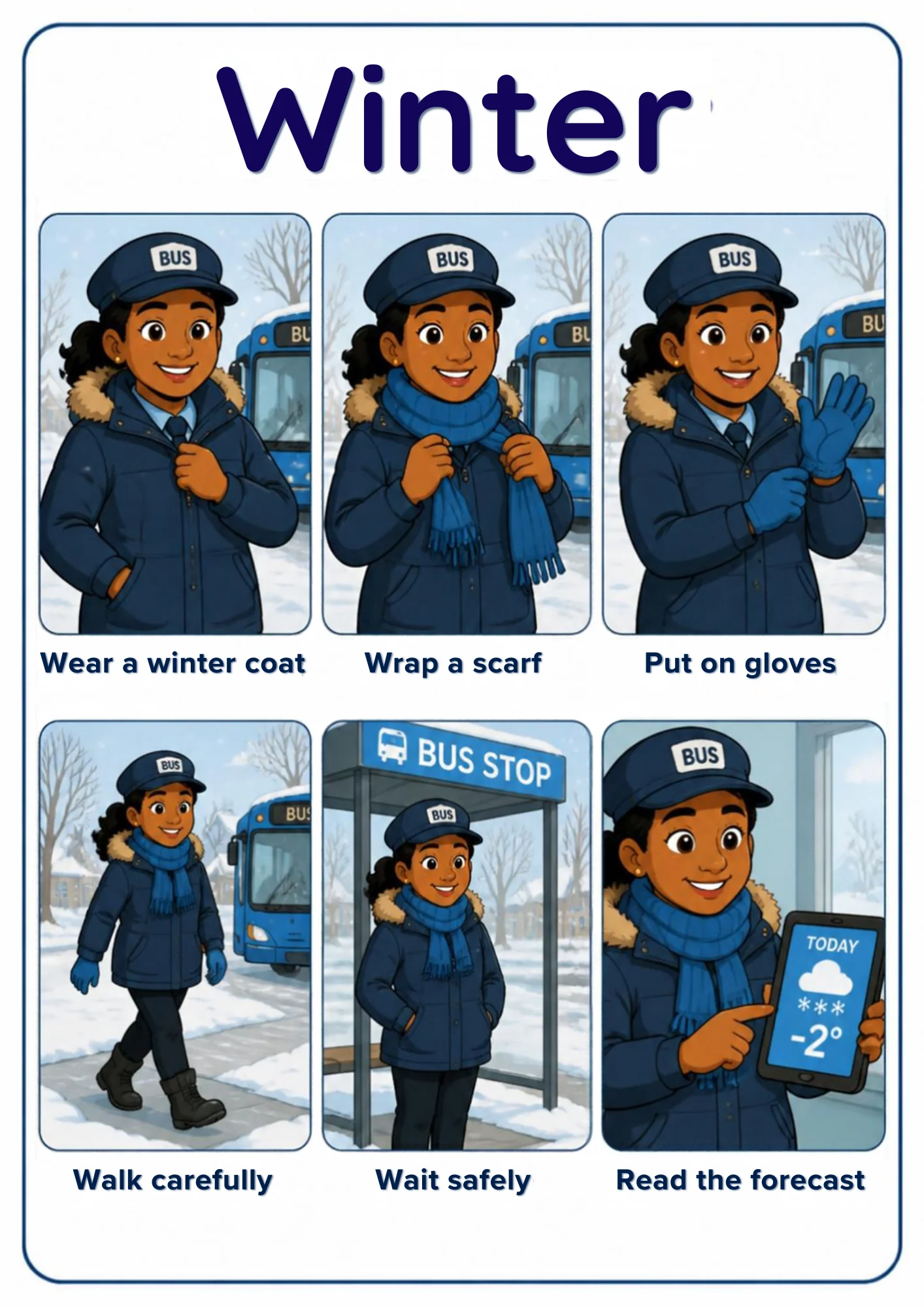
- Read the picture: the bus driver in a navy fur-hooded coat fastens it, wraps a long blue scarf, pulls on blue gloves, walks carefully on the snowy pavement past a blue bus, waits with hands in pockets under a "BUS STOP" shelter, and points at a forecast reading TODAY minus 2 degrees with snowflakes.
- Drill the full kit in order, every time: coat, then scarf, then hat, then gloves, then boots — each piece named out loud like a roll-call.
- Practise the frost walk: small flat steps, knees soft, hands free — on the rug, then on the real path. Shiny means careful.
- Build the warm-up finish as a ritual: wet things off, blanket on, warm drink, check the cheeks. Winter outings end in cosiness, always.
Look closer at the picture
On this card a bus driver with curly dark hair wears a navy winter coat with a fur-trimmed hood: fastens the coat with a hand in the pocket, wraps a long blue scarf around her neck, pulls on a blue glove, walks carefully along a snowy pavement with a blue city bus behind, waits calmly with hands in pockets under a bus-stop shelter marked BUS STOP, and points at a tablet reading TODAY with a snow-cloud icon and −2°.
Ask your child
"What is the winter roll-call?" (Coat, scarf, hat, gloves, boots.) "How do we walk on frost?" "Where do we wait for the bus?" "How does every winter outing end?"
What your child can say or do
Your child might run the roll-call solo: "Coat! Scarf! Hat! Gloves! Boots — check!" report the pavement: "Frosty bit — small steps," or declare the finish: "Blanket, cocoa — winter done right."
Out in the real world
Track the season’s signals: darker mornings, darker teatimes, breath-clouds at the bus stop, frost on the grass that melts by lunch. Watch the winter workers — drivers, posties, gritters — keeping the town moving. Notice the animal plans: fat birds at the feeder, cats curled on warm windowsills.
Try it together
Dressing-race against the clock — beat yesterday’s roll-call time. Lantern walk at dusk with a real lantern or torch: make the early dark a treat. Winter den: the blanket fort with books and cocoa where all frosty outings end. And the window-frost gallery: breathe on the glass and draw in the mist.
Understanding check
Ask: "Name the winter kit. How do frosty paths get walked? How do outings end?" The full roll-call, small careful steps, and blanket-cocoa — winter is now a routine your child runs.
Parent tips
Keep winter outings short and double-batched: twenty brisk minutes out, full warm-up, and out again if the spirit is willing. The dressing effort is the day’s biggest ask — celebrate the roll-call like a trophy. And make the dark friendly early: lanterns, torches and window-glow turn dusk into winter’s own story-time.
Staying safe
Winter rules: the full kit before every door, no exceptions — fingers, ears and necks chill first. Small steps on frost and ice, never running on shiny ground, ice on ponds strictly for looking. Something bright or reflective for the dark walks, and warm-up inside before the shivers turn to shivers-plus.
This lesson pairs with the Winter flashcard in the library — print it, show it, keep it on the fridge. Back to Weather, Seasons & What We Wear (Class 34).