
Puzzle — a step-by-step lesson for grown-up and child
This lesson teaches "puzzle" through the handover: one piece at a time, the trying narrated out loud, and the CLICK celebrated as what it is — persistence paying off.
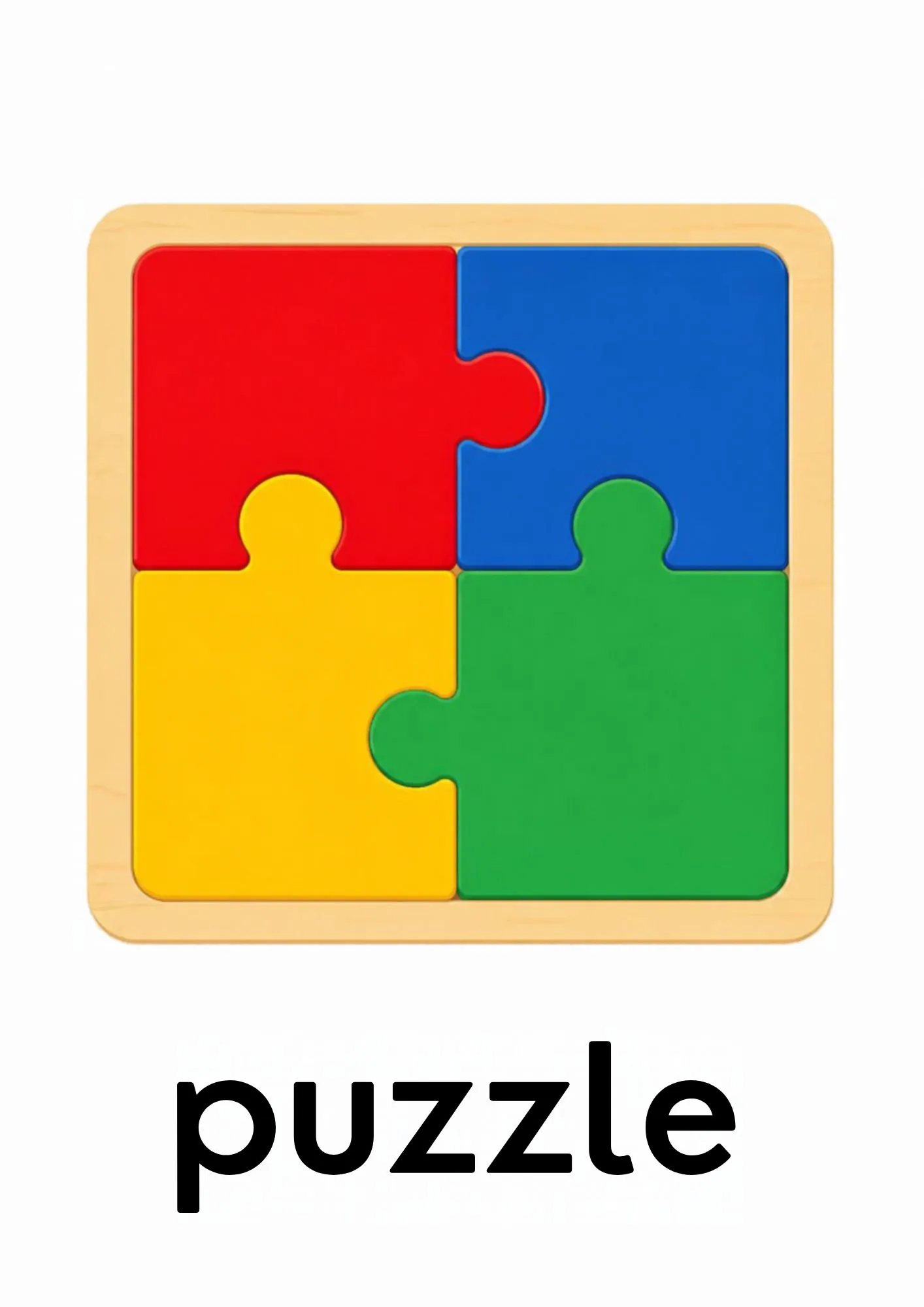
What is this?
The puzzle is the four-piece wooden board — four bright pieces, four matching holes, and the toddler’s first lab of matching and patience.
What does it mean?
Puzzles teach the fail-again muscle: a piece that will not go in is not broken, it is turned wrong. The grown-up’s calm voice while trying is the actual curriculum.
What does the child need to know?
You need the board, the pieces in YOUR hand (one at a time) and the narration: "turn it… flip it… try again… it FITS!" Never grab the piece; the struggle is the school.
Why this matters
Four pieces is victory-sized: enough challenge to demand trying, not enough to flood. Finishing builds the identity — "I am someone who finishes" — worth more than the skill itself.
What it teaches
Shape matching, wrist rotation, visual scanning, frustration tolerance, and the one-to-one logic of piece-into-hole.
Words to learn
puzzlepieceturntry againfitsclick
Say this to your child
“"Puzzle! Four pieces, four spots. Here is one — try it… turn it… click! It fits! This one is tricky… turn… flip… try again… CLICK! All four — finished! Puzzle champions!"”
Step by step
- Empty the board together: "puzzle! Four pieces, four spots."
- Hand over ONE piece: "try it… turn it around… CLICK! It fits! Red in red."
- The next piece resists: narrate the calm: "hmm… turn it… FLIP it… try again… CLICK!"
- Fade your words as the trying improves — the child inherits the narration.
- The finish: lift the whole board and pour the pieces out — "AGAIN!" The second round runs smoother than the first; that is learning, visible.
Look closer at the picture
On this card the word "puzzle" sits under a four-piece wooden board in red, yellow, green and blue — every piece out, every hole waiting.
Ask your child
"Where does the red piece go?" "Turn it… now what?" "What do we say when it does not fit?" (try again!)
What your child can say or do
Your child might say "click!" on every fit, narrate their own trying, or pour the pieces out unprompted — persistence with a sound effect.
Out in the real world
Fitting lives everywhere: keys in doors, toasters, shape sorters, the last piece of toast in the bag. "It fits — like your puzzle!" keeps the skill hunting.
Try it together
Mystery Piece: hide one piece under a cup while the child closes their eyes — which piece is missing? Find it, place it, repeat. Deduction joins the matching.
Understanding check
Ask: "What is this?" (puzzle) "Show me try again!" "What happens when it clicks?" (it fits!) — try, flip, click: persistence installed.
This lesson pairs with the Puzzle flashcard in the library — print it, show it, keep it on the fridge. Back to Toddler Room.