
Cow — a step-by-step lesson for grown-up and child
This lesson takes the easiest big sound in the deck and stretches it into a whole-body game: a moo from the belly, a cow hunt, and the milk connection named out loud.
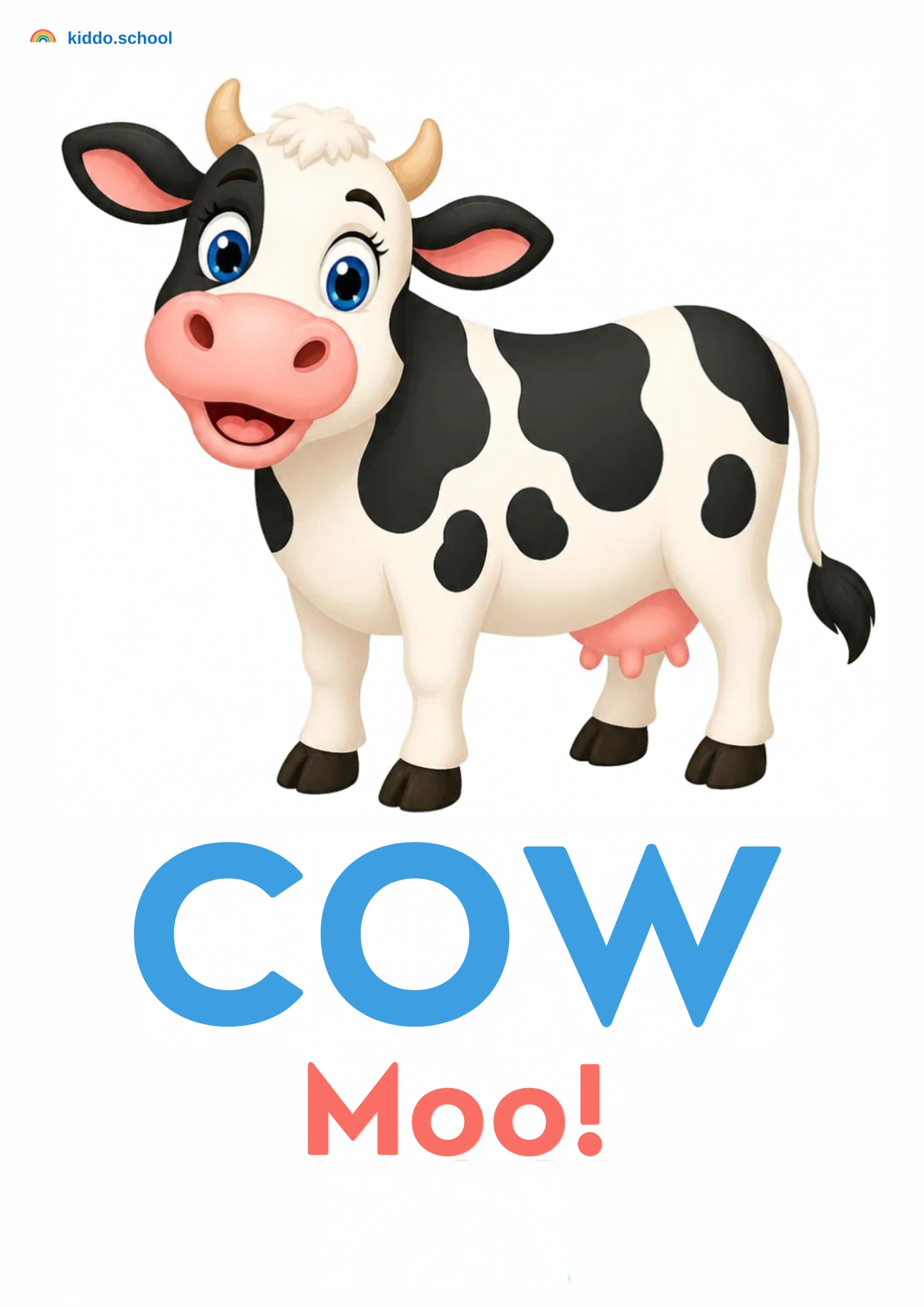
What is this?
A cow is a big farm animal that says moo — a long, low sound that rumbles, which makes it perfect for toddlers who love to hold a noise.
What does it mean?
Moo teaches sustained voicing: holding one sound for three whole seconds is breath control that later helps with singing, blowing out candles and long sentences.
What does the child need to know?
Cows live in fields and give us milk — say that link once at breakfast and let it sit. Toddlers file connections away quietly and retrieve them weeks later with no warning.
Why this matters
Farm animals are the classic first vocabulary set, and the cow is its anchor. A child who owns moo owns the key that unlocks every farm book on the shelf.
What it teaches
Breath control and sustained voicing, first animal categories (farm), and the seed of cause-and-effect talk — the cow makes the milk.
Words to learn
cowmoomilkfarmbiggrass
Say this to your child
“"Big cow! The cow says moooooo. Can you hold your moo? Hands up like horns — mooooo! Milk comes from cows, so every breakfast gets a little moo."”
Step by step
- Put the card where your toddler sits and say cow, then deliver one enormous moo together.
- Add the body: hands curled at the sides like horns, a slow sway, one long moo per sway.
- Hunt cows in the room and in books — toy cows, cow spots on pajamas, any black-and-white pattern gets called a cow today.
- When your toddler answers with an oo or a whispered moo, moo it straight back bigger; their attempt is the spark, your echo is the applause.
- Slip the word into the week: moo at breakfast while the milk pours, moo at a cow in a field through the car window.
Look closer at the picture
The card shows a cow saying moo. Find the cow, find the moo, and ask if the cow looks big or little — size words ride along for free.
Ask your child
"Where is the cow?" "What does the cow say?" "Can you hold a long, long moo?" "What do we pour on our porridge — where does it come from?"
What your child can say or do
A long "moooo" with the whole face involved is the target, but "oo!" or a tiny hum counts as the attempt. Some toddlers will moo at the fridge for a week — that is the lesson working.
Out in the real world
Field trips do the heavy lifting: a cow behind a fence, a milk carton in hand, a cow puppet at story time. Name the link between milk and cow once per sighting, no quiz attached.
Try it together
Moo choir: everyone in the family moos at a different pitch — high moo, low moo, tiny squeaky moo. Your toddler conducts with a spoon and learns that voices come in sizes.
Understanding check
Ask what the cow says with the card hidden. Any moo-shaped noise passes. Then pour milk at breakfast and pause — if a moo arrives unprompted, the connection is built and the lesson is done.
Parent tips
Hold your moo longer than feels reasonable — toddlers stretch to match a grown-up’s length, and the stretch is the exercise. Farm books double the mileage of this single card.
Staying safe
Watch real cows from over a fence or gate, never inside the field. A cow is many times bigger than a toddler, and even friendly ones do not understand small visitors.
This lesson pairs with the Cow flashcard in the library — print it, show it, keep it on the fridge. Back to Animals & Sounds (Toddler 5).