
Dog — a step-by-step lesson for grown-up and child
This lesson turns the animal most toddlers meet first into a two-minute daily game: see the dog, make the woof, find more dogs, and let the word grow out of the sound at its own speed.
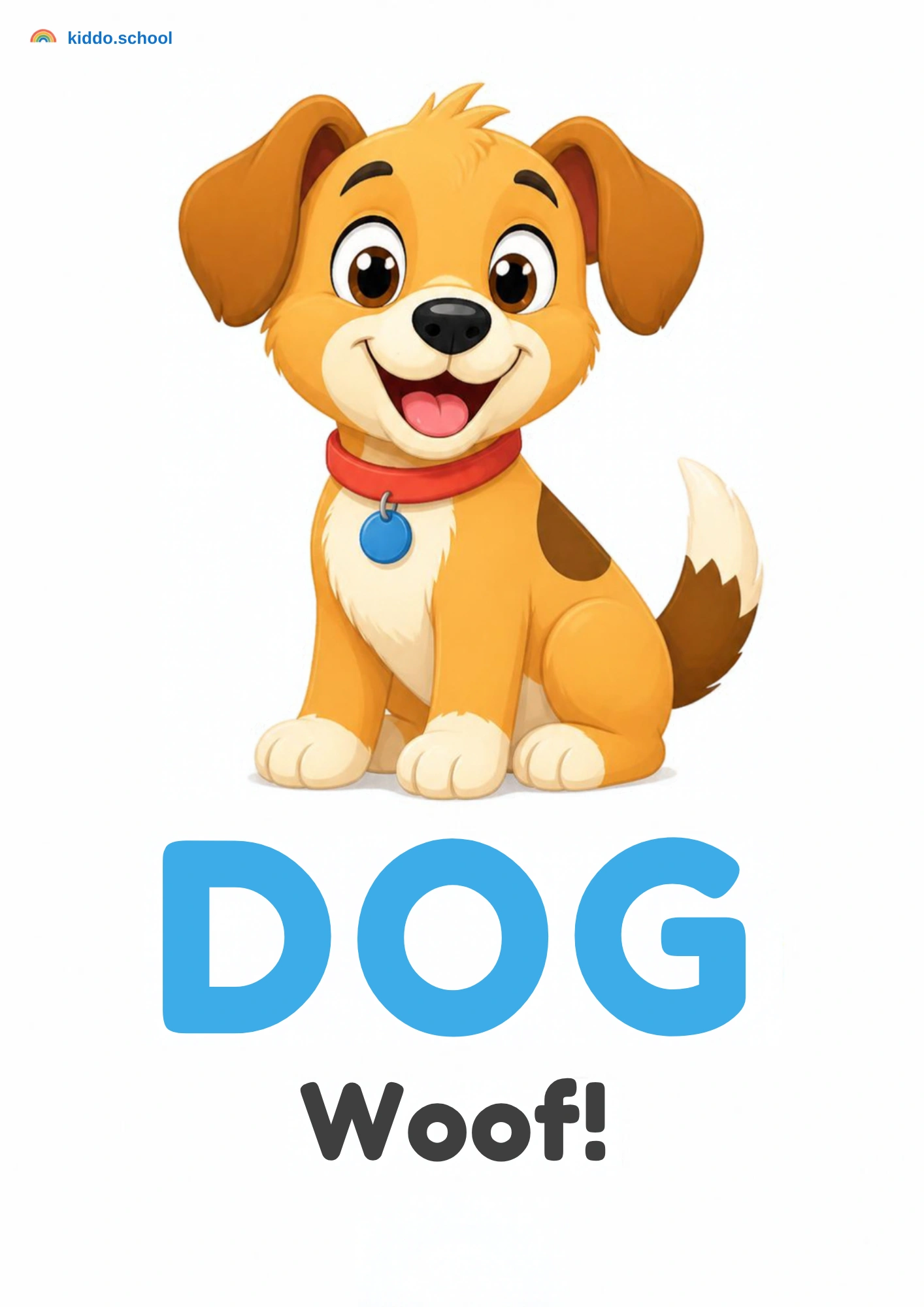
What is this?
A dog is a furry animal friend with a tail and a big bark — and its sound, woof, is one of the very easiest noises for a two-year-old mouth to try.
What does it mean?
Sounds come before names at two: woof often arrives weeks before dog, and that is not a mistake but the normal order. Every woof your toddler attempts is language practice in disguise.
What does the child need to know?
The sound is woof — toddlers deliver woof-woof, wuff, or an excited pant, and every version counts. The name often lands as doggie or gog first; the short form comes later on its own.
Why this matters
Dogs fill a toddler’s week: walks, parks, books, a neighbour’s garden. That constant replay makes this card the highest-repetition word lesson in the deck, and repetition is the fuel of the vocabulary explosion.
What it teaches
Vocabulary growth, sound imitation, and the first link between a picture and a real thing spotted out loud — the seed of all later labelling.
Words to learn
dogwoofbarktailpuppywalk
Say this to your child
“"Look — a dog! The dog says woof. Can you make the woof? Woof woof! Every dog we meet says woof: dogs in books, dogs out the window, dogs sleeping in the sun."”
Step by step
- Hold the card up and name it twice — dog, dog — then add the sound in the same breath: the dog says woof.
- Make the sound together, one woof per clap, so the noise has a beat small hands can join.
- Hunt dogs where dogs live: a picture book, the toy basket, the window on walk day. Each found dog earns its woof.
- Treat every attempt as an answer — a grunt, a wuff, a point at the card all get a warm "yes, woof!" back.
- Return on odd days this week: a breakfast woof, a bath-time woof, until your toddler fetches the card to demand the game.
Look closer at the picture
The card shows a dog saying woof, and the sound word sits right there to point at. Ask your child to find the dog, then to find the woof — two finds, one picture.
Ask your child
"Where is the dog?" "What does the dog say?" "Can you make the woof sound?" "Can you spot a dog in this book?"
What your child can say or do
Expect woof long before dog — a proud "WOOF!" is a complete answer at two. Some toddlers point at the card and wait for you to perform; pointing is an answer too, and an enthusiastic pant counts double.
Out in the real world
A real dog on the street is the card come alive. Stop for a second, whisper "woof" together, and the lesson keeps teaching long after the card is back in the drawer.
Try it together
Dog walk: crawl across the rug together, woofing at each cushion as if it were a tree. Then swap jobs — your toddler is the dog, you hold the imaginary lead, and the walk ends at the armchair park.
Understanding check
Show the card and ask what the dog says. A woof, a wuff or a happy pant all pass. Then open another book to a dog page — if the sound appears there too, the learning has left the card and settled in.
Parent tips
Pair sound and name every single time: "dog — woof!" The two words teach each other. If your toddler says gog, echo dog once, warmly, and keep playing; correction can wait for the school years.
Staying safe
Real dogs stay behind their owner’s rules: ask the grown-up with the lead before anyone pets, and let your toddler wave and woof from your hip until the answer is yes.
This lesson pairs with the Dog flashcard in the library — print it, show it, keep it on the fridge. Back to Animals & Sounds (Toddler 5).