
Goat — a step-by-step lesson for grown-up and child
This lesson takes the deck’s most confusing sound pair — goat and sheep both say something like maa — and turns the mix-up into the game.
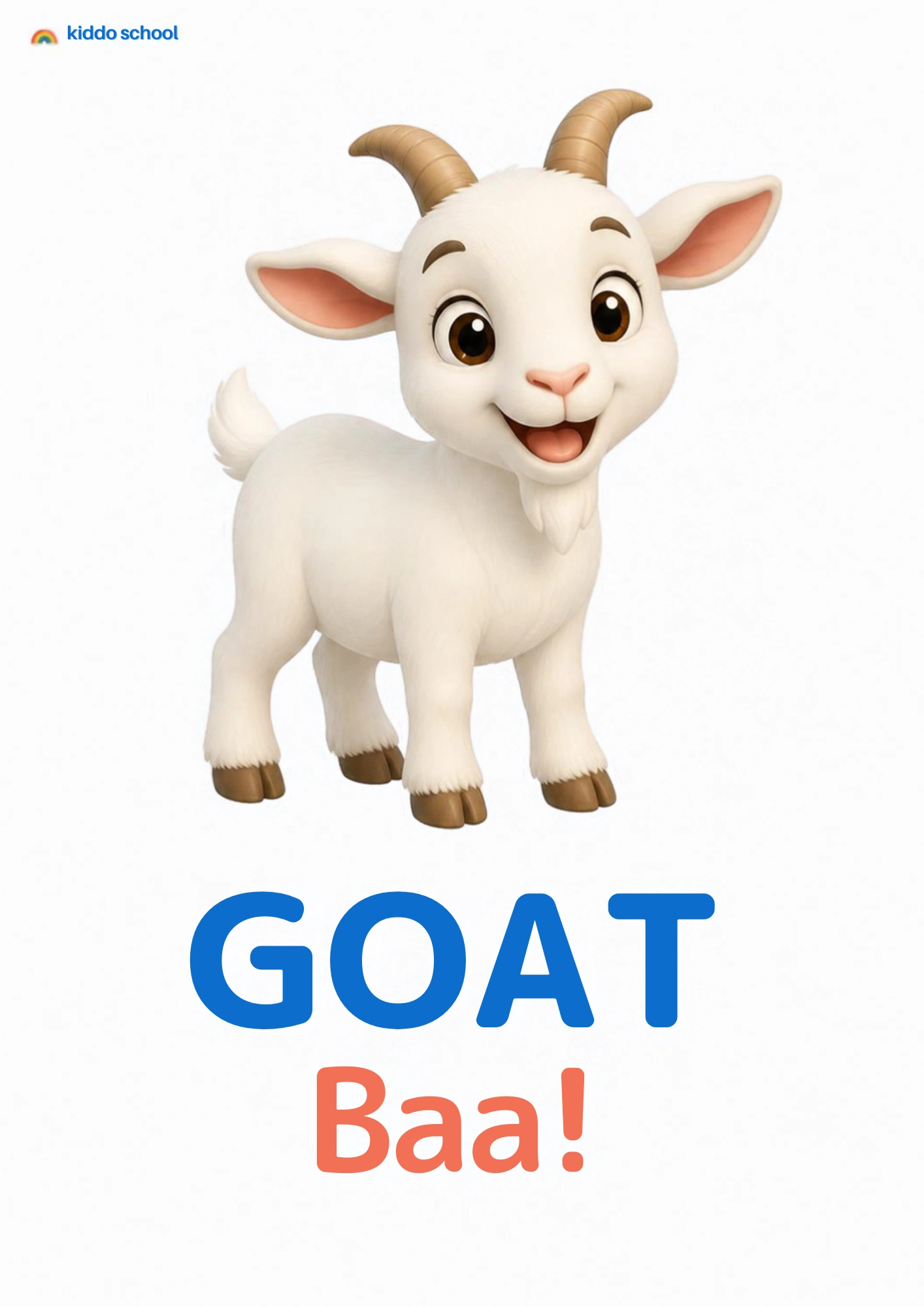
What is this?
A goat is a farm animal with little horns and a beard that says maa — a sound that sits between the sheep’s baa and a proper toddler yell.
What does it mean?
Telling baa from maa is real sound discrimination: two close noises, two different animals. Sorting close pairs is ear-training that phonics will reuse for years.
What does the child need to know?
Goats eat nearly everything and usually answer when you call — a reply that lands like a conversation, and turns a farm fence into the best show in town. Petting zoos have the hand-washing rule for a reason.
Why this matters
The goat card sharpens listening at the exact moment a toddler needs it, and it gives farm visits a main event: the animal that talks back.
What it teaches
Fine sound discrimination between baa and maa, feature-spotting (the beard), and hygiene habits that stick from the first farm trip onward.
Words to learn
goatmaabeardhornsfarmwash
Say this to your child
“"A goat! The goat says maa! Can you say maa? Look — a little beard under its chin, and horns on top. The goat answers when you call: maa!"”
Step by step
- Show the card and say goat, then maa — with a slight yell in it, unlike the sheep’s soft baa.
- Put the sheep card next to it: baa for sheep, maa for goat, and let your toddler point to the right card each time you make a sound.
- Hunt goats in books and toy boxes; find the beard every time — it is the goat’s badge.
- When baa and maa get swapped, smile and model once — "goat says maa!" — then let the game continue; the ears will sort it within the week.
- Save a farm or petting-zoo trip if you can: call maa at the fence, wait, and enjoy the reply. Wash hands straight after.
Look closer at the picture
The card shows a goat saying baa in the set’s alt text, but the picture’s beard and horns are the details to find. Ask where the beard is and what sits on top of the head.
Ask your child
"Where is the goat?" "What does the goat say?" "Can you find the goat’s beard?" "Who says baa, and who says maa?"
What your child can say or do
"MAA!" with attitude, aimed at the sheep card half the time. At the fence, a toddler maa that gets a real maa back is the sound of a lifelong animal-lover being born.
Out in the real world
Petting farms and city farms keep goats at kid height behind fences — the perfect setup. Call maa, get the answer, then head straight for the hand-wash.
Try it together
Baa-or-maa: you make one of the two sounds, your toddler slaps the right card. Start slow, speed up, and let them call the sounds for you to answer — being the caller is the reward.
Understanding check
Ask what the goat says and where its beard is. A maa plus a chin-point passes fully. Mixed-up baas this week are fine — the discrimination arrives on its own schedule.
Parent tips
The pointing version of this game matters more than the saying: toddlers can show they hear a difference before their mouths can make one. Hands get washed at every farm, no exceptions, no negotiation.
Staying safe
Goats nibble fingers, sleeves and anything dangling — keep hands flat and snacks zipped away. Every animal touch at a petting zoo ends at the sink, before anything goes near a mouth.
This lesson pairs with the Goat flashcard in the library — print it, show it, keep it on the fridge. Back to Animals & Sounds (Toddler 5).