
Pig — a step-by-step lesson for grown-up and child
This lesson lets the pig be ridiculous on purpose: a snuffle along the carpet, an oink with a wiggly nose, and a farm word that sticks because it is funny.
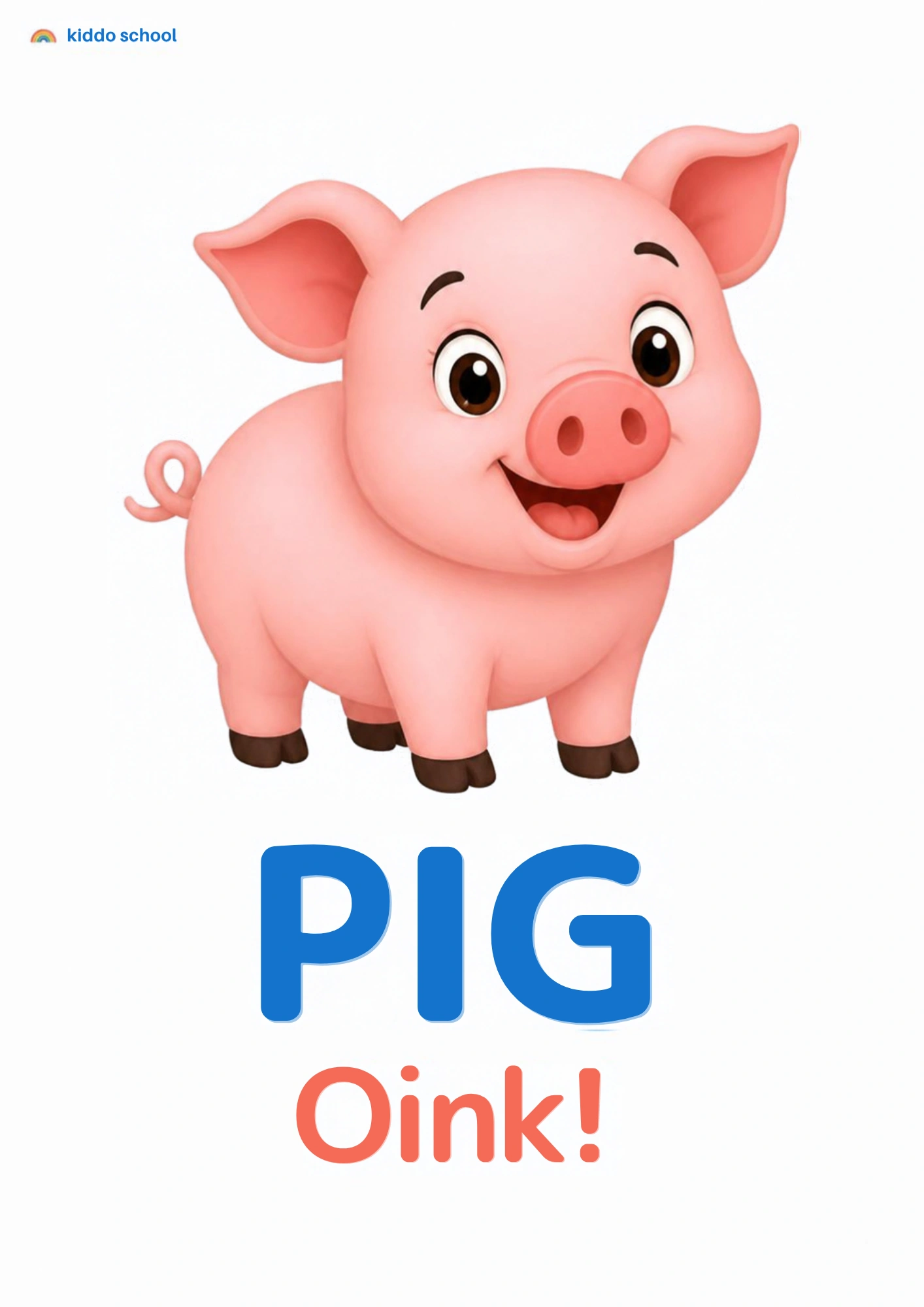
What is this?
A pig is a round farm animal with a snout and a curly tail that says oink — a two-beat grunty noise that toddlers find irresistible.
What does it mean?
Oink asks for a nasal, scrunchy sound unlike any other in the deck. New mouth shapes are the point: each odd noise stretches your toddler’s sound-making range.
What does the child need to know?
Pigs snuffle and root around with their strong noses, which is why the snuffle game belongs to this card. Cartoon pigs and real pigs look different — "pigs come in all shapes" settles it in one line.
Why this matters
Funny sounds get repeated, and repeated sounds get learned. The pig is the card a toddler requests again and again, which makes it self-teaching once it lands.
What it teaches
Sound variety and imitation, body-part naming (snout, tail), and comedic timing — the first jokes toddlers get are sound jokes.
Words to learn
pigoinksnoutsnufflecurlymuddy
Say this to your child
“"A pig! The pig says oink oink. Can you oink? Push your nose out like a snout — oink, oink! Pigs love to snuffle in the mud with their strong noses."”
Step by step
- Show the card and say pig, then oink oink with your finger popped on your nose for the snout effect.
- Snuffle like a pig: push a soft ball along the rug with your nose, oinking as you go. Hand the ball over and let the snuffling begin.
- Hunt pigs in books and toy boxes; spot the curly tail wherever a pig hides.
- When your toddler delivers an oyk, a snort or pure giggling, oink back louder — the laugh is the lesson working, not an interruption.
- Keep oink on rotation all week: oink at bath time, oink at the muddy puddle on the walk, oink at bedtime once for luck.
Look closer at the picture
The card shows a pig saying oink. Find the pig, find the oink, and ask where the pig’s nose is — the snout is this card’s teaching detail.
Ask your child
"Where is the pig?" "What does the pig say?" "Can you wiggle your nose?" "Can you snuffle like a pig?"
What your child can say or do
"Oink!" with a finger on the nose, or a pure snort which is arguably better. Expect oink to leak into dinner time and the supermarket — pigs travel well.
Out in the real world
Muddy puddles are pig habitats: after rain, point and say "a pig would love that puddle." Farms and story books bring real snouts, but the puddle line works on any street.
Try it together
Snuffle hunt: hide three small toys in the rug’s folds, then crawl and snuffle them out, nose first, oinking at each discovery. Toddlers who refuse every other game will snuffle.
Understanding check
Ask what the pig says with the card out of sight. An oink, a snort or a nose-wiggle all pass. Watch for the nose-touch gesture later in the week — the snout has been filed away.
Parent tips
Let the oink be as loud as it wants at home and as quiet as a whisper in public — the loud/quiet switch is a bonus lesson hiding inside the silliness. Muddy-puddle talk earns you extra miles in bad weather.
Staying safe
Real pigs are farm animals with strong bodies and no idea how small a toddler is — admire from the fence side, hands flat, at any petting farm.
This lesson pairs with the Pig flashcard in the library — print it, show it, keep it on the fridge. Back to Animals & Sounds (Toddler 5).