
Rooster — a step-by-step lesson for grown-up and child
This lesson gives your toddler the longest sound in the set and permission to fail gloriously: nobody finishes cock-a-doodle-doo, everyone finishes laughing, and both outcomes teach.
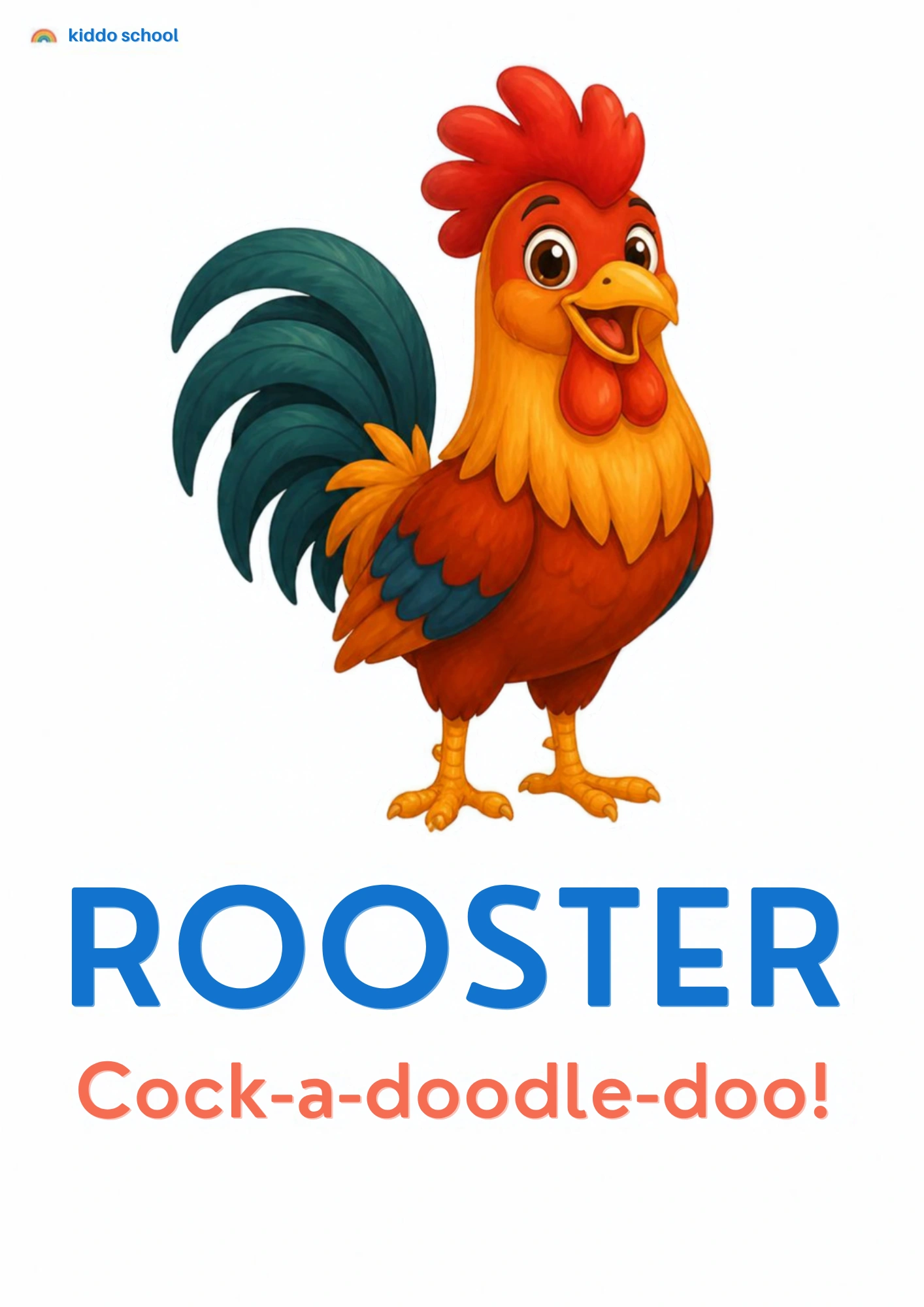
What is this?
A rooster is the farm’s alarm clock — a proud bird that shouts cock-a-doodle-doo, a five-syllable monster of a sound built for attempting, not perfecting.
What does it mean?
Long sounds teach chunking: cock-a-doo-doodle arrives in pieces, and piecing sounds together is the same skill your toddler will later use on long words.
What does the child need to know?
Doodle-doo is a perfectly respectable toddler version, and many children settle there for a year. The full version grows on its own; nothing needs fixing.
Why this matters
This card is the deck’s comedy summit — and the morning slot is built in, because roosters own sunrise. A sound with a scheduled daily stage repeats itself.
What it teaches
Multisyllable chunking, breath support for long sound chains, and the social joy of shared nonsense — family jokes are language glue.
Words to learn
roostercock-a-doodle-doomorningloudsunwake
Say this to your child
“"The rooster! Cock-a-doodle-doo! Shout it with me — cock-a… doodle… doo! It is a giant sound — well done, what an effort. The rooster shouts it when the sun comes up."”
Step by step
- Show the card and say rooster, then fire the full cock-a-doodle-doo with total commitment.
- Try it as a team: you take cock-a-, your toddler takes -doodle-doo, then swap. Teamwork makes the monster manageable.
- Hunt roosters in farm books and on toy shelves; every found rooster gets the alarm.
- When your toddler’s version collapses into breathless giggles at syllable two, that is success — applaud the collapse and try again.
- Give the sound its job: a sleepy doodle-doo when the curtains open each morning this week, until the whole house knows the routine.
Look closer at the picture
The card shows a rooster saying cock-a-doodle-doo. Find the rooster, find the sound words, and ask whether the rooster looks proud — the comb-on-top posture is the picture’s joke.
Ask your child
"Where is the rooster?" "What does the rooster say?" "Can you say the giant sound?" "Who wakes the farm up in the morning?"
What your child can say or do
"Doodle-doo!", "doo-doo-doo!" or an explosive cough of syllables — every attempt is correct. Some toddlers will assign the sound to the sunrise permanently; mornings have been worse.
Out in the real world
Farm visits and alarm-clock talk both feed this card. When a real alarm or phone rings, compare: "the rooster is the farm’s alarm — cock-a-doodle-doo!"
Try it together
Wake the house: your toddler rooster waits outside the bedroom door, then bursts in with the biggest possible doodle-doo to wake the teddy bears, one bear at a time. Repeat until everyone is awake and nobody minds.
Understanding check
Ask what the rooster says. Any multi-syllable attempt passes; two syllables pass too. The real test is spontaneous: tomorrow’s curtain-opening tells you if the sound found its slot.
Parent tips
Never smooth this sound into correctness — the struggle is the exercise. Do the duet version at the breakfast table and let your toddler own the loudest syllable; ownership breeds repetition.
Staying safe
Farm roosters are loud up close and can flap surprisingly high — hold your toddler at the gate and let the sound carry to you both from a step back.
This lesson pairs with the Rooster flashcard in the library — print it, show it, keep it on the fridge. Back to Animals & Sounds (Toddler 5).