
Brave — a step-by-step lesson for grown-up and child
This lesson names the feeling your toddler produces daily without applause: brave. The card shows a child being brave by trying, and the lesson retells those moments as true stories with heroes.
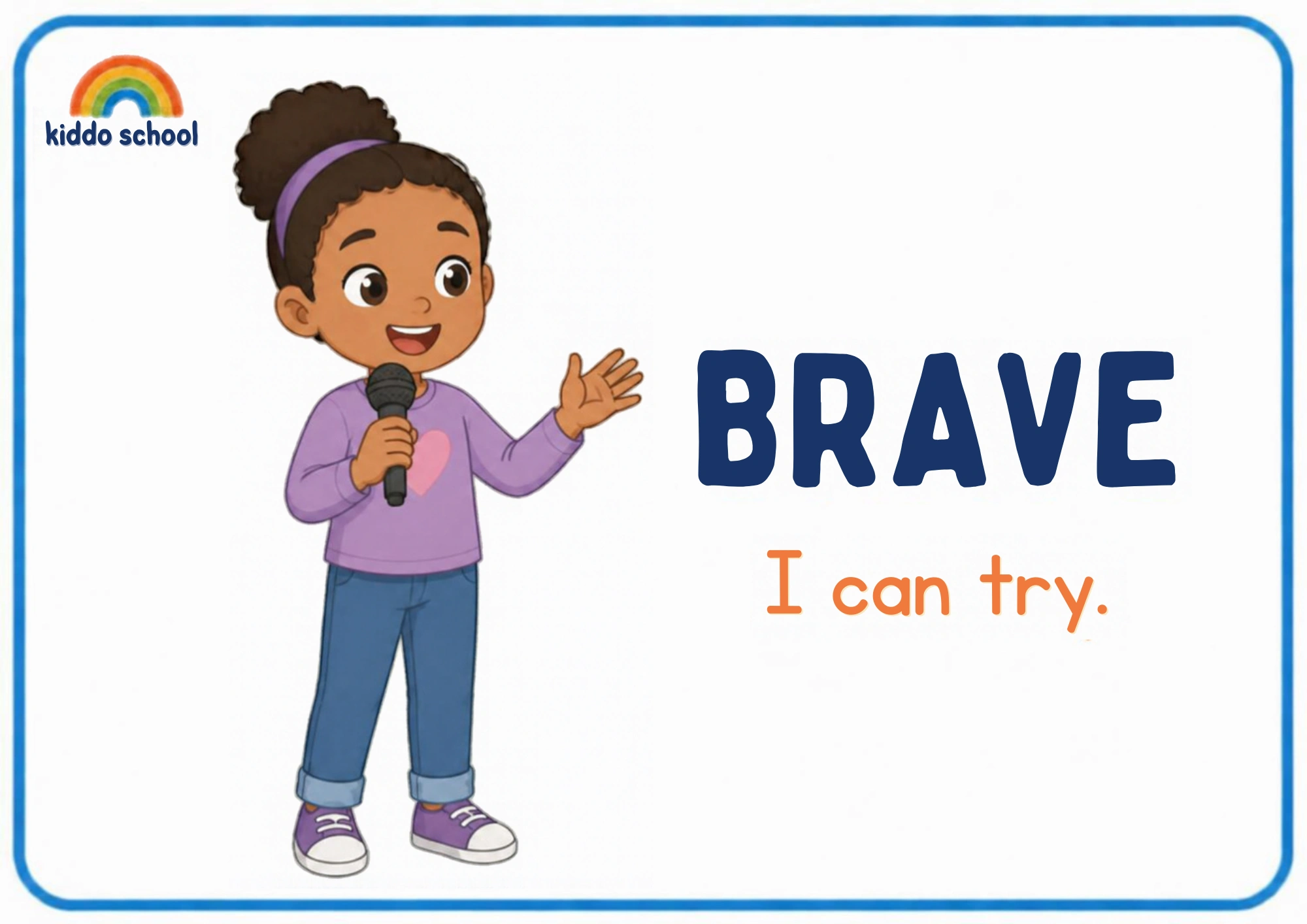
What is this?
Brave is the wobbly-and-anyway feeling — the big slide attempted, the loud dryer endured, the new food tasted. The card shows it honestly: a child being brave by trying, not by winning.
What does it mean?
Brave is scared plus one step: the two feelings share a body, and the story that joins them — it was big, the wobble was real, and then you did it — is what teaches a toddler their own courage.
What does the child need to know?
Keep the word for genuine effort by your toddler’s own measure — their hard, not yours. Expect a grin, a brave repeated, or the deed done again immediately. All pass; the immediate repeat most of all.
Why this matters
Hard things arrive hourly at two, and each one is a story waiting for its ending. A named brave turns scattered trials into a self-image with a spine.
What it teaches
Confidence, effort vocabulary, and the fear-to-action arc — emotional storytelling that makes courage a habit instead of an accident.
Words to learn
bravetrybigstepscareddid
Say this to your child
“"Brave! This child is trying the big thing — see the brave face? Brave is feeling scared, and doing it anyway. You know what? You do that all the time! You are brave. Let us tell the story of when you did it."”
Step by step
- Show the card and tell its story: brave — this child is trying something big, even though it feels scary. Brave means scared, and doing it anyway.
- Make the face together: determined chin, deep breath, fists ready. The posture is half the feeling — borrow it freely.
- Catch it live at the next wobble-and-try: you felt scared, and you went down the slide anyway — brave! Say it while the landing is still bouncy.
- Retell the day’s brave moment at dinner as a three-beat story: the big thing, the scared feeling, the doing it anyway. Your toddler takes the hero role, truthfully.
- Keep real danger where it belongs: brave is for the child’s own hard things — grown-ups own roads, water and heights. Say the boundary once so the word stays safe to use.
Look closer at the picture
The card shows an illustrated child showing bravery by trying — one determined face mid-attempt. Ask your toddler to find the brave child, then to make their own brave face and take one big pretend step.
Ask your child
"Where is the brave child?" "Can you make a brave face?" "What big thing did you try today?" "What happened next?"
What your child can say or do
A determined march toward the thing, a brave whispered at the top of the slide, or the story retold with the hero’s part pointed at themselves — all are the word moving in. Wobbles still happen; brave includes them.
Out in the real world
Brave moments line up daily: the hand-dryer, the big step, the new babysitter. Catch one, tell it as a story, and the word starts doing quiet work in the background of every hard thing.
Try it together
Story-theatre: retell today’s brave moment with toys playing the parts — the slide, the wobble, the try. Your toddler directs, corrects and casts themselves as the hero, which is accurate casting.
Understanding check
At the next hard thing, listen afterwards: brave, did it, or a point at the card during the retelling all pass. Then watch for the second attempt happening sooner — courage compounding is the real report card.
Parent tips
Save the word for genuine effort by your toddler’s own measure — brave spent on easy things goes bankrupt fast. Tell the wobble part honestly: the scared bit is what makes the brave bit mean something.
Staying safe
Brave is for wobbles, not hazards: roads, water, fires and high places stay grown-up decisions, always and without negotiation. Say it plainly — you are brave, and I keep you safe — so both truths can hold hands.
This lesson pairs with the Brave flashcard in the library — print it, show it, keep it on the fridge. Back to Emotions & Feelings (Toddler 7).