
Calm — a step-by-step lesson for grown-up and child
This lesson practises the deck’s quietest face while nobody needs it: calm, rehearsed in soft moments so it can be found again in loud ones. Two breaths at a time — that is the whole method.
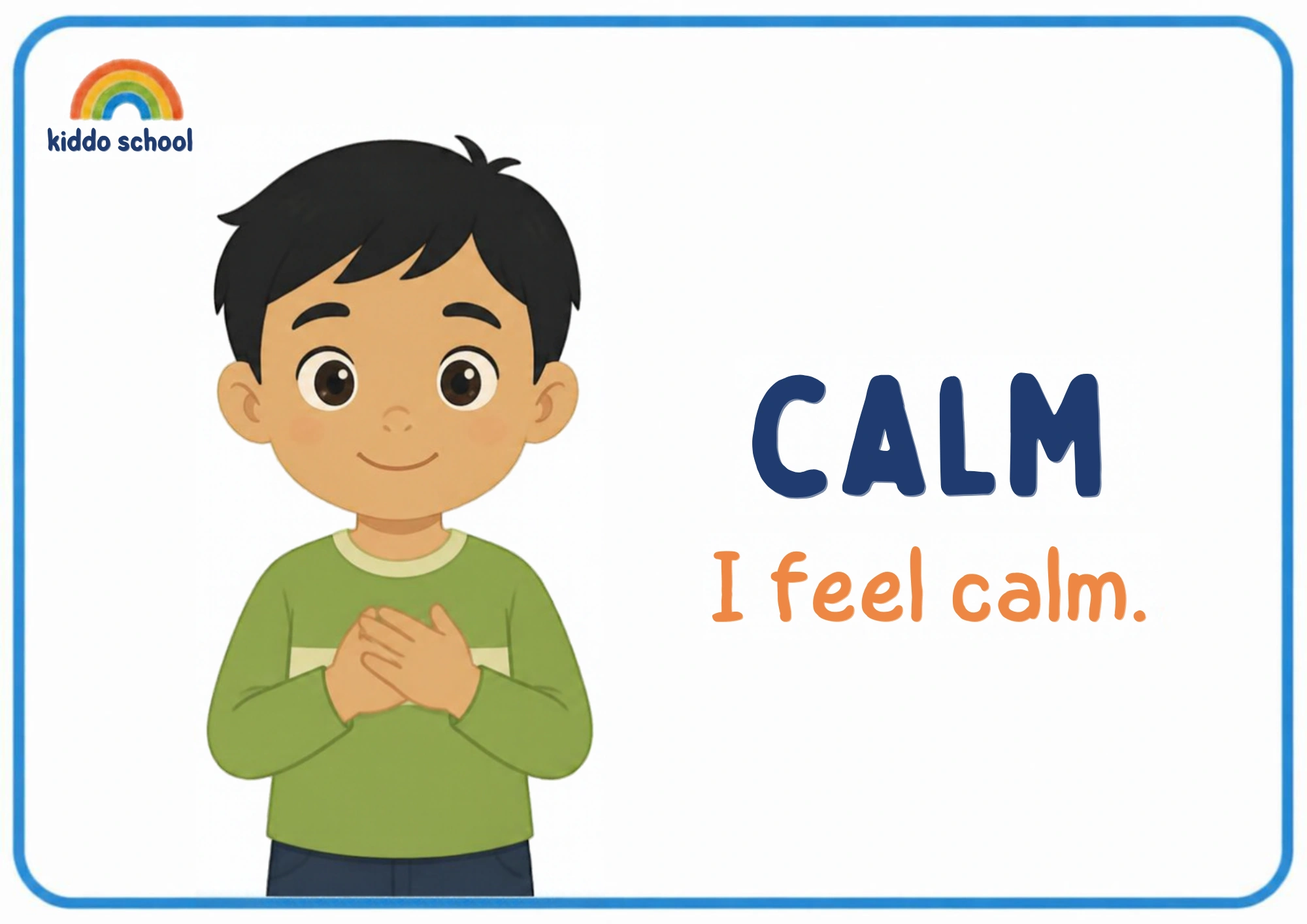
What is this?
Calm is the settled feeling — slow breath, easy face, a body that is not in a hurry. The card shows it as a face; your toddler can feel it in two slow breaths, right on cue.
What does it mean?
Calm is the first feeling toddlers can switch on deliberately: breath is the one dial a two-year-old can actually turn. Practised daily, the slow breath becomes a tool the body owns before the words do.
What does the child need to know?
Expect a copy-cat breath, a soft sigh, or a solemn point — all are answers. Teach calm when everyone is already calm; asking for it mid-storm is like fishing in an empty bath.
Why this matters
Every storm needs a harbour. The calm face, practised in peace, becomes the picture your toddler’s body remembers when the next big feeling blows through.
What it teaches
Breath control, self-regulation in embryo, and quiet-time habits — the skill that turns every later meltdown shorter and every bedtime softer.
Words to learn
calmbreathslowquietsoftstill
Say this to your child
“"Calm. This face is feeling calm — see the soft eyes? Let us breathe like the calm face: smell the flower… and blow the feather. Quiet body, slow breath. This is calm. Lovely."”
Step by step
- Show the card in a soft voice: calm — this face is feeling calm. Let the word itself arrive slowly.
- Breathe together: sniff an imaginary flower — breathe in slow — and waft a feather — breathe out long. Two rounds is plenty; five gets silly.
- Make the calm face in a mirror: loose shoulders, easy mouth, sleepy-blinking eyes. Let your toddler study their own quiet face.
- Play a quiet game — rocking a toy to sleep, listening for the fridge hum — and name the feeling during it: this is calm. We are being calm right now.
- Practise at odd, peaceful moments all week: after the bath, in the buggy, before the story. The rehearsed feeling becomes findable on demand.
Look closer at the picture
The card shows an illustrated child having a calm feeling — one settled, easy face. Ask your toddler to find the calm face, then to make their own face soft and slow beside it.
Ask your child
"Where is the calm face?" "Can you make your face calm?" "Can you smell the flower with me?" "What do we do with a slow breath?"
What your child can say or do
A copy-cat breath with a wobbly exhale, a sigh from the belly, or a body that suddenly settles — the body speaks first here. Some toddlers shush you gently; being calm together is the whole exercise.
Out in the real world
Calm moments hide in the day: the buggy ride, the bath, the last story. Say the word during two of them and the feeling gets a daily home — ready for the day it is needed as a rescue.
Try it together
Flower-and-feather: sniff an imaginary bloom (slow in), waft a feather off your palm (slow out). Do it side by side, then let your toddler lead. Two breaths, three times a day, builds a regulator.
Understanding check
At the next small wobble, offer the breath: shall we smell the flower? A breath attempt, a settling body, or a point at the calm card all pass. Bodies that find calm faster than last week are the real report card.
Parent tips
Rehearse in peace or not at all — calm demanded mid-meltdown collapses. Keep your own breath slow and visible while you teach; toddlers borrow the nervous systems of the people they love.
Staying safe
Breathing games are the safest card in the deck; the honest note is about expectations — calm is a practice, not a switch, and storms still happen. Never use it as a punishment or a command to feel differently.
This lesson pairs with the Calm flashcard in the library — print it, show it, keep it on the fridge. Back to Emotions & Feelings (Toddler 7).