
Silly — a step-by-step lesson for grown-up and child
This lesson names the feeling behind the fart jokes and the walking-backwards: silly. The card gives the giggles a face, and the day gets a sanctioned time and place for pure nonsense.
What is this?
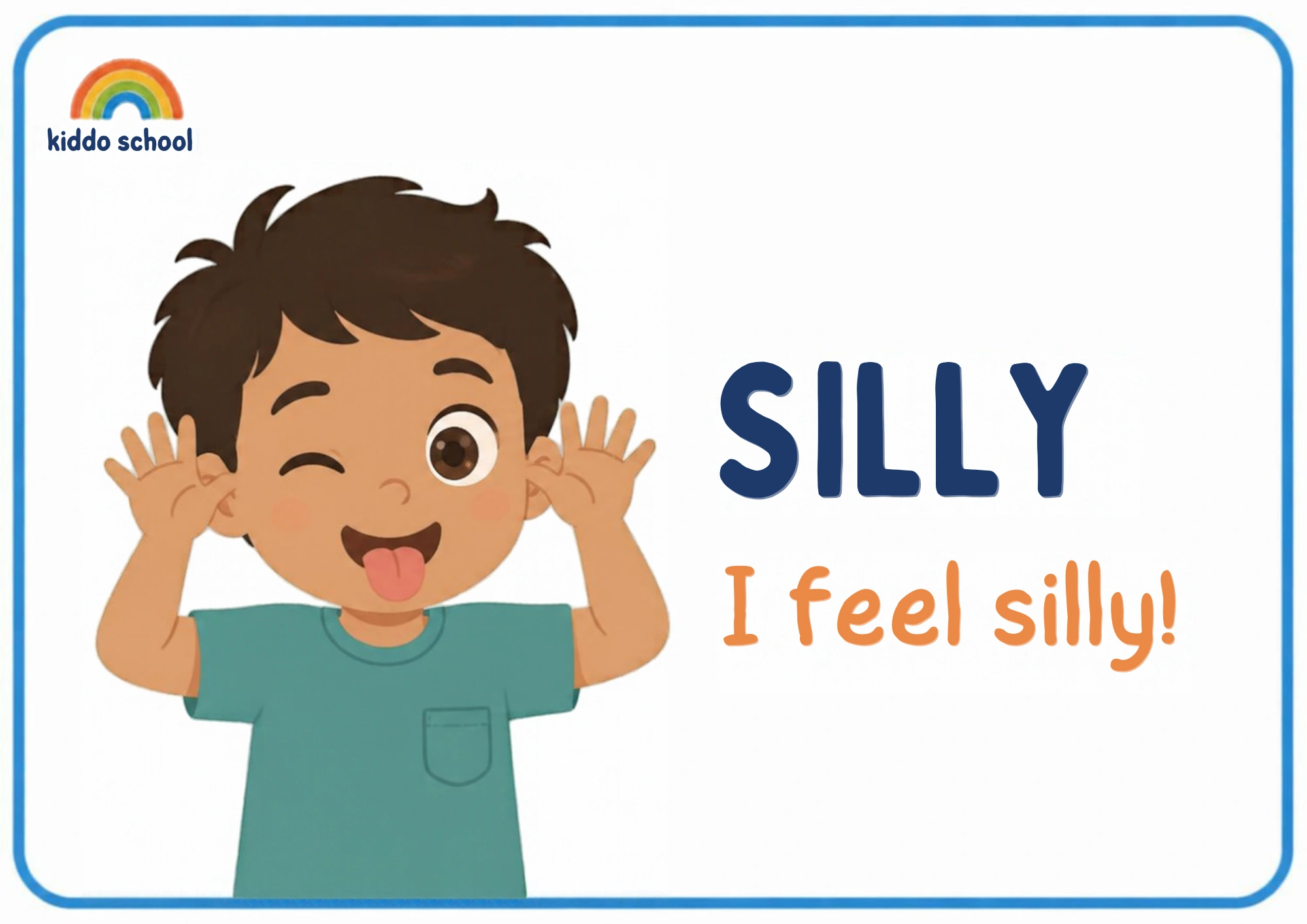
Silly is the playful feeling — tongue out, googly eyes, a body that has decided everything is funny. The card shows it as a face; your toddler has been demonstrating it for months.
What does it mean?
Naming silly hands your toddler a word for deliberate play — the feeling they produce on purpose to make things fun. A feeling with a name can be requested, scheduled and shared, which is comedy in embryo.
What does the child need to know?
Expect an instant face, a giggle, or silly! shouted at full volume. The word lands fast because the feeling needs no introduction — your only job is the name and the venue.
Why this matters
Silly is the deck’s release valve: ten seconds of deliberate nonsense can reset an afternoon. A named, scheduled silly beats a chaotic one every time.
What it teaches
Humour development, deliberate play, and emotional vocabulary for joy — plus the social skill of reading when silliness is welcome.
Words to learn
sillyfunnyfacegigglegoofyjoke
Say this to your child
“"Silly! Look at this face — what a silly face! Can you make one? Tongue out… googly eyes… oh no, TOO silly! Silly is for playtime. Silly makes us laugh — your turn to be silly now."”
Step by step
- Show the card and meet it with a grin: silly — this face is being so silly. Let your eyebrows start the game.
- Pull silly faces together: tongue out, puffed cheeks, crossed eyes. A mirror makes it a tournament; keep the rounds short.
- Name the feeling while the giggles run: you are being so silly! The word attaches itself — no drilling required.
- Give silly its frame: silly time lives in play, not at the dinner table or the shop checkout. Say the frame once, kindly, and hold it.
- Let your toddler run a round: they make the face, you do the laughing. The comedian-audience swap is the social half of the lesson.
Look closer at the picture
The card shows an illustrated child having a silly feeling — one tongue-out, playful face. Ask your toddler to find the silly face, then to make their silliest face right back at it.
Ask your child
"Where is the silly face?" "Can you do a silly face?" "Who is being silly right now?" "When is silly time?"
What your child can say or do
An instant tongue, a cross-eyed stare, or silly! barked like a command — the feeling arrives faster than any other card in the deck. Expect to be commanded to look; the audience is part of the game.
Out in the real world
Silly breaks out everywhere: the bath, the buggy, the wrong-hat game. Name it when it comes, enjoy it, and let the frame do the steering — silly named is silly shared.
Try it together
Silly-face tournament: two players, one mirror, faces escalate until someone laughs. Everyone loses, everyone wins — then a deep breath ends the tournament, and the silliness folds back into the afternoon.
Understanding check
Ask at a calm moment: show me the silly face. An instant tongue-out is a pass with honours. Then watch the frame: a toddler who saves the silliest material for playtime has learned the whole lesson, frame included.
Parent tips
Join in fully — silly is the one feeling that dies without an audience. Keep the frame firm and cheerful: silly has a time, and grown-ups will say when it is. That boundary is what makes the game last.
Staying safe
Silly bodies bump into things: the tournament stays on soft floors, away from furniture corners and stairs. The honest note — silliness can tip into wildness fast, and the grown-up owns the timer, not the toddler.
This lesson pairs with the Silly flashcard in the library — print it, show it, keep it on the fridge. Back to Emotions & Feelings (Toddler 7).