
Surprised — a step-by-step lesson for grown-up and child
This lesson turns the deck’s funniest face into a game: surprise, manufactured gently at home, named out loud the instant the eyebrows shoot up.
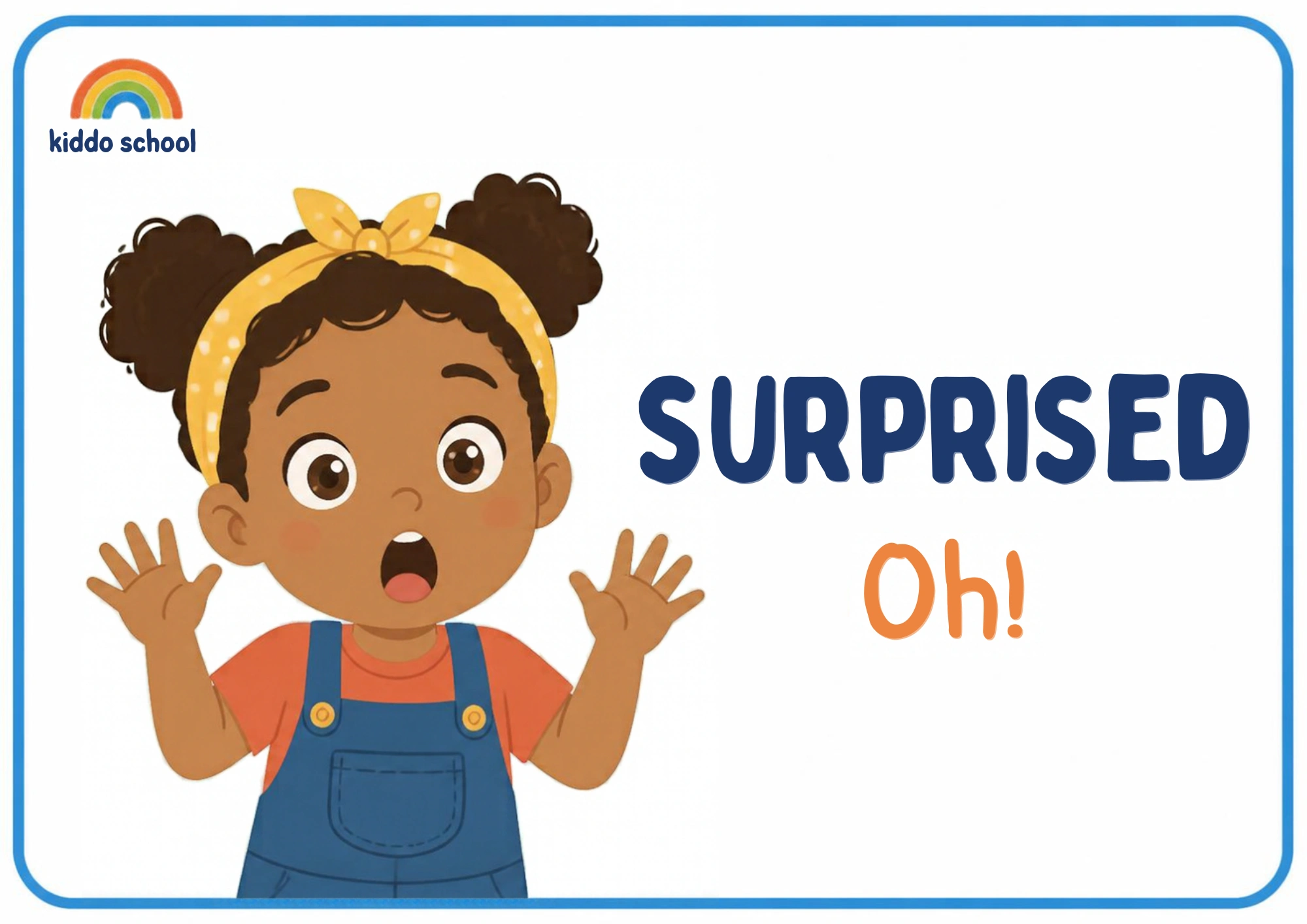
What is this?
Surprised is the sudden feeling — eyebrows high, mouth open, a gasp before the laugh. It arrives when the world does something unexpected, and toddlers meet it daily: peek-a-boo, pop-up toys, disappearing biscuits.
What does it mean?
Surprise is the friendly edge of the big feelings: it startles without hurting, and it teaches that feelings arrive suddenly and pass quickly. It is also the gateway card — once the face game is fun, the heavier faces feel lighter.
What does the child need to know?
The gasp is the answer: a surprised oh!, a squeal, or both eyebrows climbing are complete. Manufacture the feeling small and kind — gentle reveals, never jumps — and name it while the eyebrows are still up.
Why this matters
Surprise hides inside the games toddlers already play: covered cups, pop-up books, socks that turn out to be on hands. Every reveal is a rehearsal with the word attached.
What it teaches
Feeling vocabulary, sudden-change tolerance, and face-reading — plus the comedy timing that makes toddlers the best audiences on earth.
Words to learn
surprisedwowohpeekpopgasp
Say this to your child
“"Surprised! Oh — look at that face! Eyebrows up, mouth open: ohh! Watch the cup… one, two… pop! Surprised! Can you do the surprised face? Now you hide the toy and surprise me!"”
Step by step
- Show the card with drama: surprised — look at those eyebrows! Let your own eyebrows join in from the first word.
- Make the face together: hands on cheeks, mouth open, a big ohh! Practise it twice, then keep it in your pockets for later.
- Play a gentle reveal: hide a toy under a tea towel, count to two, whisk it off and gasp surprised! together. Repeat until the giggles take over.
- Name real surprises live: the toast pops, the dog barks, the bubble pops — surprised! The word should chase the feeling by half a second.
- Let your toddler run the reveal: their turn to cover, count and lift, while you do the gasping. Being the surpriser teaches the timing from the inside.
Look closer at the picture
The card shows an illustrated child having a surprised feeling — one open-mouthed face, eyebrows high. Ask your toddler to find the surprised face, then to point at the mouth and the eyebrows that tell the story.
Ask your child
"Where is the surprised face?" "Can you make that face?" "What happened — pop! How do you feel?" "Whose turn to surprise?"
What your child can say or do
A gasp, a squeal, or surprised delivered as a delighted brrrp! — the face will arrive long before the word does. Some toddlers stage the whole reveal themselves and gasp on your behalf; that is directing, and it counts.
Out in the real world
Surprises pepper the day without any planning: the kettle clicks, the light goes on, a friend appears. Catch two a day with the word and the feeling owns its name by Friday.
Try it together
Peek-cup theatre: three cups, one toy, slow reveals with big gasps. Let your toddler swap which cup hides the toy while your back is turned — being surprised well is a gift you give them.
Understanding check
Next gentle surprise, watch the face: eyebrows up means the feeling arrived, and a surprised or an ohh means the word rode along. Then ask later where the surprised face is — a quick find closes the loop.
Parent tips
Keep every manufactured surprise kind and slow — this game lives next door to startle, and startle is not the lesson. If your toddler dislikes surprises, study the face on the card and skip the reveals; the word still lands.
Staying safe
Surprises stay small and voluntary: no jump-scares, no hiding out of sight, no loud bangs — a startled toddler is a frightened one, and the difference matters. Reveal, gasp, giggle, repeat.
This lesson pairs with the Surprised flashcard in the library — print it, show it, keep it on the fridge. Back to Emotions & Feelings (Toddler 7).