
Grasshopper — a step-by-step lesson for grown-up and child
This lesson is pure launch power: your toddler crouches like the grasshopper on the card, counts down with you, and jumps — then finds out that grasshoppers leap much farther than their own size, and so can legs that practise.
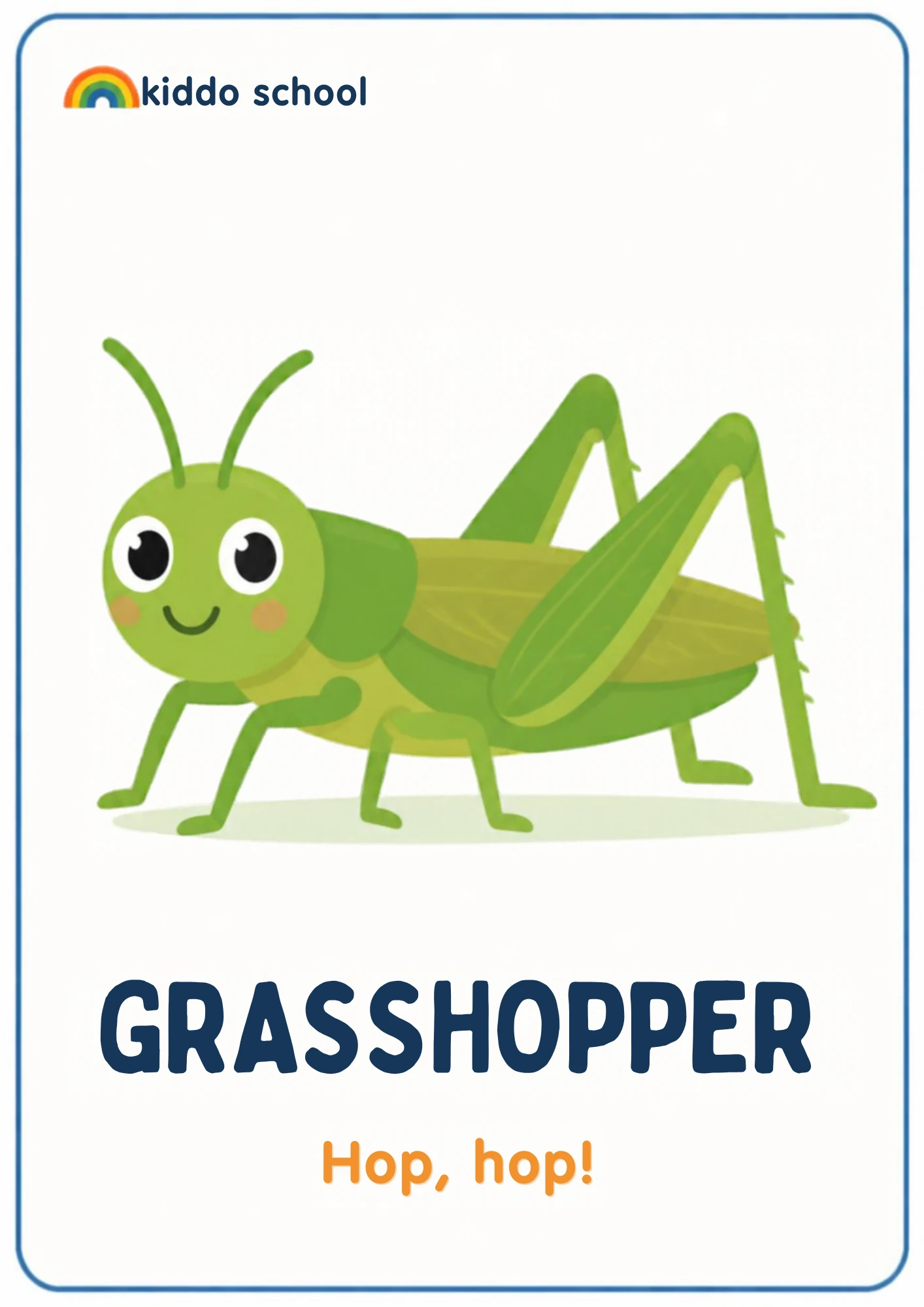
What is this?
A grasshopper is a green insect with long, strong back legs made for jumping. It hides down in grass and tall plants, then leaps away in one big bound when anything comes near — nobody else in the garden jumps further.
What does it mean?
The grasshopper is the set’s jumping card, and jumping is what two-year-old legs dream about. The countdown before each leap adds the best bit: waiting one, two, three makes the jump itself twice as big.
What does the child need to know?
Grasshoppers crouch and leap, and they live down in the grass. We jump on rugs and mats, not hard floors — and in real grass we take big careful steps first, because hiding friends do not like being stepped on.
Why this matters
Countdown-then-jump builds listening, waiting and explosive movement in one game, and measuring jumps with steps is the gentlest first maths: how far did MY leap go? Bodies learn; numbers sneak in behind.
What it teaches
Powerful crouch-and-jump mechanics, counting down as impulse control, early measuring and comparing, and care for small hidden things — watching the ground as well as the sky.
Words to learn
grasshopperjumpcrouchlegsgrassready
Say this to your child
“"Grasshopper! Look how it crouches... ready, set — JUMP! Grasshoppers have big strong legs and they hide down in the grass. We jump on the rug, and in the garden we watch our feet. One, two, three — launch!"”
Step by step
- Show the card and say grasshopper — then crouch down low yourself, knees bent, ready: your shape teaches first.
- Count down together — one, two, three — then jump! Land, laugh, and crouch again for the next launch.
- Measure the jumps: heel-to-toe steps from take-off to landing, counted out loud. Grasshoppers leap many times their own length — can you?
- Tell the hiding story: grasshoppers live down in the grass, so in real grass we take big careful steps and walk first, jump later.
- End with the biggest jump of the day — then a tiny grasshopper crouch, still and quiet, hiding just like the card.
Look closer at the picture
Say grasshopper together and find the long back legs on the card — this grasshopper is green and ready to jump. Crouch like it, hold for a breath, then do one big jump right there on the rug.
Ask your child
"How does the grasshopper jump — big or small?" "Can you crouch and leap?" "Where does the grasshopper hide?" "In the grass, do we run or watch our feet?" — answered with a crouch, a leap and careful little steps.
What your child can say or do
"One, two, three, JUMP!" chanted at sofas, beds and every puddle-adjacent paving stone, jumps measured against grown-up feet all afternoon, and grasshoppers imagined springing from every patch of long grass.
Out in the real world
Grasshoppers spring out of long grass, meadows and hedge edges all summer — usually seen only as a flash of green. Each flash is a rerun: freeze, whisper grasshopper, watch where it landed, and step carefully.
Try it together
Lily-pad jumping course: cushions or paper pads laid out across the rug, crouch and leap from pad to pad, counting each launch. Land on the pads, not the floor — the aiming is half the exercise.
Understanding check
Set up a countdown tomorrow with no card in sight: one, two, three — if a big jump arrives on cue, the legs learned the lesson as well as the ears did.
Parent tips
Jump on soft surfaces only, and jump with your toddler — your leap sets the standard and your landing shows the technique. Keep the measuring silly and short; three heel-to-toe steps is a whole adventure.
Staying safe
All jumping happens on rugs, mats or grass, never tiles or hard floors, and the jump zone gets cleared of furniture first. In real long grass, walkers watch for stones and holes — and for the tiny hidden friends who were there first.
This lesson pairs with the Grasshopper flashcard in the library — print it, show it, keep it on the fridge. Back to Garden Bugs & Friends (Toddler 8).