
Snail — a step-by-step lesson for grown-up and child
This lesson is a race to be last: your toddler learns the word snail, crawls across the room at the world’s slowest speed, and meets the garden friend that takes its home along everywhere it goes.
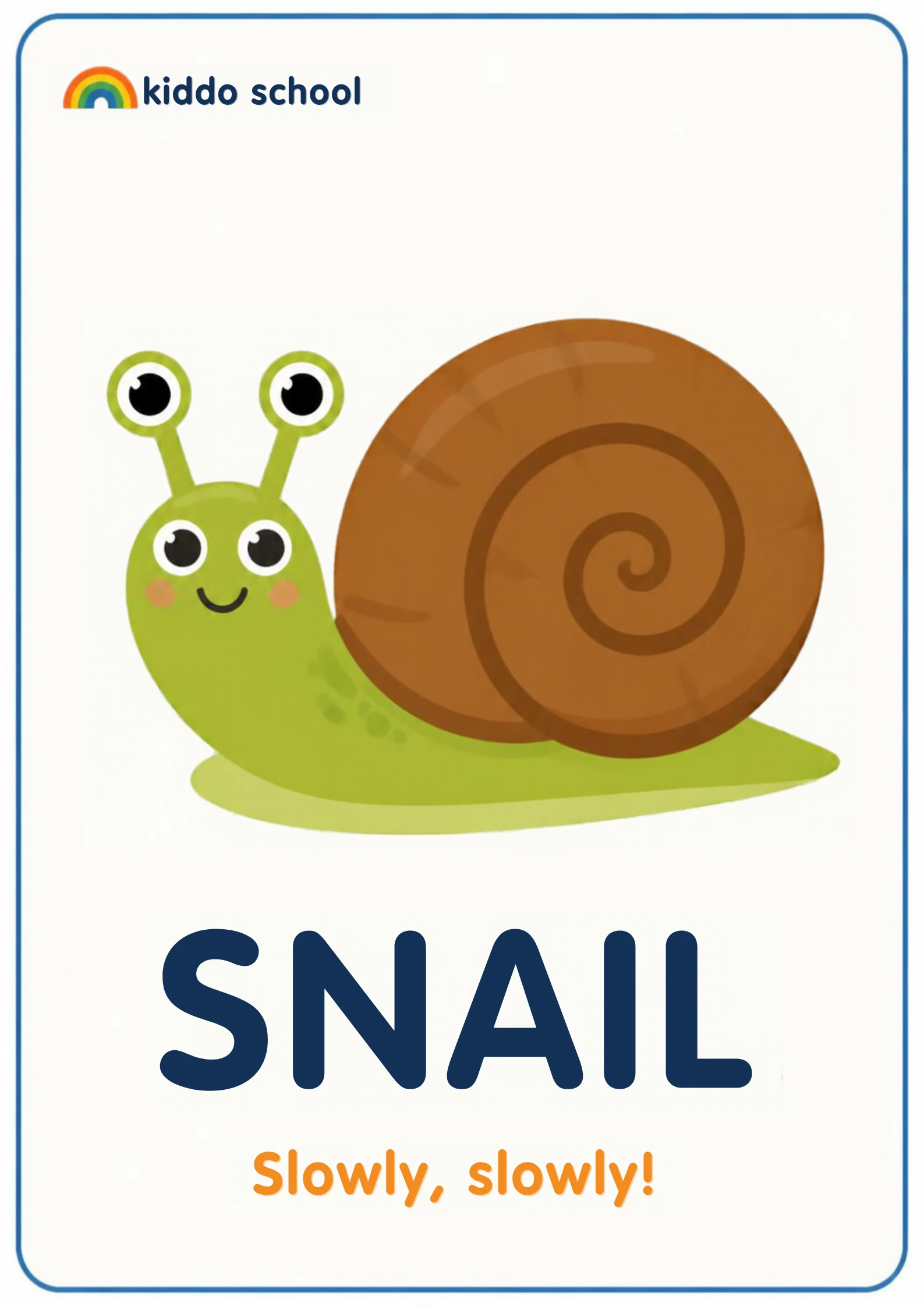
What is this?
A snail is a small, soft creature with a spiral shell on its back that moves — very, very slowly — on one slim foot. Snails come out when the air is damp, after rain or overnight, and munch leaves as they go.
What does it mean?
Slow is a genuinely difficult speed for a two-year-old, and the snail makes it a game instead of a command. The shell-house story gives the slowness a reason: the snail carries everything it owns, so of course it takes its time.
What does the child need to know?
Snails are slow and carry spiral shells, and damp days bring them out. We watch them without touching — and after any snail encounter, hands go straight to the sink.
Why this matters
Crawling slowly builds body control that crawling fast never touches, and the waiting teaches patience with a living example: the snail always arrives, just later. Damp-day snail hunts turn rainy weather into an event.
What it teaches
Slow-motion body control, a first spiral shape found in the wild, weather words (rain, damp, wet), and gentle observation — following one small creature’s whole journey across a step.
Words to learn
snailslowshellrainhousewatch
Say this to your child
“"A snail! Slow, slow, slow — see its shell-house riding on its back? It never hurries anywhere. After rain, snails come out for a walk. We watch them crawl, we never touch, and then we wash our hands like big kids."”
Step by step
- Show the card and say snail — then ask where its house is: right there on its back, taken along everywhere.
- Trace the shell’s round curl on the card with one finger, round and round and in — a spiral is a lovely new shape.
- Crawl across the rug at snail speed together: the rule is that nobody may hurry, and the slowest crawler wins the giggle.
- After rain, check a wall or a plant pot for a real snail and watch it travel at its own pace — one whole minute is a long, marvellous time.
- End with the routine: we looked at the snail, so now we walk inside and wash our hands — snails are watched, never pocketed.
Look closer at the picture
Say snail together and find the shell — this snail has a brown shell and a smile. Trace the curl with one finger, round and round, and ask whether the snail looks like it is going anywhere in a hurry.
Ask your child
"Where is the snail’s house?" "Can you crawl slowly, slowly?" "When do snails come out?" "Do we touch the snail or watch it?" — answered with a point, a crawl and a slow-motion grin.
What your child can say or do
"Slowwww snail!" announced at every pace slower than usual, snails spotted on pavements and flowerpots after rain, and a crawl across the kitchen that takes genuinely forever — the point of the whole game.
Out in the real world
Rainy days turn every pavement and garden wall into a snail safari. Each find is a rerun: crouch, whisper snail, watch the neck stretch, and leave it exactly where it was heading.
Try it together
Snail race — in reverse: mark a start and a finish cushion, and the winner is whoever takes the longest to cross. Slow motion, silly faces, and the best self-control workout disguised as a race.
Understanding check
Say slow out of nowhere tomorrow and watch what happens: a deliberate, exaggerated crawl means the snail left its word behind — the speed and the animal are glued together.
Parent tips
Practise the hand-washing line with a happy voice every single time — the routine matters more than the snail. If rain never comes, a watering can on the same flowerpot makes a fine pretend-damp morning.
Staying safe
Snails trail through soil, leaves and whatever the garden has hosted, so looking is eyes-only and hands get washed straight after garden play. Nothing from the garden — snail, leaf or shell — ever goes near a mouth.
This lesson pairs with the Snail flashcard in the library — print it, show it, keep it on the fridge. Back to Garden Bugs & Friends (Toddler 8).