Age 2 YearsSubject Nature & TalkClass School GardenDuration 3–5 minutes
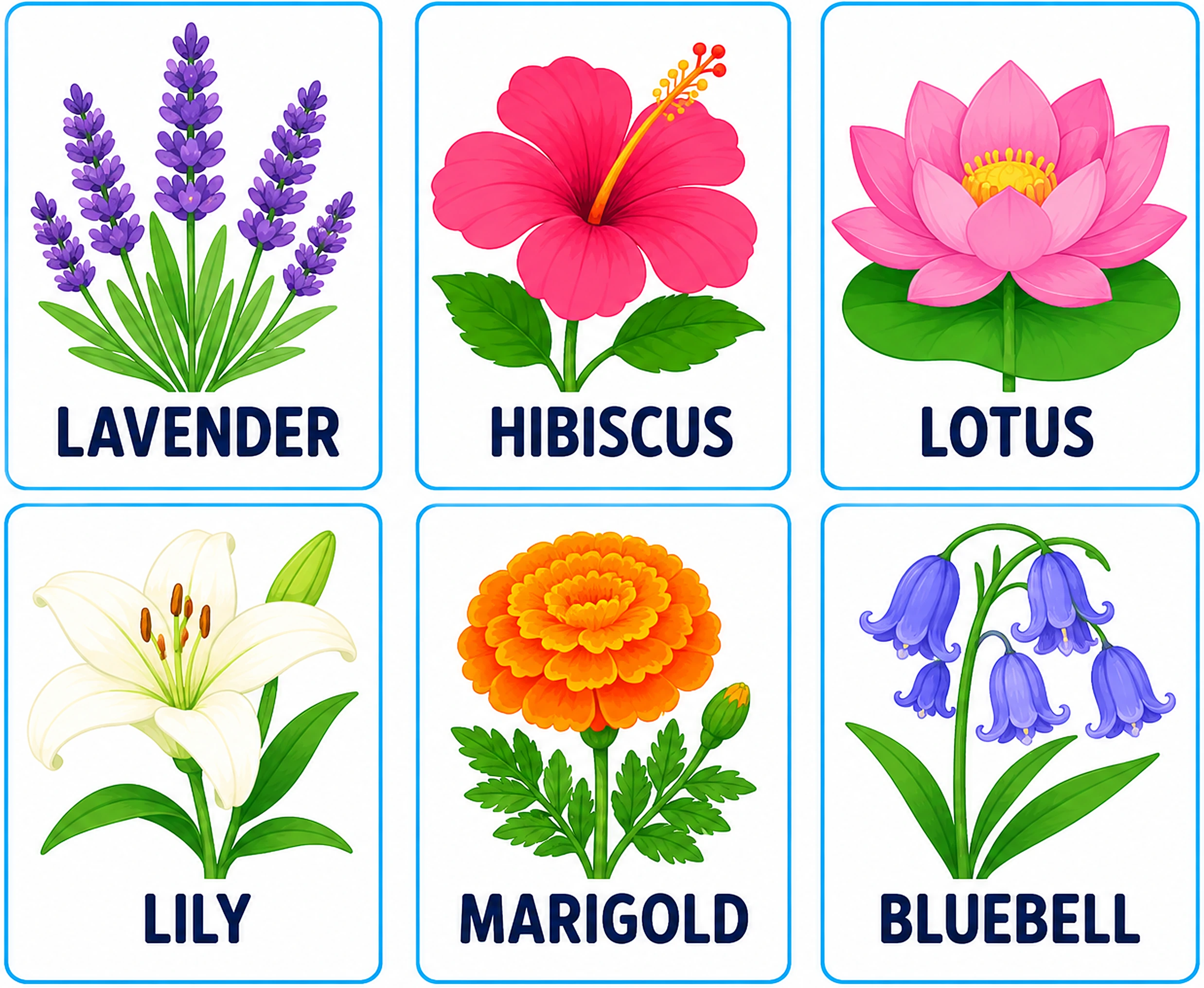
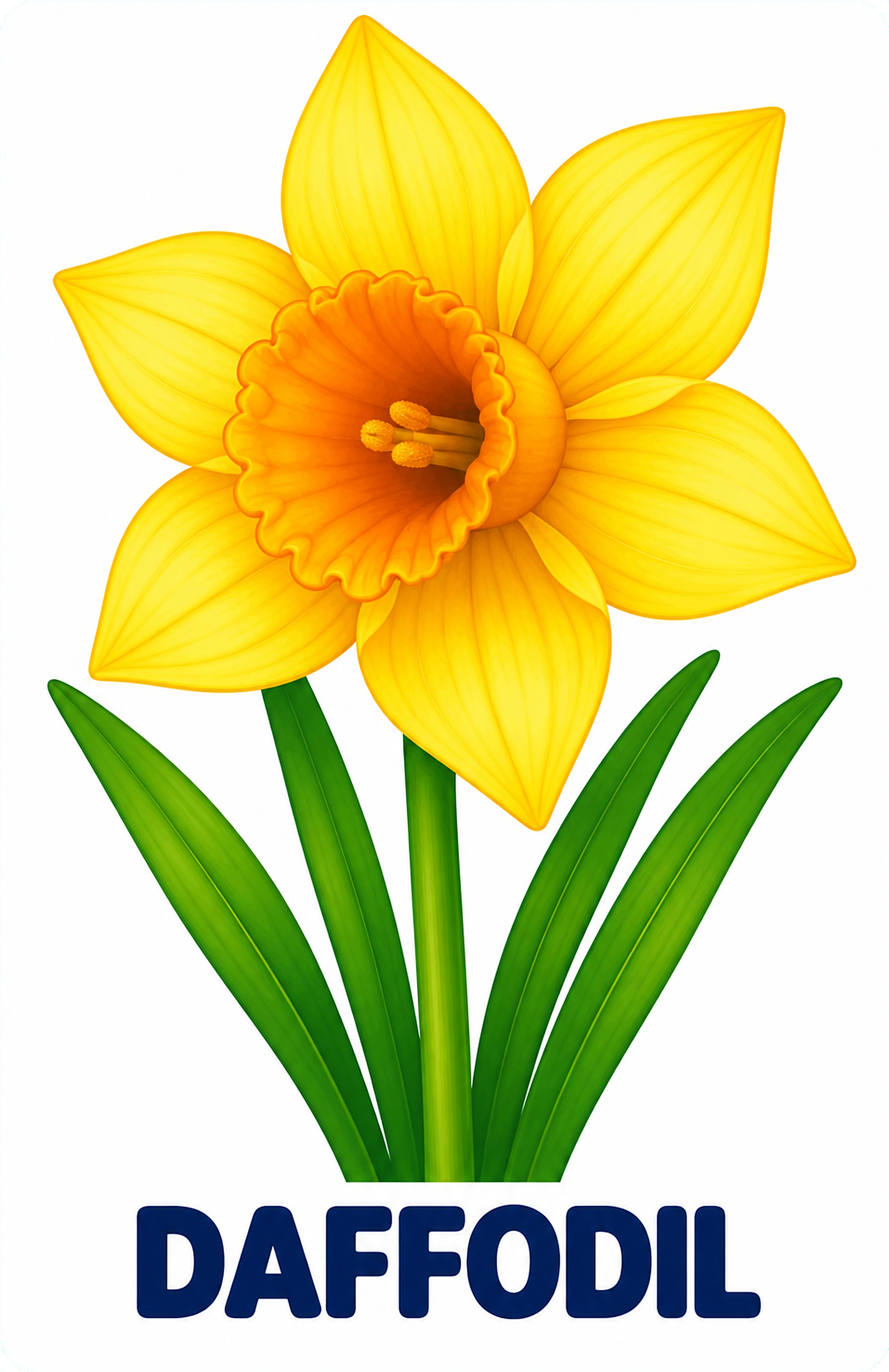
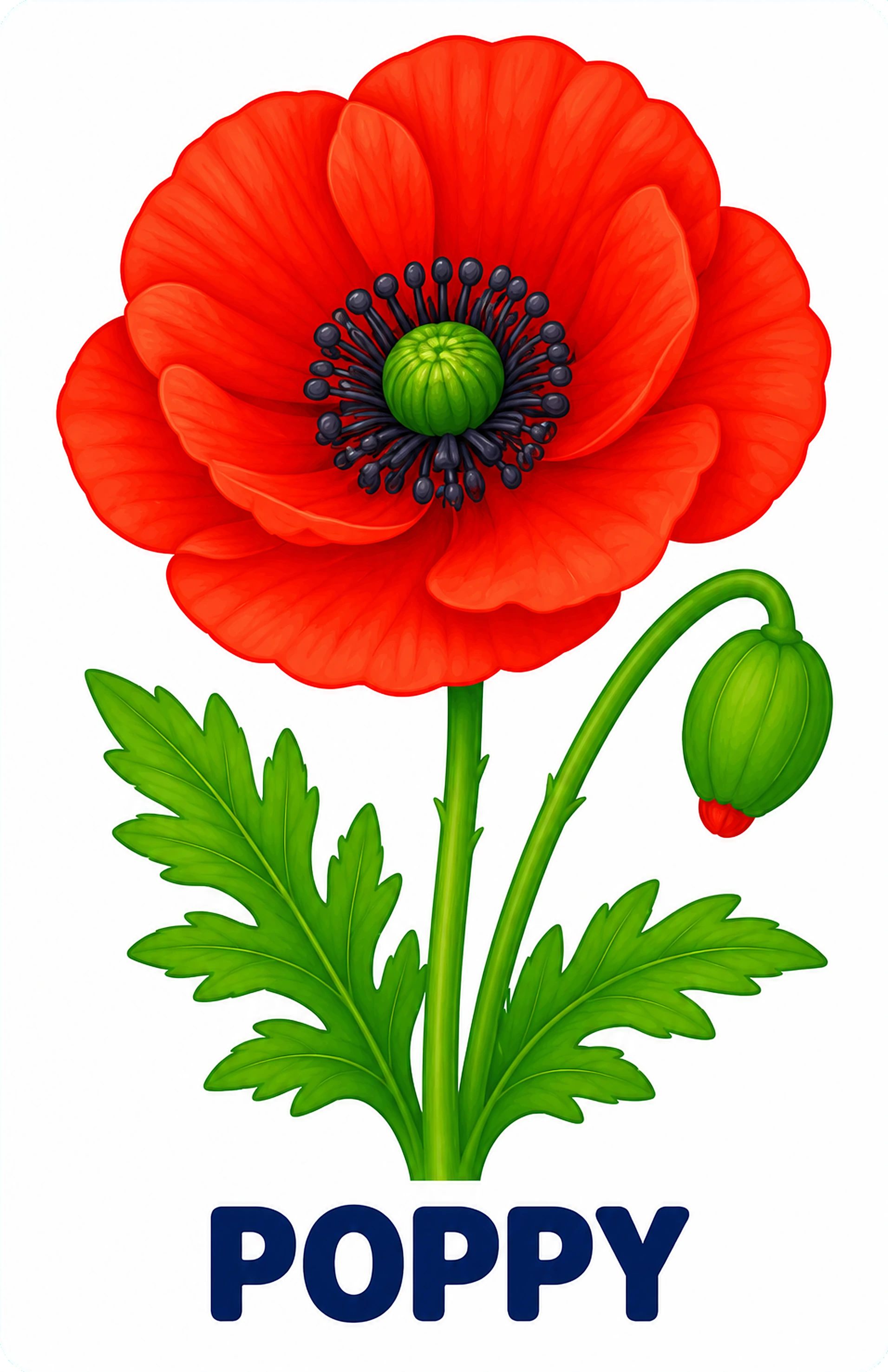
Big yellow sunflowers, roses, tulips and bluebells — the flower bed is full of names waiting to be learned. Twelve bright blooms, one big picture at a time.
Nothing to prepare and nothing to read. You say the flower name, your toddler points, sniffs the air or giggles — a moment on a card counts, and the real garden can wait for your next walk.
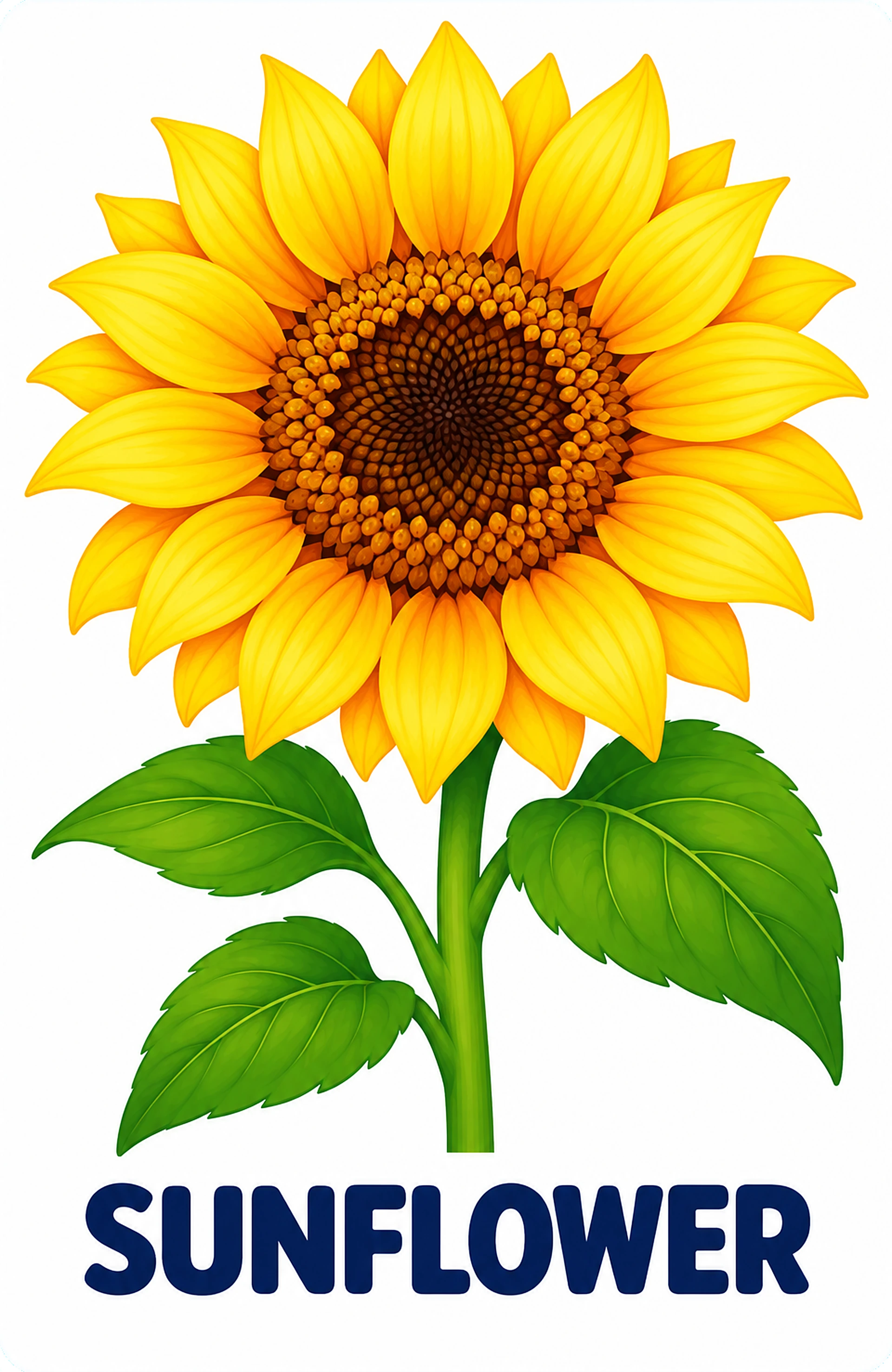
Start the Class ↓Start with the sunflower — the tallest friend in the bed.
TODAY’S CLASS
How today’s class works.
Eight little steps, in order: a welcome from your teacher, all twelve flowers, a look-and-smell walk, solve the flower cards on paper, cards to print, a note from your teacher and one last check-in from you. Stop after any step — that is a complete class.
1 Teacher welcome
2 Meet the flowers
3 Where flowers grow
4 Solve the sheets
5 Take it off screen
6 Print the cards
7 Teacher note
8 Parent review
TEACHER WELCOME
“Let’s walk through the flower garden! Can you say their names with me?”
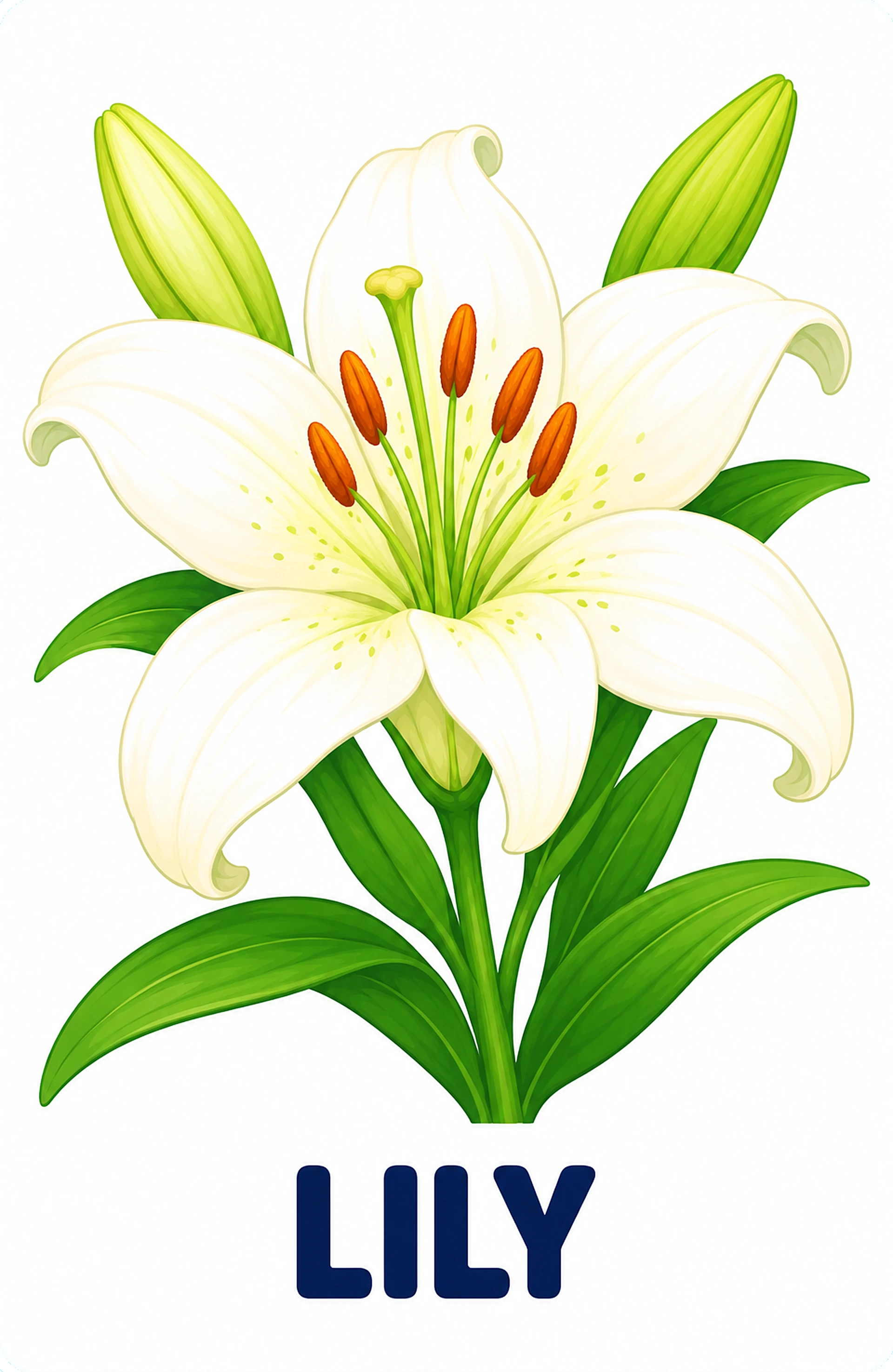
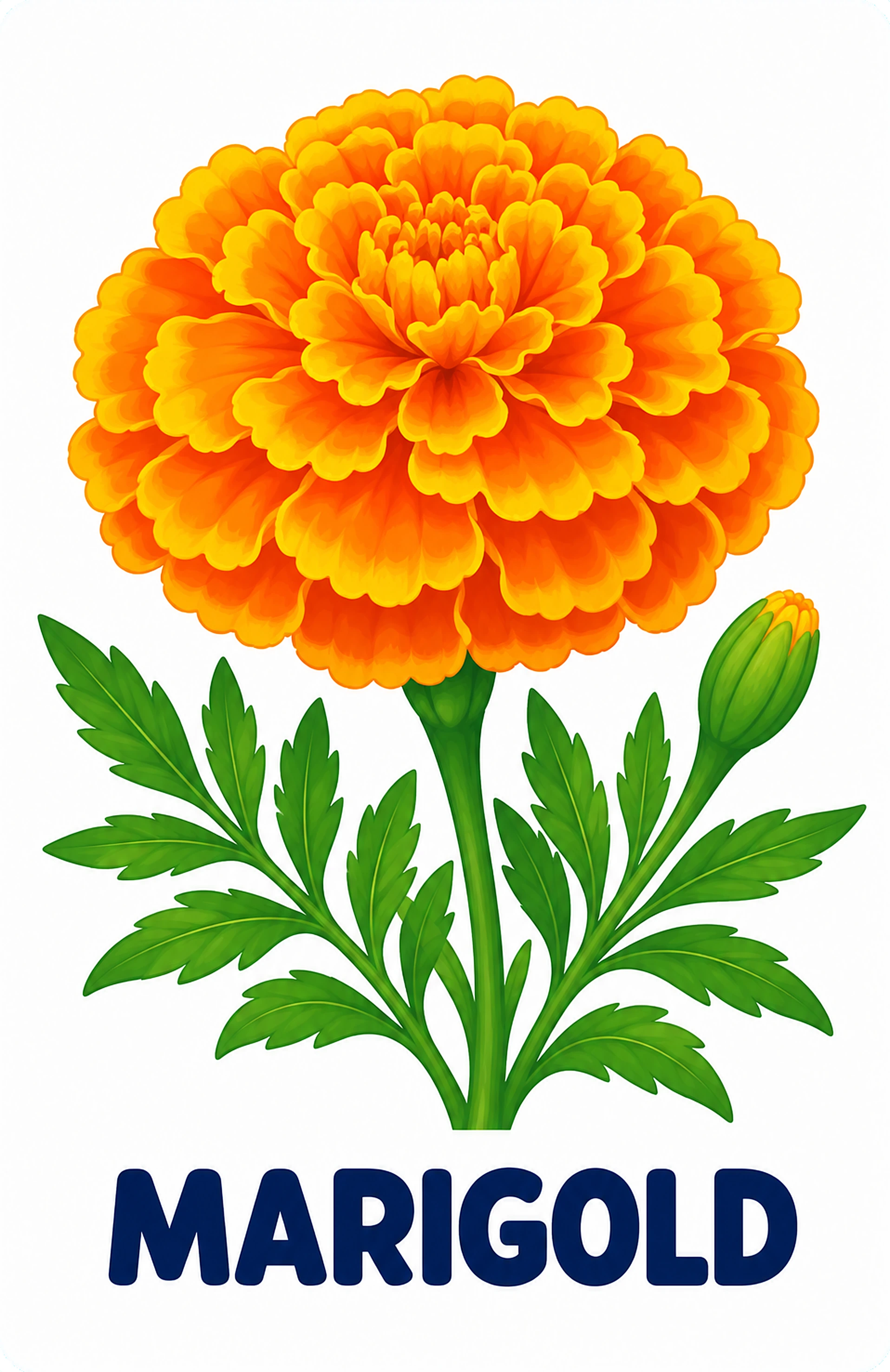
Twelve big, bright blooms, one at a time. Say the name clearly, and let your toddler point, sniff the air or sign along.
Card 1 of 12
Or simply scroll: all 12 cards are below.
TOGETHER · WHERE FLOWERS GROW
Where flowers grow.
Flowers turn up in the most ordinary places — here is where to look, gently and without picking.
Sunflower
“In gardens and on farms, standing taller than you by summer.”
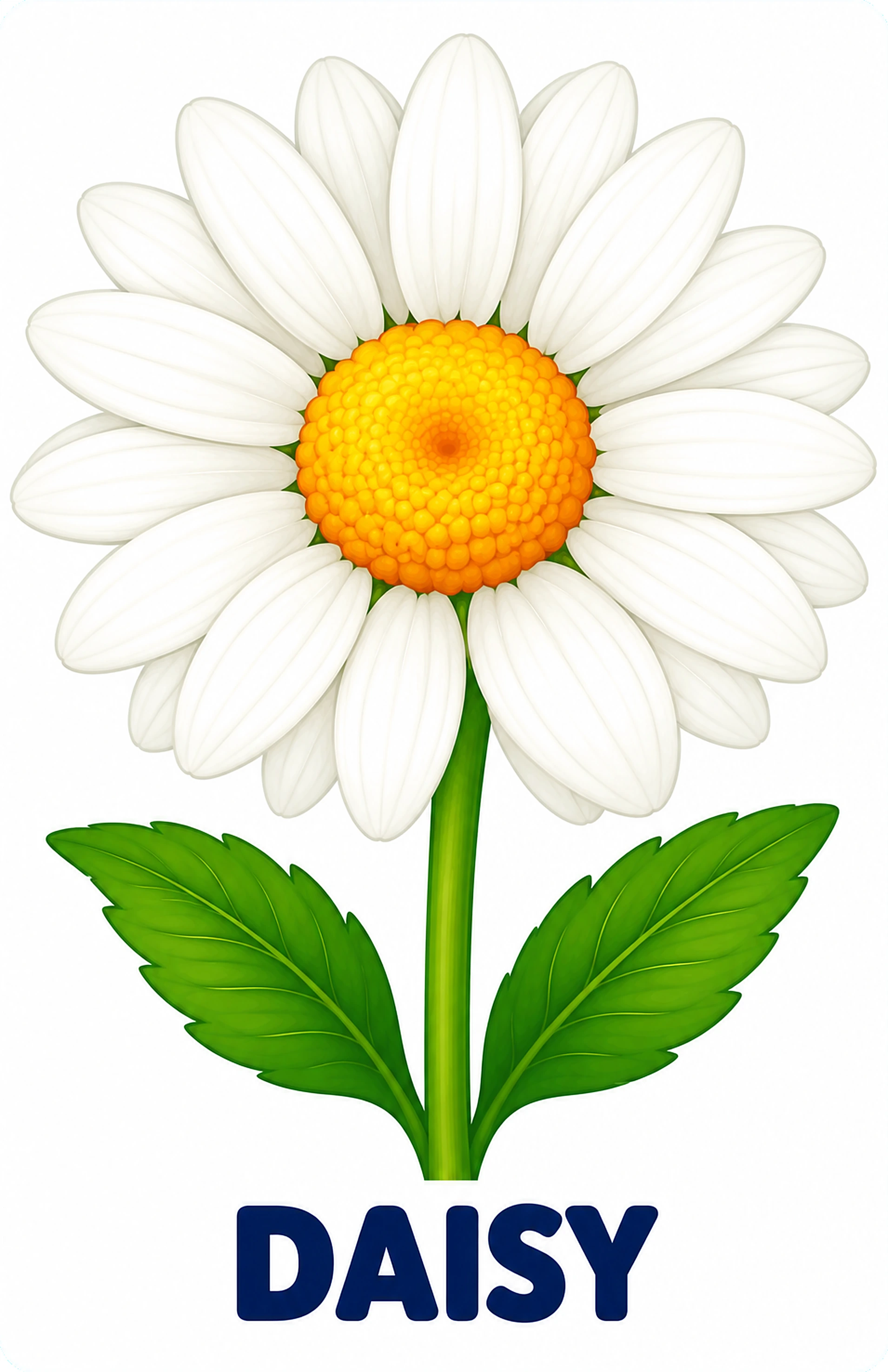
Daisy
“Right in the grass — little white stars on any lawn.”
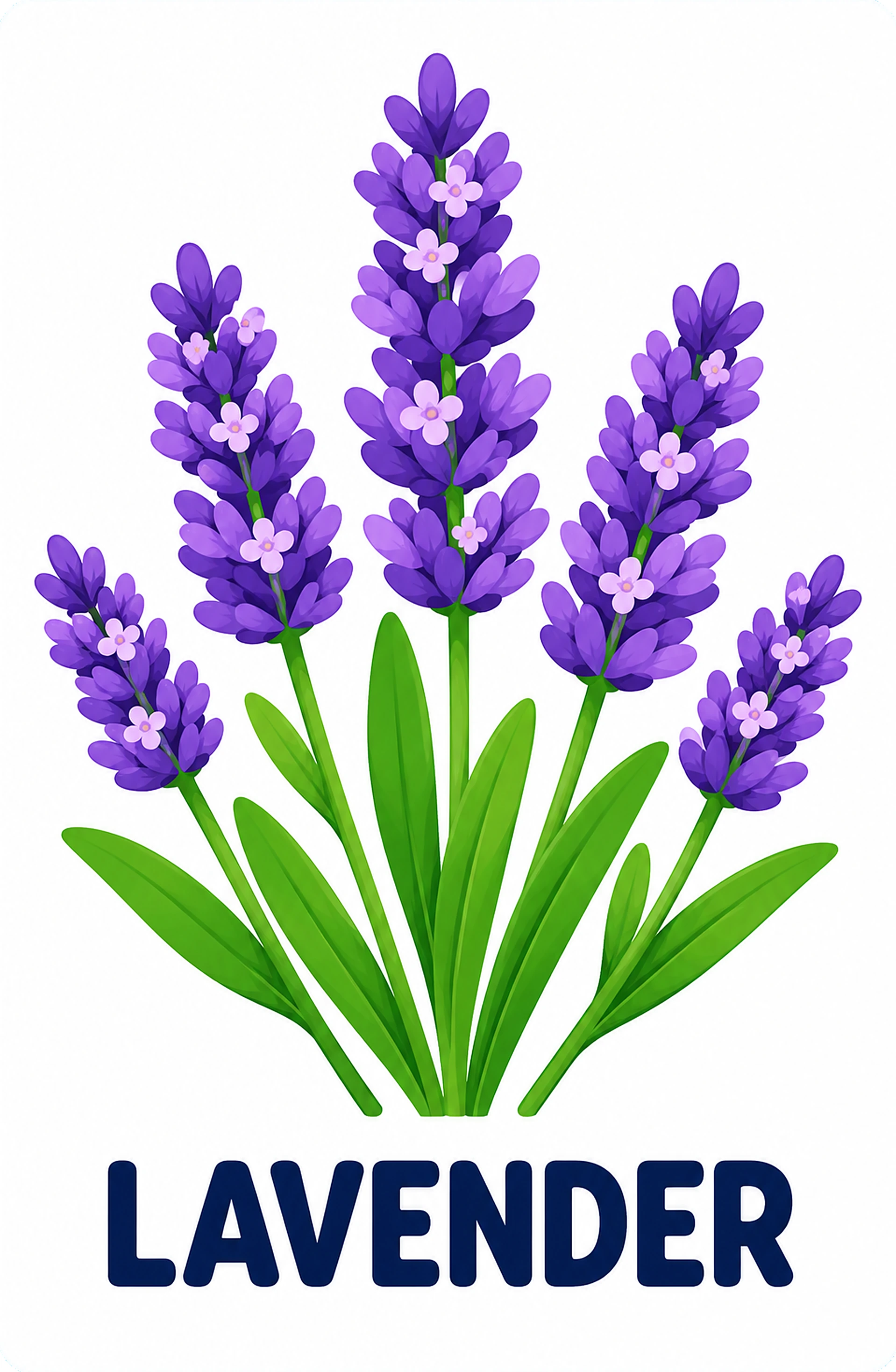
Lavender
“In purple rows in gardens; bees visit it all day long.”
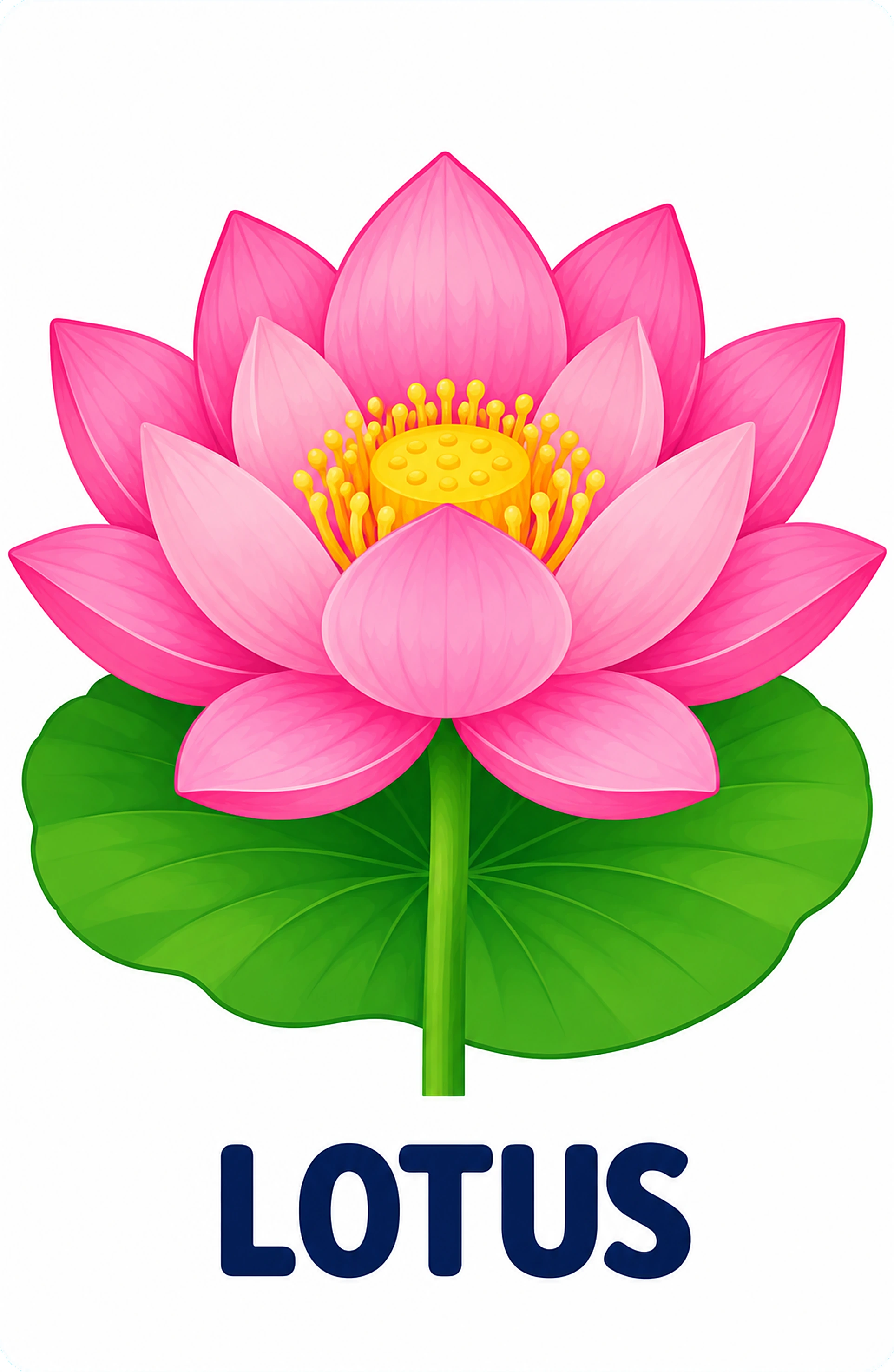
Lotus
“On warm, still ponds — floating on a big green pad.”
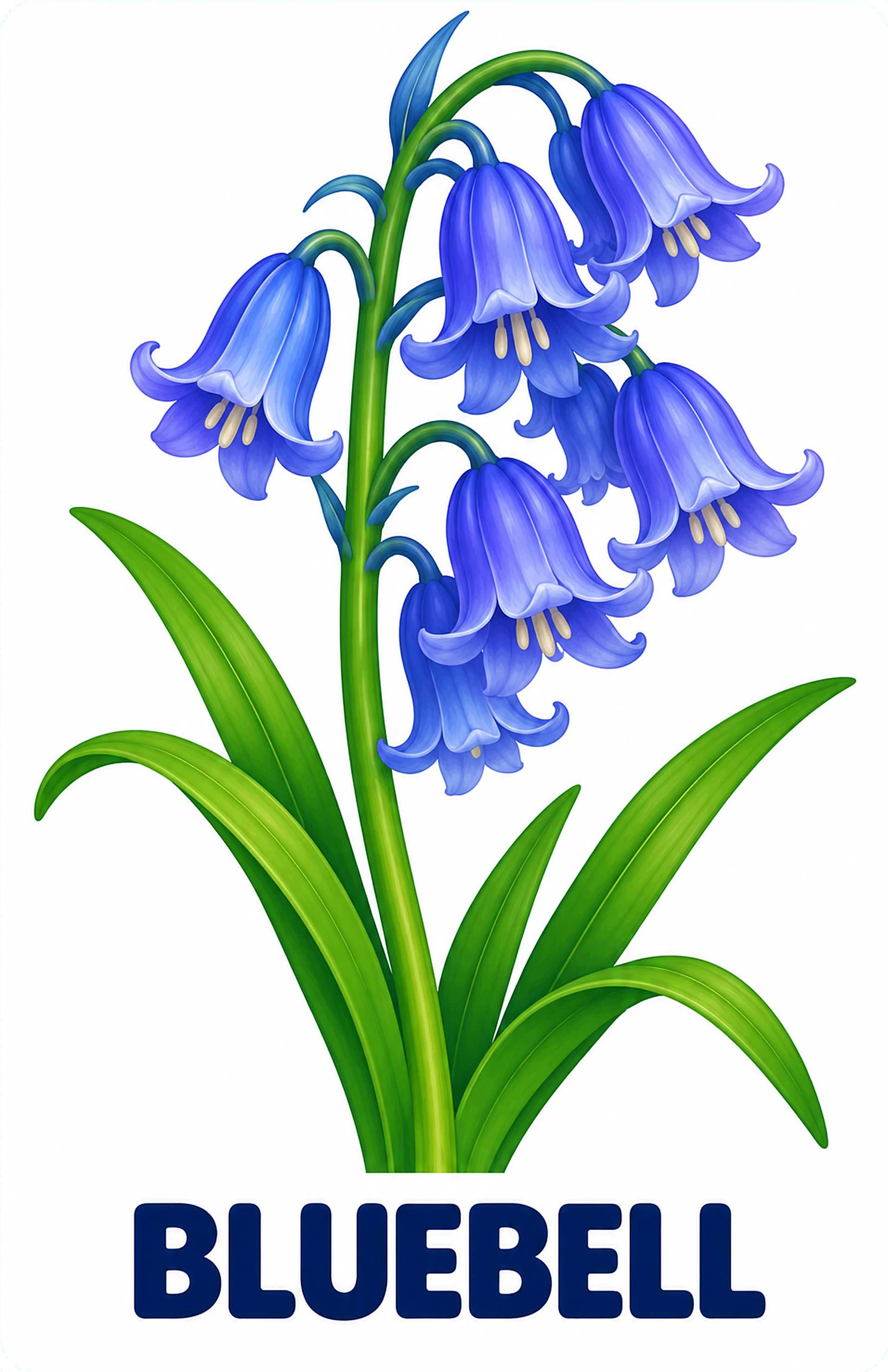
Bluebell
“In woods in spring, ringing blue under the trees.”
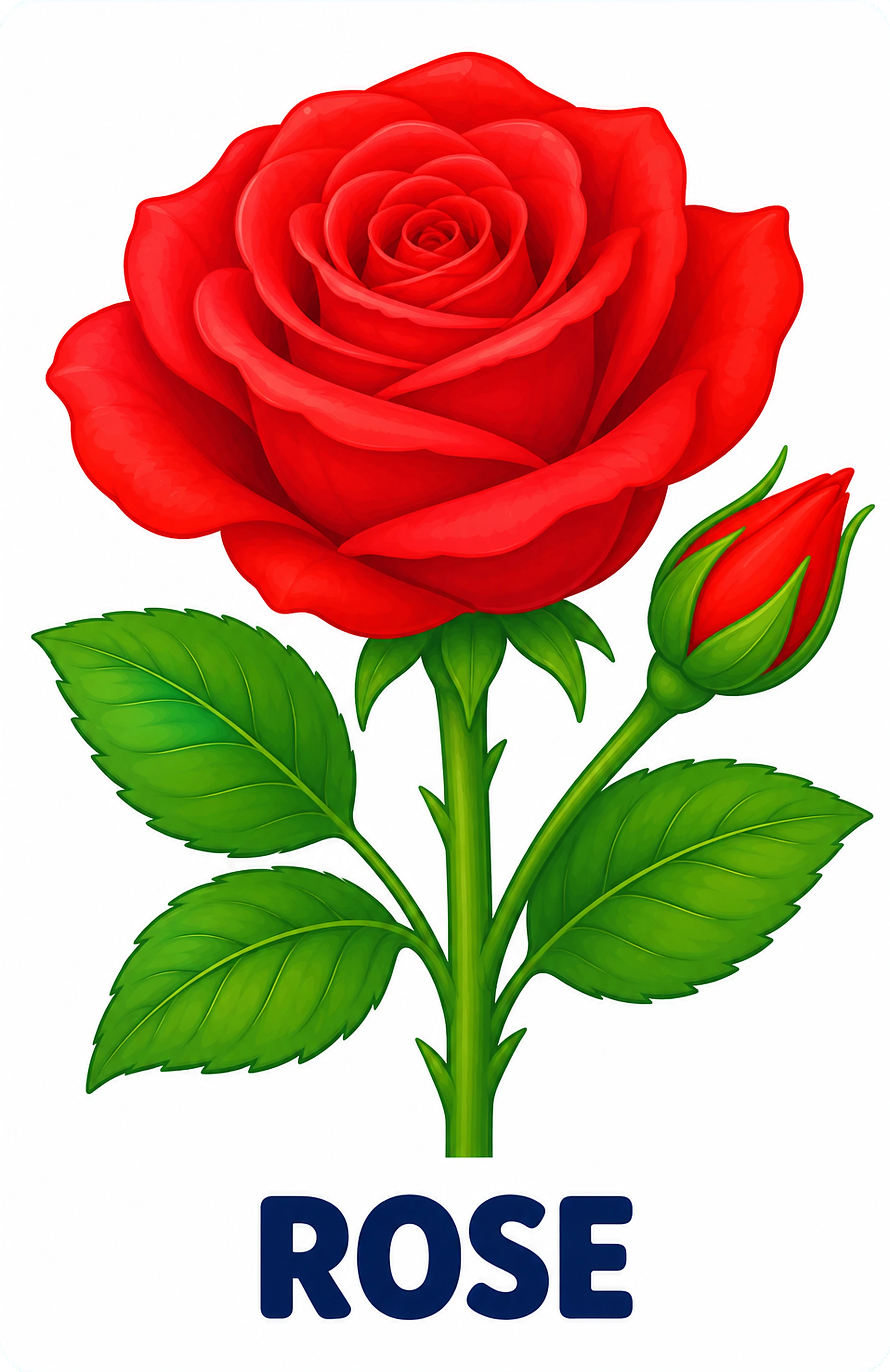
Rose
“In rose beds and parks — smell first, touch very gently if a grown-up says it is okay.”
SOLVE THE SHEETS — ON PAPER OR ON SCREEN
Solve the garden flower cards together.
The twelve flower cards print two to a page, straight from your browser. Printed, cut and named, they are the collection’s real worksheets — and on screen, every card page can be drawn on directly.
01
Print the cards
Open the printable cards and print all twelve, two to a page. Cut them out together, saying each flower’s name.
02
Name the colors
Say each flower’s color as you name it — a pink flower, a yellow flower. Colors hide inside this collection for free.
03
Smell around you
Flowers are the smell-it collection: on the next walk, sniff (gently!) one real flower and name its card.
04
Draw a flower
Pick a favourite card and draw the flower on paper — or on its card page with the Write & Color layer.
Every card page has a Write & Color layer: your child can draw right on the card with a finger, a stylus or the mouse, then save the finished work. Nothing is uploaded anywhere.
TAKE IT OFF SCREEN
A look-and-smell flower hunt.
Take the names outside — or to a window box, a park or a bunch of flowers at home. Flowers are for looking at and smelling, not picking.
Try one today
Spot a flower on your walk and say its colour together.
Smell a rose or a herb together — snif, snif, what does it smell like?
Count the petals on a daisy — one, two, three… as far as your toddler goes.
Find a bee visiting a flower and watch it quietly — the bee is working.
Point at every yellow flower you can find, then try pink.
Flowers stay on the plant — picking is for grown-ups. One flower noticed and named together is a complete hunt, and a grown-up stays close the whole time.
PRINT THE CARDS
Print the garden flower cards.
Print the cards for simple naming games and colour-spotting warm-ups.
The same twelve flowers from today’s class — handy for a quiet naming chat at the kitchen table.
TEACHER NOTE
One last word from class.
“Roses to bluebells — every walk becomes a naming game. You do not need a garden; a window box, a park or a bunch of flowers at home works beautifully.”
— Your Kiddo School teacher
A NOTE FROM THE PRINCIPAL
For the grown-ups.
Your toddler does not need every flower name to stick. Big, bright pictures and your voice are doing the teaching — the words ride along, and one favourite flower repeated happily is a complete lesson.
From the tall sunflower to the little bluebells — what a colourful walk. However many rounds you played, however long it took, that was the whole class — and stopping early is allowed too.
Your feedback helps us make Kiddo School better. This is feedback about the activity, for the grown-ups who make it — it is never about a child.
Comments from our school community
FLASHCARDS
Prefer printed cards?
The cards from this class also live in the flashcards library — every card has its own page with the picture, the words to say together and a download button, ready for away-from-screen time.



Comments from our school community