
Wheelbarrow — a step-by-step lesson for grown-up and child
This lesson hauls: your toddler pushes an invisible barrow across the room, drives a basket load of toys across the rug, and hears why the real one is a grown-up vehicle with a famous tipping habit.
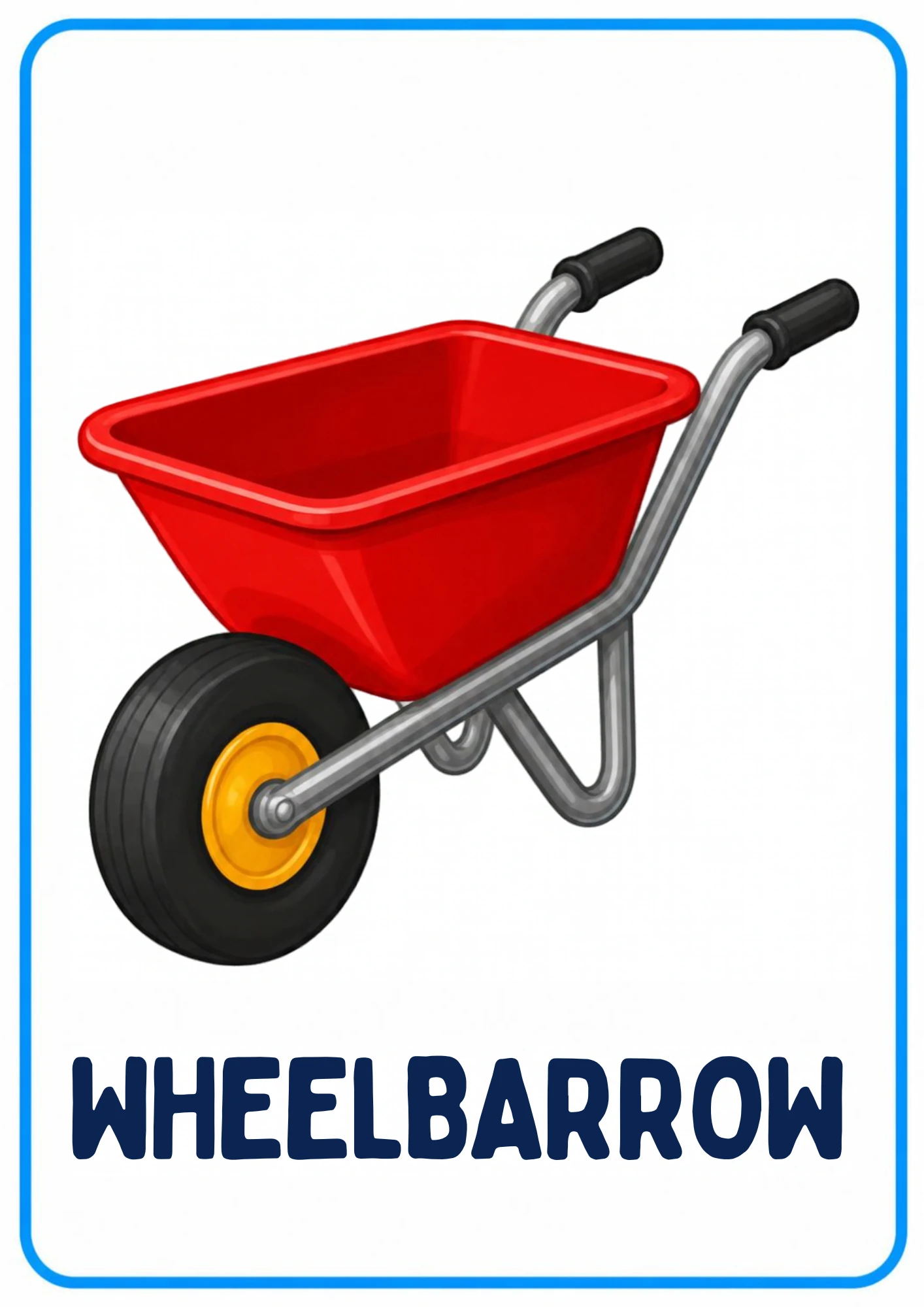
What is this?
A wheelbarrow is a garden cart riding on a single wheel, steered by two long handles, with a wide open tub for hauling soil, leaves and tools around. You lift the handles and push, and the wheel rolls.
What does it mean?
The wheelbarrow is the set’s transport card — everything goes somewhere in it. Pushing, loading and delivering is a complete story arc a toddler can run with baskets and blocks, no garden required.
What does the child need to know?
The wheelbarrow carries heavy loads on one wheel, and a badly balanced load can tip it — something most adults discover the embarrassing way. Real ones are pushed by grown-ups; toddlers drive basket barrows and ride only with a grown-up steering.
Why this matters
Push-and-deliver play builds whole-body coordination and narrative play at once: load, drive, arrive, tip, repeat. And the tipping fact gives the real-tool rule a reason with a story attached.
What it teaches
Pushing strength and steering, loading and balancing play, transport vocabulary (load, deliver, tip), story-loop sequencing, and the gleeful physicality of being the cargo — a classic toddler role.
Words to learn
wheelbarrowwheelhandlesloadpushtip
Say this to your child
“"A wheelbarrow! One wheel, two handles — it is the garden’s lorry. Load it up — soil, leaves, everything — and push! Beep beep, coming through! If the load sits wrong, whoops, it tips. So the real barrow is for grown-ups to push, your basket is your barrow, and rides come with me on the handles."”
Step by step
- Show the card, say wheelbarrow, and take up the driving pose: palms flat, legs strolling — beep beep, load incoming!
- Push the invisible barrow across the room and tip a make-believe load of soil with a mighty heave — then do the return trip empty.
- Upgrade to real cargo: a basket of blocks is the load, the rug is the road — load it, push it to the other side, deliver, tip, repeat.
- Tell the tipping truth: if the load sits wrong, the barrow tips — which is why grown-ups steer the real one and your barrow is the basket.
- Finish as the cargo: if a real barrow is ever nearby, the toddler rides only with a grown-up on the handles — hands holding handles the whole slow trip.
Look closer at the picture
Drop into pushing position and say wheelbarrow with a beep beep. Ask your toddler to find the wheel on the card — just one! — then load, drive and deliver a pretend barrow-load across the room together.
Ask your child
"How many wheels does a wheelbarrow have?" "What does it carry?" "Who pushes the real one?" "What happens if the load sits wrong?" — answered with a push, "one wheel!" and a gleeful "it tips!".
What your child can say or do
"Beep beep — barrow coming!" Expect basket-barrows in constant service, siblings and teddies hauled as cargo, and tipping dramatised at every opportunity. Wheelbarrow may become the family name for any pushing game.
Out in the real world
Wheelbarrows work in gardens, allotments and building sites, and garden-centre displays count as sightseeing. Each real sighting is a rerun — name it, count the wheel, admire the load — at a respectful, non-tipping distance.
Try it together
Delivery run: mark a loading zone and a delivery point, and let your basket-barrow driver move everything from one to the other — blocks, balls, teddies — tipping each load with ceremony. Add a "fragile!" warning for the giggles.
Understanding check
At the next real barrow, watch the hands: they stay off the handles while the mouth says "one wheel!" means the rule and the word both landed. The beep beep is optional but traditional.
Parent tips
Keep basket loads light enough to steer — control is the skill, not weight. If your toddler begs for a real ride, do it slowly with their hands on the handles and yours over theirs: the safest seat in the garden.
Staying safe
Real wheelbarrows tip under wrong loads and roll on slopes, so pushing is grown-up work and rides happen only with a grown-up driving and hands held on the handles. No riding in tubs on hills, ever, and feet stay clear of the wheel.
This lesson pairs with the Wheelbarrow flashcard in the library — print it, show it, keep it on the fridge. Back to Garden Things (School Garden).