

Dog — a step-by-step lesson for grown-up and child
Dogs perform themselves: the sound is famous, the wag is famous, and the baby version of both is arriving right about now. This lesson stages the dog card as a two-part act.
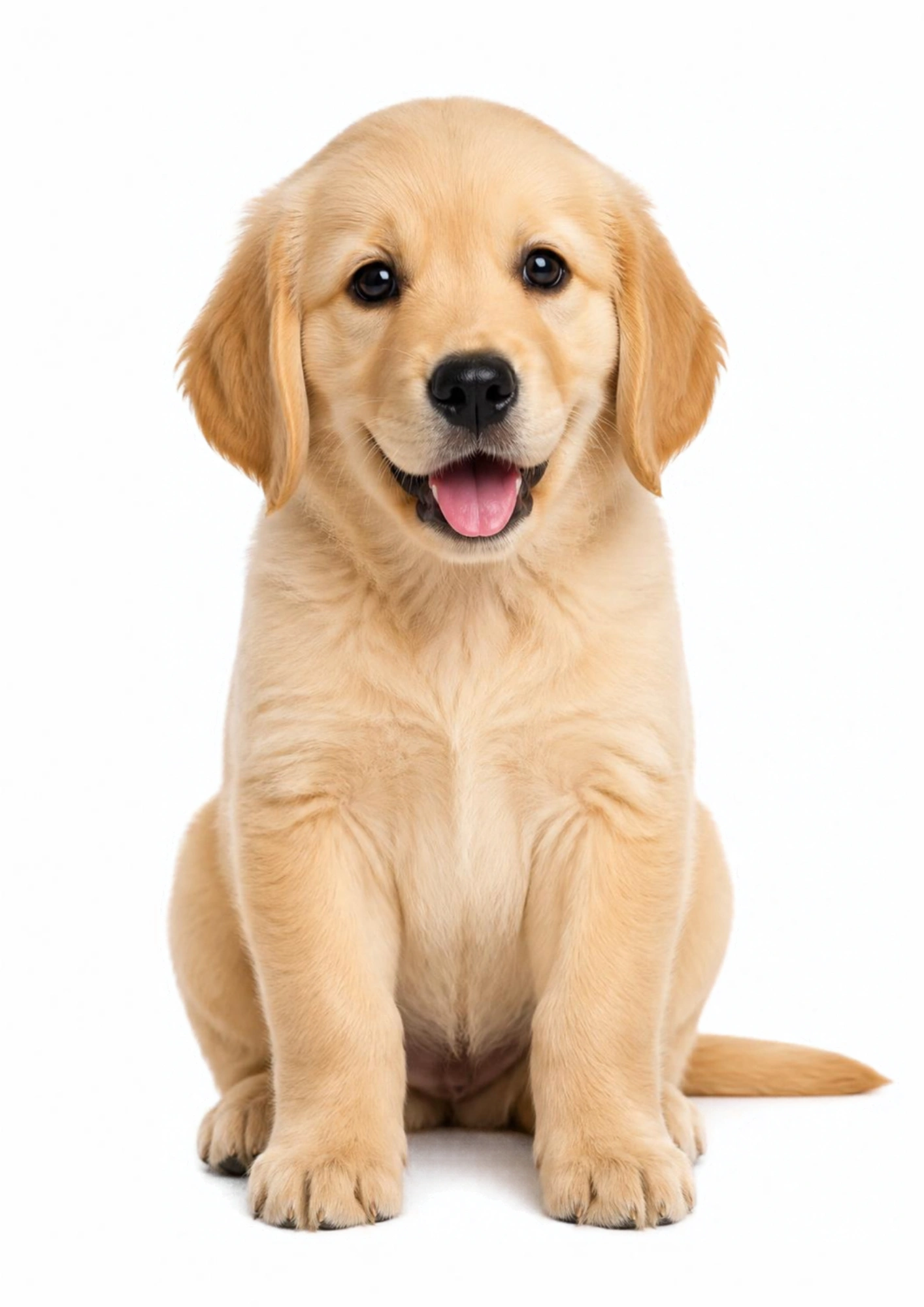
What is this?
A dog is a four-legged friend that barks, wags and adores outings — and it is the animal your baby is likeliest to meet in the flesh. The card gives a clear portrait; your woof and your floppy-ear hands give it a performance your baby can join.
What does it mean?
Two channels are better than one: a word with a sound and an action offers your baby two roads in. Some babies answer sounds first, some answer movement, and a few manage both — whichever road your baby takes, the word waits at the end of it.
What does the child need to know?
The act is simple: the woof, then the ear-flap hands, then silence. And across the week, say the word about every dog there is — enormous, tiny, loud, asleep — because at this stage your baby is learning that one name covers a whole population of very different animals.
Why this matters
Dog is often the first animal word a child owns outright, because dogs supply so many rehearsals: on walks, in books, behind fences, on the telly. Owning the word turns every future dog into a named event — and named events are how a baby’s world gets organised.
What it teaches
Sound recognition and imitation, action imitation (the copy-me wave of the next stage starts here), generalisation across different-looking examples, and reaction-and-recovery to sudden noises.
Words to learn
dogwoofwagearsbigsmall
Say this to your child
““Dog! A great big happy dog, tongue out, tail going. A dog says woof! Woof, woof! And look — my hands are floppy ears. Big dogs say woof, small dogs say woof, sleepy dogs say woof. Everyone knows this word by heart.””
Step by step
- Bring the card to viewing distance and greet it: “Dog! Look at that happy face.”
- Tap the tail and give it a wiggle with your fingertip — the wag is the dog’s signature, and yours to perform.
- Do the woof — two short friendly ones — then pat your own head like floppy ears while your baby watches.
- Hold the silence open. A laugh, a kick, a babble that sounds like a reply: answer all of it with delight.
- Across the week, replay the word at every dog you meet — the giant one, the yappy one, the sleeping one — same word, every size.
Look closer at the picture
The artwork is a happy dog with its tongue out and tail mid-wag — say that much. The live noticing: which part of the act does your baby copy — the sound, the hand-movement, or neither yet? Imitation at this stage is a coin with two faces, and either face counts.
Ask your child
Watch the copying: does a hand wave after your ear-flaps? Does a sound follow your woof? Wonder aloud: “I wonder which of us is training which — you have me doing this dog three times a day.”
What your child can say or do
A babbled burst right after the woof, arms that flap when yours do, a full-leg jiggle of joy, or a solemn stare that saves its reaction for the third round — copy-me behaviour at 6–9 months rarely fires on the first performance, so keep the act in rotation.
Out in the real world
Dogs are everywhere once you start counting: the neighbour’s behind the gate, the one asleep outside the café, every other page of the animal book. Each is a replay of word, sound and — if your hands are free — ears.
Try it together
Woof-and-freeze: do the woof, then go completely still with an expectant face. The stillness is the invitation; whatever noise or movement your baby loads into it, celebrate like it was a word. Because functionally, it was.
Understanding check
Parent self-check: did the word cover more than one dog this week, and did the act get a silence at the end for your baby’s half? The variety teaches the generalisation; the silence teaches the conversation.
Parent tips
Commit to the performance — an apologetic woof teaches half a word. If your baby startles hard at the sound, drop the volume and keep the ears; some babies take the visual road first and find the sound later. Both roads are open.
Staying safe
Real dogs are met only on their owner’s terms and at a safe distance — the card carries the lesson and the fence carries the dog. Watch reaction-and-recovery: a startle that settles fast is healthy; a baby who cannot settle needs the quiet version of this card.
This lesson pairs with the Dog flashcard in the library — print it, show it, keep it on the fridge. Back to Animals & Everyday Objects (Baby 1).