

Eating — a step-by-step lesson for grown-up and child
No card in the set gets more live performances: eating happens on schedule, with an audience and props. This lesson shows how to name the action mid-meal so the word lands where the food does.
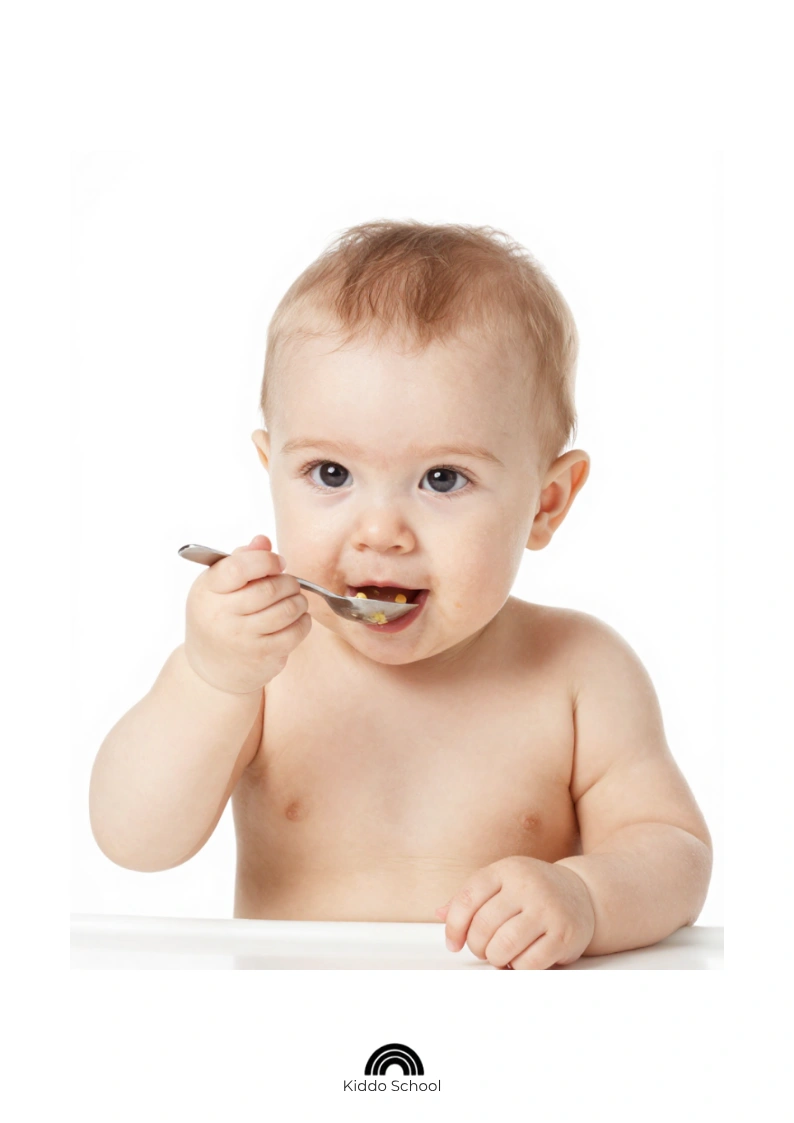
What is this?
Eating is taking food in — spoon in the card’s picture, finger foods in your baby’s fist. At 9–12 months your baby is deep in the self-feeding project: mashed everything, pincer picks and a spoon held with more hope than aim. The card names the thing they are already experts in.
What does it mean?
Action words are the shy ones of early vocabulary — harder to point at than nouns — but meal routines give eating a stage no other verb gets: a beginning, a middle, an end and a bib. Naming it mid-bite gives a verb its clearest chance.
What does the child need to know?
Say the word while the mouth is busy: "Eating! You are eating." Timing is the whole trick — before the bite is a forecast, during is the word, after is a review. Aim for during, once or twice a meal, and let the meal stay a meal.
Why this matters
Verbs open the door to sentences: eating, drinking, sleeping give your baby a grammar of daily life long before they can say any of it. Understanding "eating" also lets your baby predict — the word itself begins to mean food is coming.
What it teaches
Verb vocabulary through routine, understanding ahead of speaking, self-feeding skills (pincer grip, spoon practice), and shared attention at meals.
Words to learn
eatingbiteyumspoonmoreall gone
Say this to your child
“"Eating! The baby on the card is eating, spoon going in. You are eating too — yum, yum. Bite by bite, in it goes. Spoon up, mouth open. All gone! Eating is what we do, three times a day."”
Step by step
- Show the card just before a meal, not in the middle of the chaos: "Eating! The baby is eating, just like you."
- Let your baby hold the card and bang it gently on the tray — the card is about them, and they should treat it accordingly.
- At the next meal, name it once mid-bite: "Eating. Yum." Then carry on; the meal is the main event and the word is the garnish.
- Point at the card’s spoon, then the real spoon: "Spoon. You have a spoon too." Matching picture to prop is the game this age plays best.
- Finish the meal with "all gone!" and both hands turned over — the ending of eating is as nameable as the middle, and babies love a formal finish.
Look closer at the picture
The artwork shows a baby at a meal, spoon going in — a scene rather than a single object, so there is plenty to name honestly: the spoon, the open mouth, the business of it. Then look up: the same scene, starring your baby.
Ask your child
Watch the mid-bite naming: do the eyes flick to you, does the mouth open wider, does the hand pause? Wonder aloud: "I wonder if you knew that was the word for this."
What your child can say or do
A pincer pick of a puff delivered straight to the mouth, the mouth opening before the spoon arrives, the spoon banged like a drumstick between bites, or a pause and a look at the word "eating" — understanding running ahead of speech is exactly what this age does.
Out in the real world
Every meal is the card: breakfast, lunch, dinner, snacks, the biscuit at grandma’s. Name the action at one or two of them and the vocabulary of daily life starts assembling itself.
Try it together
Feed the card: pretend to spoon-feed the picture — "in it goes, yum!" — then offer your baby the spoon for one real bite. Prop play makes the routine funny, and funny gets remembered.
Understanding check
Parent self-check: did the word land mid-action at least once today, and did the meal stay calm afterwards? Narration is seasoning; the meal itself is still the meal.
Parent tips
One or two namings per meal is the ceiling — a running commentary turns dinner into a lesson, and nobody eats well in a classroom. If your baby is too busy eating to look at you, fine: the word was heard by the part that was listening.
Staying safe
Sit upright for every bite, keep foods soft and cut small for this stage, and stay within arm’s reach through the meal — gagging is loud, but choking is silent, and silence is the reason a grown-up stays close. Cards wait until the tray is for playing, not for lunch.
This lesson pairs with the Eating flashcard in the library — print it, show it, keep it on the fridge. Back to First Actions & Body Parts (Baby 2).