

Waving — a step-by-step lesson for grown-up and child
Waving is the gesture your baby is most likely to perform for an audience, and doorways hand out free lessons all day. This card catches the movement mid-wave and gives it a word.
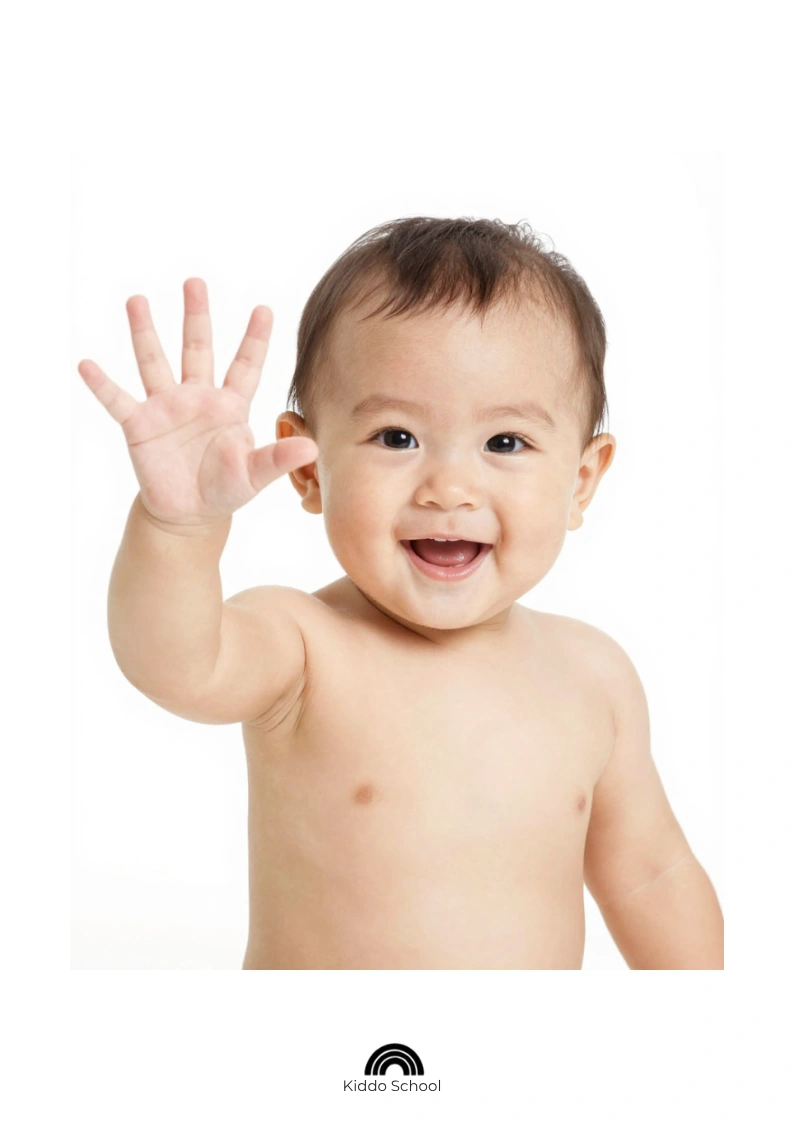
What is this?
Waving is a hand moving hello or goodbye — usually the first social gesture a baby performs on request. The card shows a hand mid-wave; the real performances happen at doors, windows, mirrors and every departing relative.
What does it mean?
A wave is communication without words: your baby sees someone go, moves a hand, and the someone answers. Naming it gives the gesture a soundtrack, and the daily traffic of arrivals and departures gives it honest stages all week.
What does the child need to know?
Wave about real goodbyes, not at the card: the front door, the window, the sibling leaving for school. Gestures live inside routines — the more real exits the word attaches to, the sooner your baby connects the movement with its meaning.
Why this matters
Gestures come before words and predict them: babies who wave and point early are building the turn-taking system that speech runs on. A wave on request is also your baby’s first deliberate social act — a small hand with a large milestone in it.
What it teaches
Gestural communication, social routines (hello and goodbye), imitation of movement, and the understanding that actions can be called up by words.
Words to learn
wavebyehellohandoutagain
Say this to your child
“"Waving! Wave bye-bye. The hand goes out and back — out and back. Bye-bye, Daddy. Bye-bye, window. Hello, morning! Waving says hello and waving says goodbye, and your little hand knows both."”
Step by step
- Show the card and move it gently side to side: "Waving! Wave bye-bye." The moving card demonstrates before you do.
- Wave your own hand slowly at the card: "Wave, wave." Exaggerate the turn at the wrist so the movement can be studied.
- Take your baby’s hand and wave it once towards the card or a real window, then release and watch what comes back.
- Stage one real goodbye — a leaving parent, a sibling, a mirror — and run the word there: "Bye-bye! Wave!" Real audiences make real waves.
- Finish by waving hello and goodbye at your baby yourself, and answer any wave back with a warm "hello!" — the reply is what makes the gesture worth repeating.
Look closer at the picture
The artwork is a single hand caught mid-wave — fingers up, the movement implied. Say that much, then look at the hands in the room: the card freezes the wave, and your baby’s hand is the one that animates it.
Ask your child
Watch the doorway moments across the week: does an arm lift when the word lands, or does the wave arrive late and unasked? Wonder aloud: "I wonder which goodbye is your favourite."
What your child can say or do
An arm pumped up and down at the closed door after someone leaves, a wrist-only wave aimed at the window, waving at the mirror with total delight, or the gesture offered at random — at 9–12 months, off-schedule waving is rehearsal, not confusion.
Out in the real world
Waves run through every day: the postwoman, the neighbour’s dog, a grandparent on a video call, the bath toy going "bye-bye" down the plughole. Every goodbye is a stage, and the word is the ticket.
Try it together
Wave relay: you wave, wait, and answer any wave back with another wave. Long chains of hello-and-back are exactly what conversation feels like to a baby — the wave is simply the first thing they can say in it.
Understanding check
Parent self-check: did you attach the word to at least one real goodbye this week, and did you answer every wave you caught? A wave ignored is a letter unanswered, and babies notice.
Parent tips
Do not drill the wave at the card alone — gestures grow on people and doors, not on paper. If your baby waved wildly for a week then stopped, that is normal calibration; keep waving, and the pause passes.
Staying safe
Wave with arms in open space, away from door frames and table edges, and keep the card out of your baby’s hand during the excited part — a paper edge flaps worse than it waves. Doorway goodbyes need one grown-up per doorway.
This lesson pairs with the Waving flashcard in the library — print it, show it, keep it on the fridge. Back to First Actions & Body Parts (Baby 2).