

Hand — a step-by-step lesson for grown-up and child
Body words live on the body, and this card starts the Baby 2 habit: name the part where it lives, then let your baby’s own hands answer.
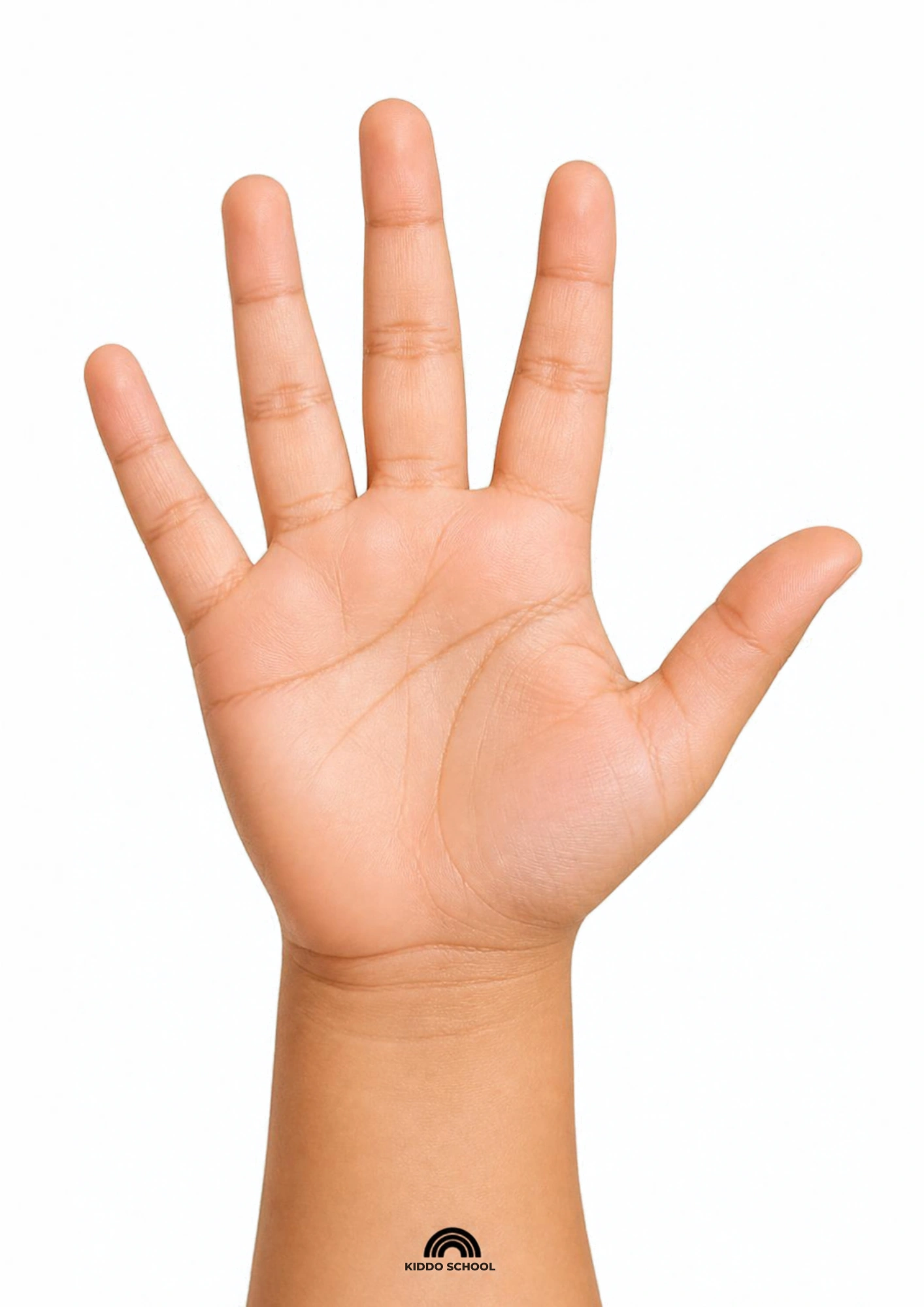
What is this?
A hand is the reaching, grabbing, clapping tool at the end of each arm — and at 9–12 months it is the busiest part of your baby’s body. The card shows a single open hand, drawn big and plain, so the word has a picture worth studying.
What does it mean?
Between nine and twelve months hands take over: they grab the spoon, rake the crumb, learn the pincer pick and beat a joyful rhythm on everything within reach. Naming the hand gives your baby a word for the instrument doing all that work.
What does the child need to know?
The method is touch-and-say: name "hand" while a hand is actually doing something — patting, holding, banging. Body words stick when the part is felt as well as shown, so the card opens the naming and your baby’s own skin finishes it.
Why this matters
Body-part words are usually among the earliest vocabulary a baby understands, because they are always available, always touchable and always in use. A named hand also feeds imitation — clapping, waving and pointing all run on hands.
What it teaches
Body awareness, vocabulary understanding (words known long before they are said), pincer grip practice, and the imitation loop this whole stage is built on.
Words to learn
handfingersopenwidetapclap
Say this to your child
“"Hand! This is a hand. See the fingers, all in a row. Here is your hand — hello, hand. And here is my hand. Hands hold, hands tap, hands clap. What busy hands you have."”
Step by step
- Sit your baby on your lap with both their hands in view, then show the card: "Hand. This is a hand."
- Press your baby’s palm gently against the card so picture and feeling arrive together — hand, card, hand.
- Open and close your own free hand slowly beside it, saying "open... wide..." and let your baby study the moving fingers.
- Offer one finger to grip, then name it again: "Hand. You are holding my hand." The grip itself is this card’s live demonstration.
- Finish by patting the card together, one palm over the other, and stop while the game is still fun.
Look closer at the picture
The artwork is a single open hand — big, plain and nothing else on the card. Say exactly that much, then turn to the better show: your baby’s hands, gripping, patting and spreading, the moving version of the same picture.
Ask your child
Watch what the hands do once the word has landed: a grab at the card, a pat, fingers spreading against the picture? Wonder aloud, to nobody in particular: "I wonder if that grip counts as applause yet."
What your child can say or do
A palm slapping flat onto the card, fingers raking at its edge, a pincer pick at one corner, or both hands meeting in an accidental first clap — at 9–12 months every one of these is the hand card being answered.
Out in the real world
Hands fill the day: the hand that holds the spoon, the hand that waves at the window, the hand that finds yours in a dark room. Say the word at each one and the card repeats itself a dozen times before dinner.
Try it together
Hand sandwich: your hand, then the card, then your baby’s hand, patting the stack in turns. Simple repetition plus touch — and the giggles it pulls are the sign the game is working.
Understanding check
Parent self-check: did you say the word while the part was actually being used, and did your baby land one honest grab or pat? A word on a still card is half a lesson; a word on a moving hand is the whole thing.
Parent tips
Follow the hands, not the plan: if your baby would rather chew the corner than study the picture, that is a nine-month-old’s honest review. Naming hands during real grips — spoon, rail, your nose — matters more than any second look at the card.
Staying safe
Keep the card in your hands, not in an unattended grip: paper edges soften with chewing and can flake. Mouthing is normal learning at this age — inspect the card afterwards, and retire any corner that is turning to pulp.
This lesson pairs with the Hand flashcard in the library — print it, show it, keep it on the fridge. Back to First Actions & Body Parts (Baby 2).