
Bandage — a step-by-step lesson for grown-up and child
This lesson teaches the bandage as teamwork: the bandage keeps the spot clean, and the body — the real hero — does the quiet healing underneath.
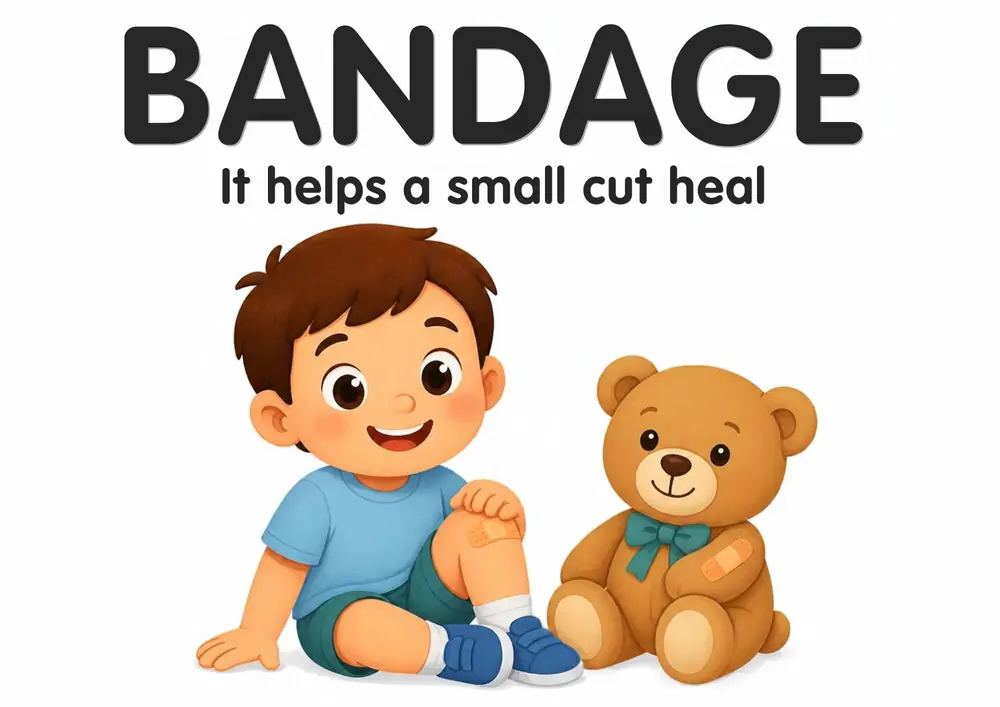
What is this?
A bandage is a small soft covering for a small cut — it keeps dirt out so the skin can knit itself back together.
What does it mean?
A bandage turns an "ow" into a job half-done: cleaned, covered, healing. The ritual matters as much as the plaster — clean, stick, press, "all better," because the ritual is the comfort.
What does the child need to know?
You need the card and a box of bandages. Teddies get bandaged first (paw scrapes are frequent in teddy society), then one "just because" bandage for the child — worn proudly is allowed.
Why this matters
Children who have applied ten bandages to teddies meet the real one with steady hands — theirs and the nurse’s. The skill is small; the calm it buys is not.
What it teaches
Fine motor (peeling, placing, pressing), sequencing (clean, cover, press), and the first-aid frame: helping hands, not scares.
Words to learn
bandagecutcleancoverhealall better
Say this to your child
“"Bandage! It helps a small cut heal. Clean it, stick it, press it — and your body does the healing work underneath. All better!"”
Step by step
- Show the card: "it helps a small cut heal."
- The order, always: clean the spot first, then stick, then press.
- Teddy hospital: wrap paws until the peeling gets smooth.
- One "just because" bandage for the child — a badge, worn proud.
- The ending word, every time: "all better."
Look closer at the picture
On this card the words "bandage — it helps a small cut heal" sit over a child sitting cross-legged with a small bandage on the knee, teddy bear beside.
Ask your child
"What goes on first, soap or bandage?" (soap — clean first) "What does the bandage do?" (keeps the spot clean) "Who does the healing?" (your body — the bandage helps)
What your child can say or do
Your child might run a bandage clinic for every toy, request a "just because" bandage weekly, or explain to grandma that the body heals and the bandage helps.
Out in the real world
Kitchens, playgrounds and grandpa’s workshop all keep bandages — the same clean-cover-press works at every one of them.
Try it together
Bandage Factory: a queue of stuffed patients, each with an invented tiny scrape; the nurse cleans (a wipe), covers (a bandage), presses and discharges with "all better!" Efficiency grows; so does calm.
Understanding check
Ask: "What does a bandage do?" (keeps the cut clean) "What comes first?" (cleaning) "Who does the real healing?" (your body)
Staying safe
Real wounds get a grown-up’s eyes first — the child’s bandage game stays on toys and "just because" skin. Bleeding that soaks, gapes or does not stop is a doctor moment, said calmly.
This lesson pairs with the Bandage flashcard in the library — print it, show it, keep it on the fridge. Back to Doctor Visit.