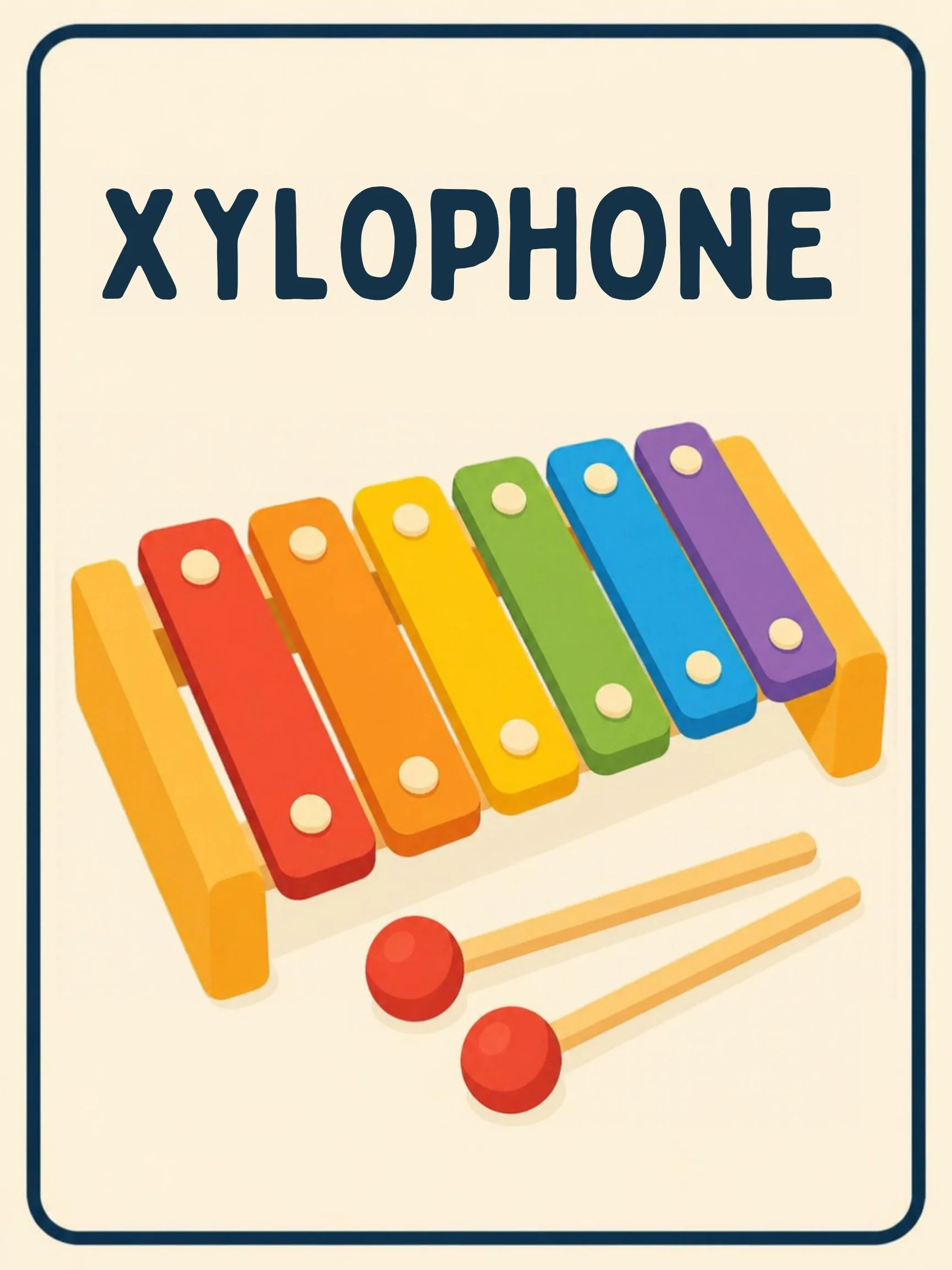
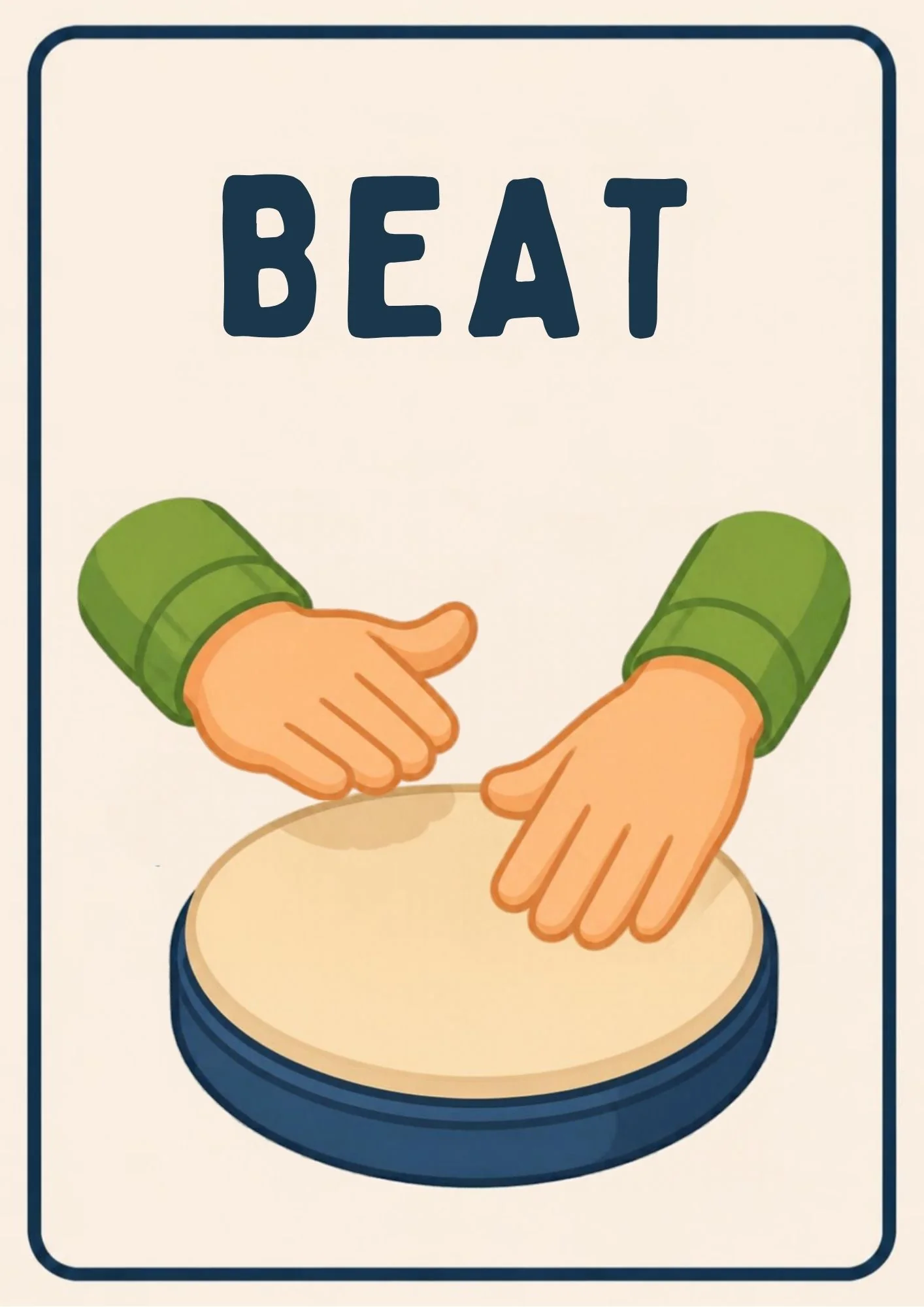
Violin Flashcard for Preschoolers
A violin — four strings, a bow, and the closest thing to a human voice that wood and hair can build. It rests on the shoulder, whispers like wind and sings like the star of every fairy tale.
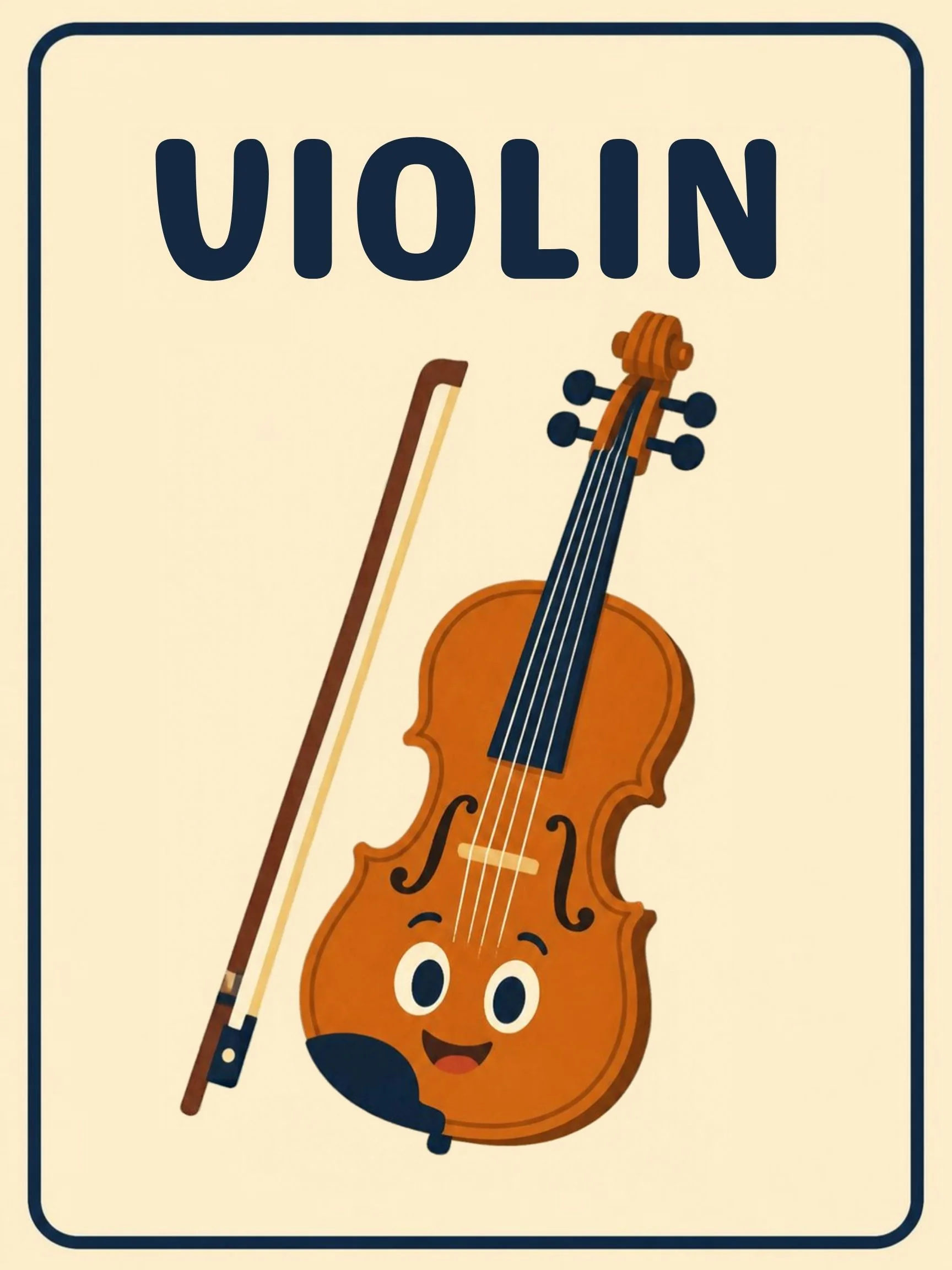
What is this instrument?
A violin has four strings tuned low to high and a bow of horsehair to draw across them. It sits under the chin on the shoulder — the left hand fingers the notes, the right arm does the singing.
What does it sound like?
The melody crown. Violins lead orchestras, waltzes, lullabies and every chase scene: fast bows sparkle, slow bows ache, and the smallest pressure change tells a different story.
Why it helps a preschooler
The bow is a long, slow motion — perfect training for the long, slow strokes that later write letters. And the violin’s crying-singing range gives feelings a vocabulary without words.
Say it together
“Eeeeee-ahh — high and sweet, sometimes a purr, sometimes a cry. The violin sings while you stroke it.”
Say it naturally, then wait. Whatever comes back — the word, the sound, a point, a giggle — is the right answer.
Try this
Arm bow, table violin: stroke one arm slowly with the other while singing aaaa — long bow, long note. Short bows for a running mouse song, long bows for a sleepy moon song. Bow changes tell all.
Quick parent note
Small violins exist in fractions — a sixteenth-size fits a three-year-old. Until then, the arm-violin is fully legitimate: every great violinist spent time pretending before the shoulder rest.
From the The Music Room (Class 23) class on the Learning Path.
More cards to try.
Nearby cards from this set and its closest friends.