Draw a story map.
Every adventure starts with a little idea.
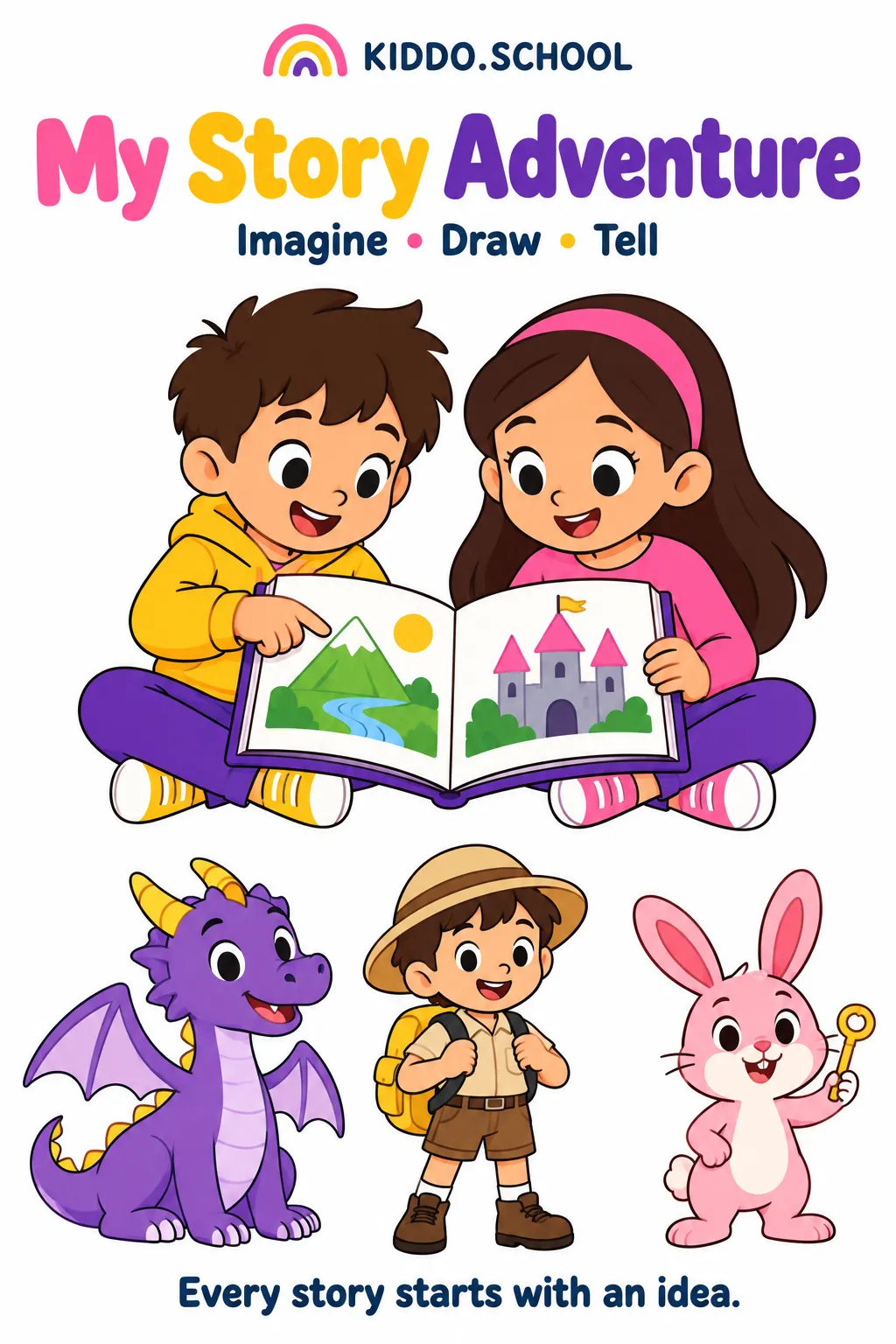
You do not need a full page of writing to tell a good story. A map can hold the places, problems and surprises. Use pictures and a few words to plan an adventure, then tell it aloud.
Choose a storytelling activity.
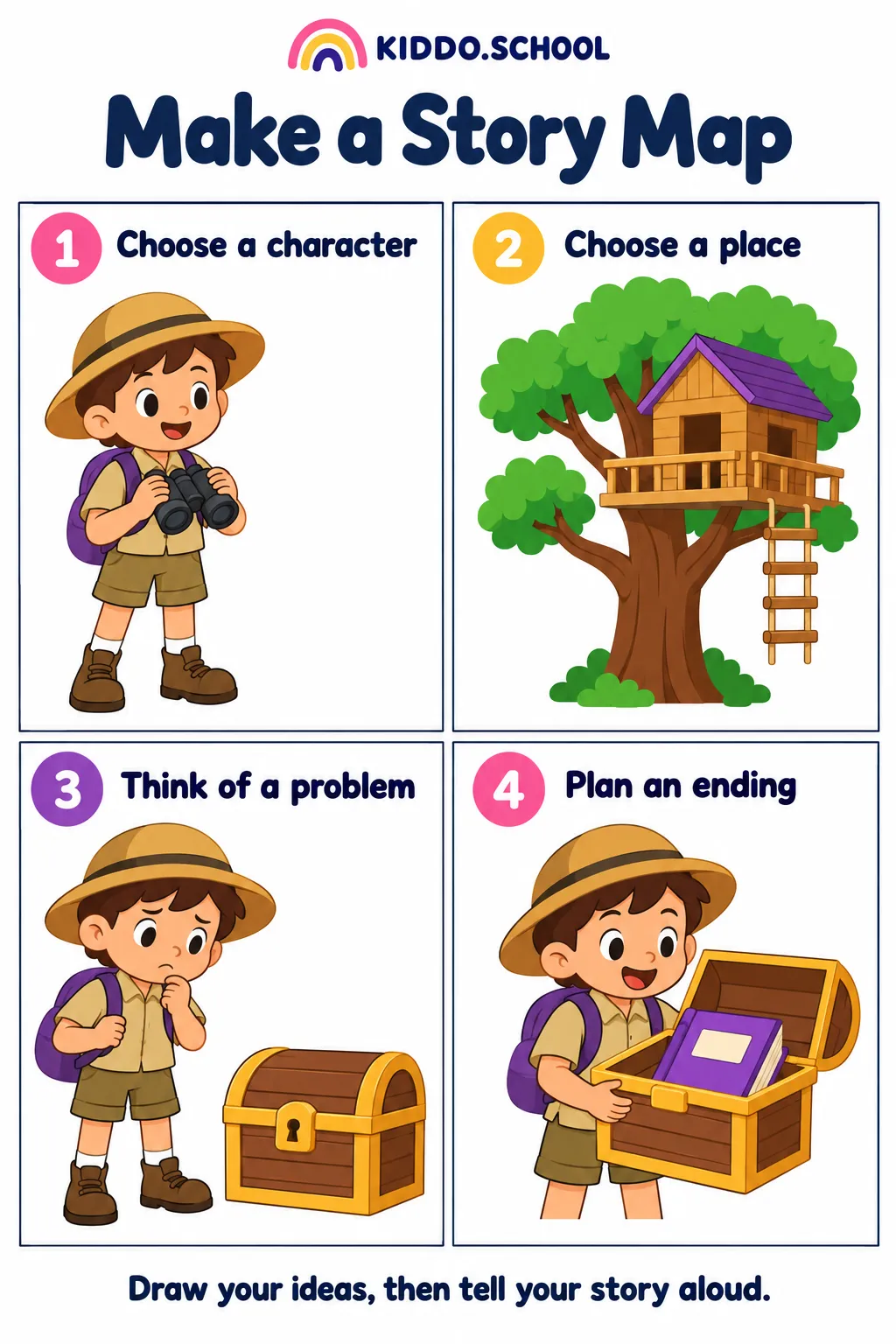 Make a Story Map
Choose a character, imagine a place and plan a story with pictures.
Draw · Type · Save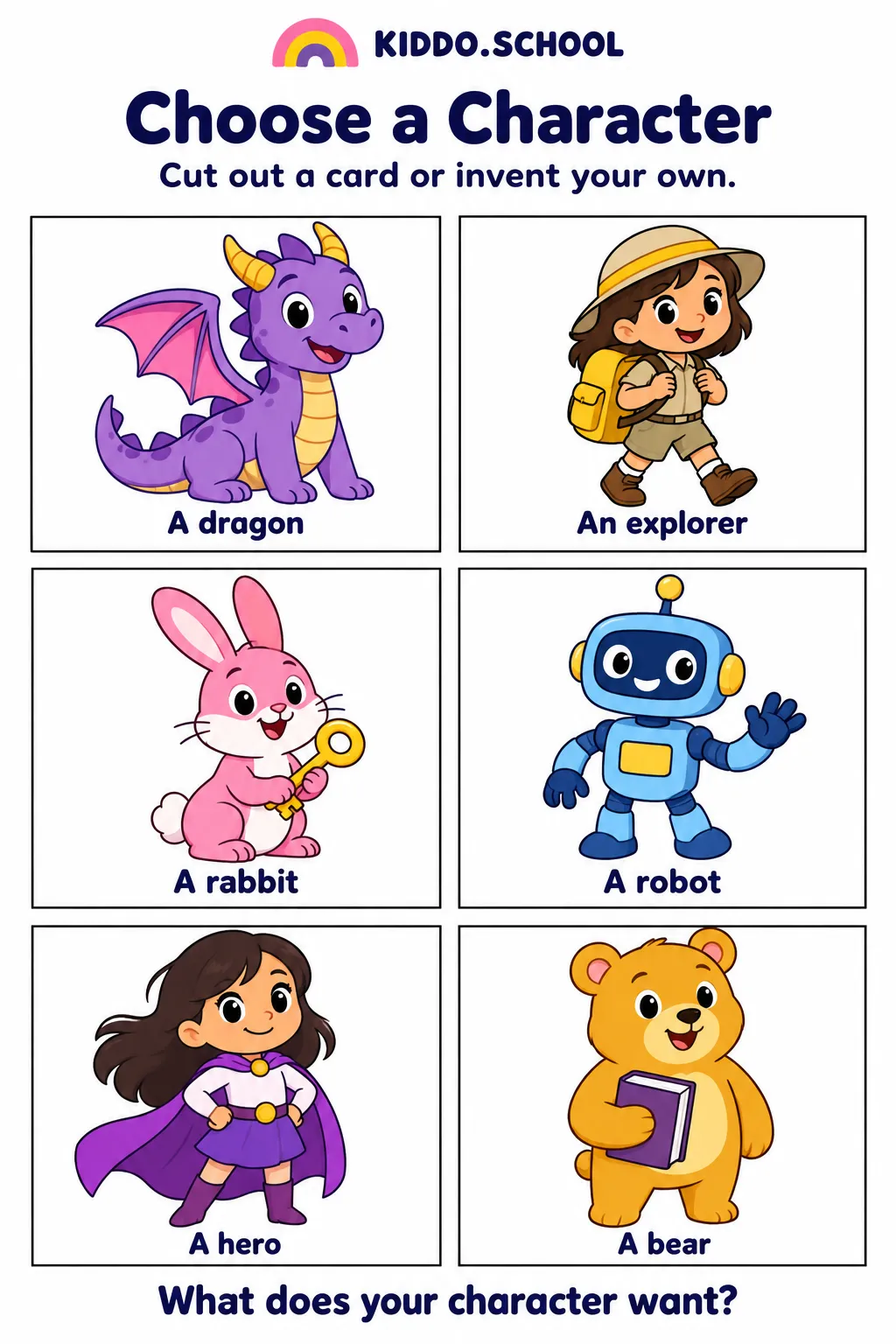 Choose a Story Character
Meet six picture characters or invent someone completely new.
Draw · Type · Save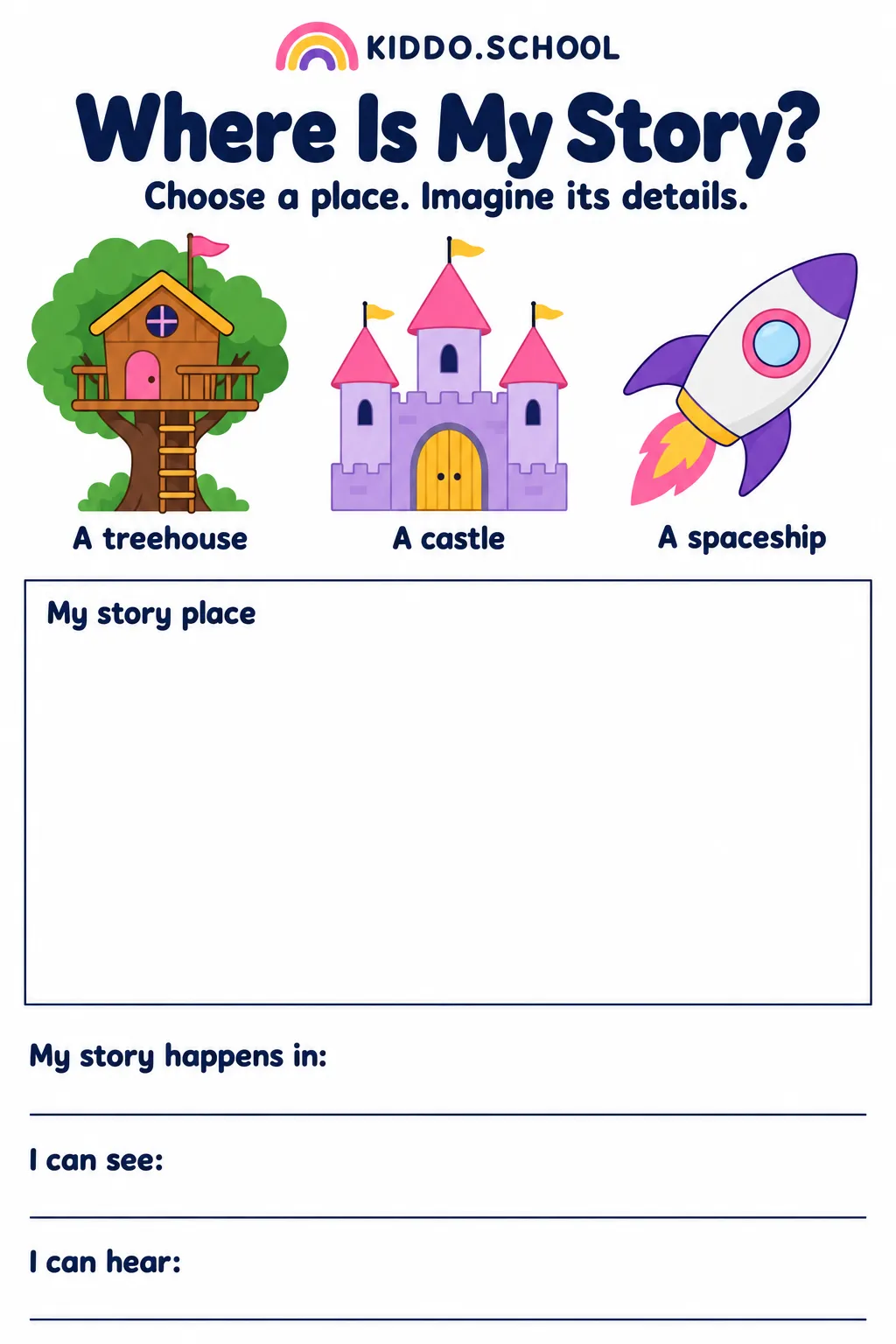 Where Is My Story?
Imagine a place and choose details that help someone picture it.
Draw · Type · Save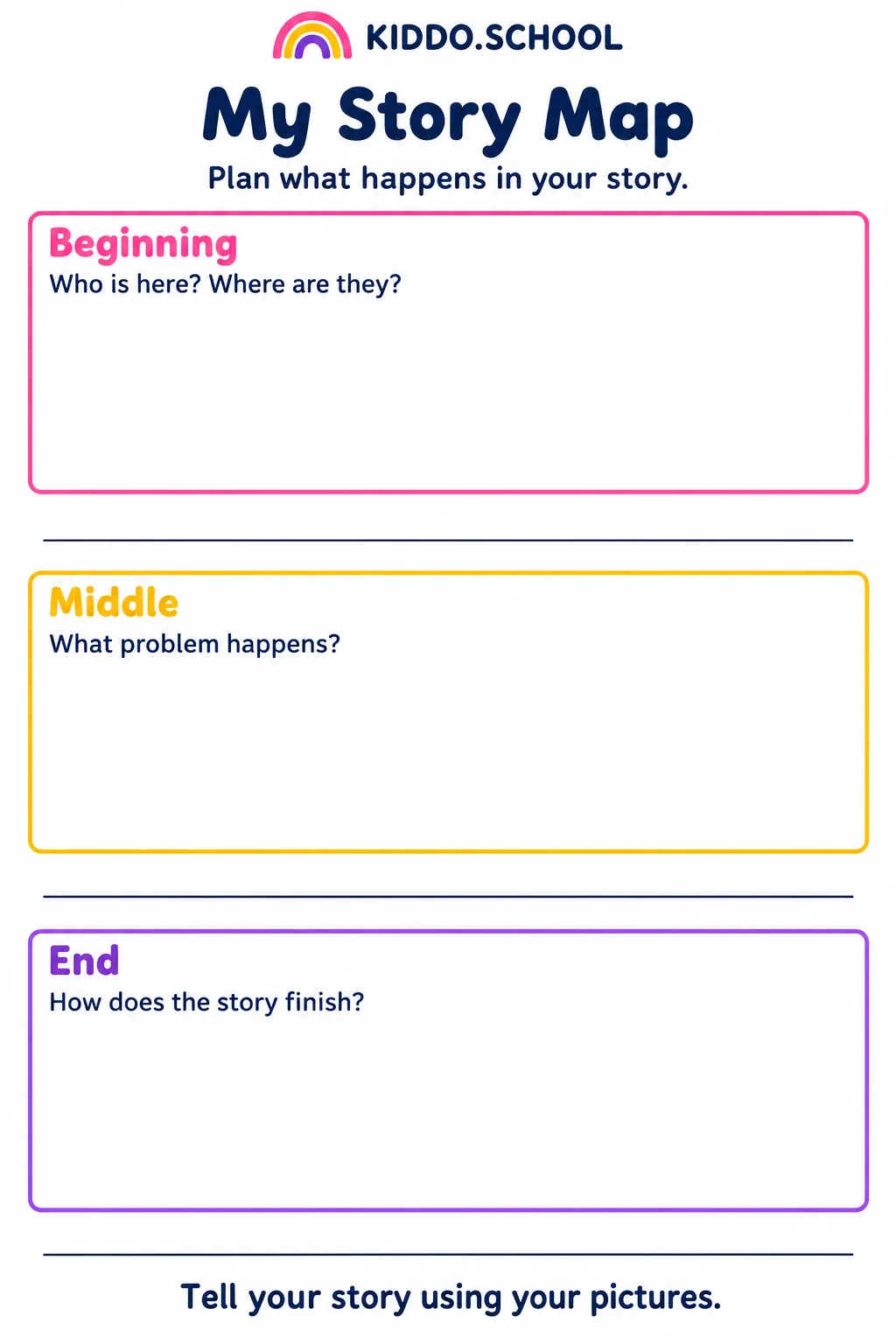 My Beginning, Middle and End
Arrange your ideas into three connected parts.
Draw · Type · Save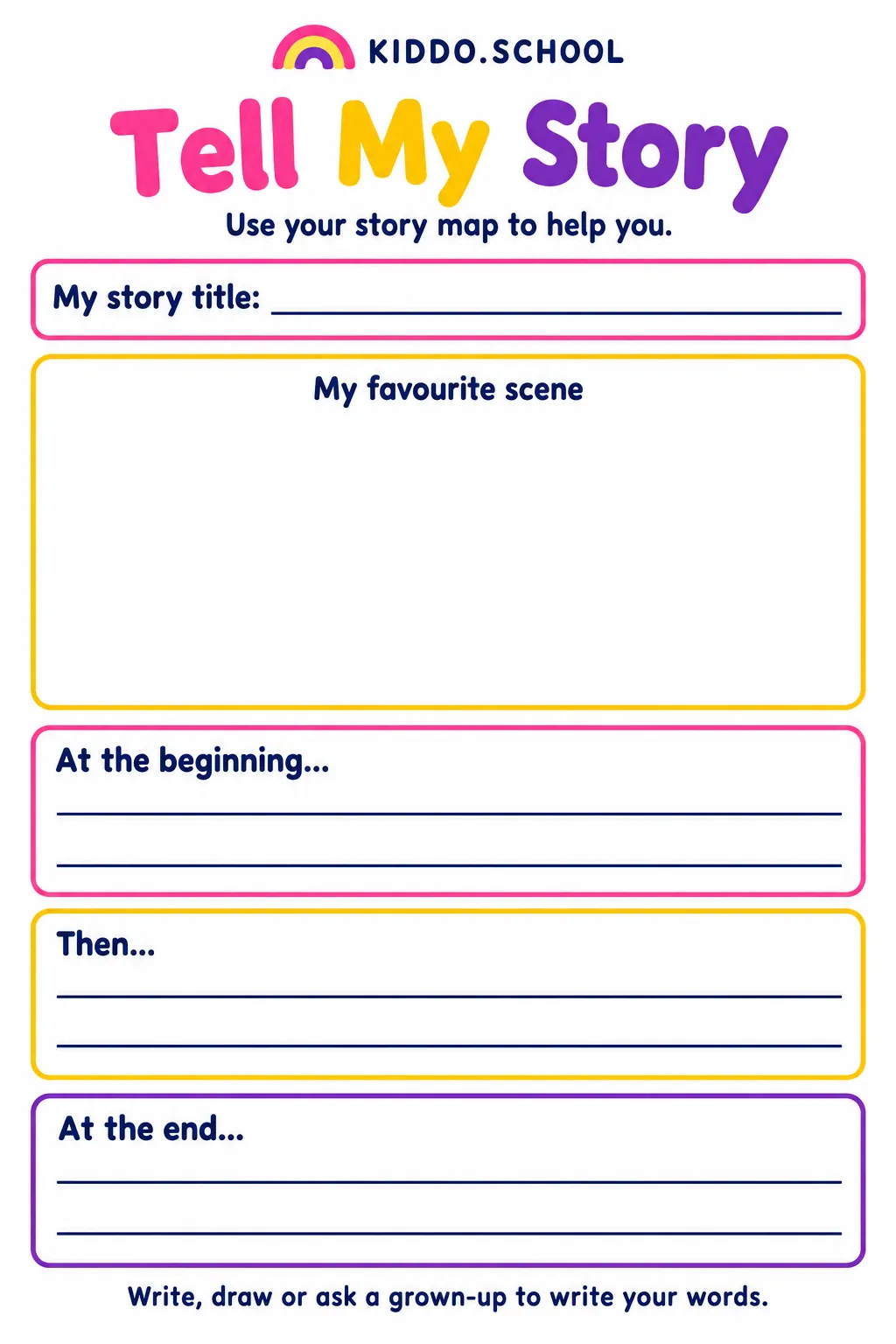 Tell My Story
Turn your picture plan into a story in your own words.
Draw · Type · SaveLet's make it happen.
Meet your character
Draw a character in the first space. Decide what they want: perhaps to find a lost kite or deliver a letter.
Choose a setting
Draw where the story begins. Add two details that tell us about the place, such as tall trees or a noisy market.
Put a problem in the way
In the middle space, draw something that stops the character getting what they want. Keep the problem small enough to explore in one story.
Find a way through
In the final space, draw what the character tries and how it turns out. An ending can be surprising without solving everything perfectly.
Tell the whole adventure
Trace a finger from beginning to middle to end as you tell the story. Ask a listener which part they would like to hear more about; add that detail.
What's happening here?
A beginning, a problem and an ending create a structure a listener can follow. Drawing first can help children hold their ideas in order before adding words or sentences.
Keep the wondering going.
- What does your character want most?
- How does the problem change their plan?
- Which detail helps a listener imagine the setting?
Make it work for you.
Keep it simple
An adult can scribe a sentence under each drawing. Tell the story together using first, next and finally.
Take it further
Add a second attempt that fails before the ending. Show how the character feels through an action or a line of dialogue.
Not quite going to plan?
Stuck for a problem? Try a closed gate, a missing object or a sudden change in weather. Ask what the character could try next rather than supplying the ending.
My story map
Draw your adventure in order. Tell it aloud using first, next and finally.
Image · prints on A4 or Letter using “fit to page”. Plain paper works just as well.
Download the sheet Open image to print ↗You may print and use this original activity sheet at home or in your classroom. Please link to the activity page when sharing it online.