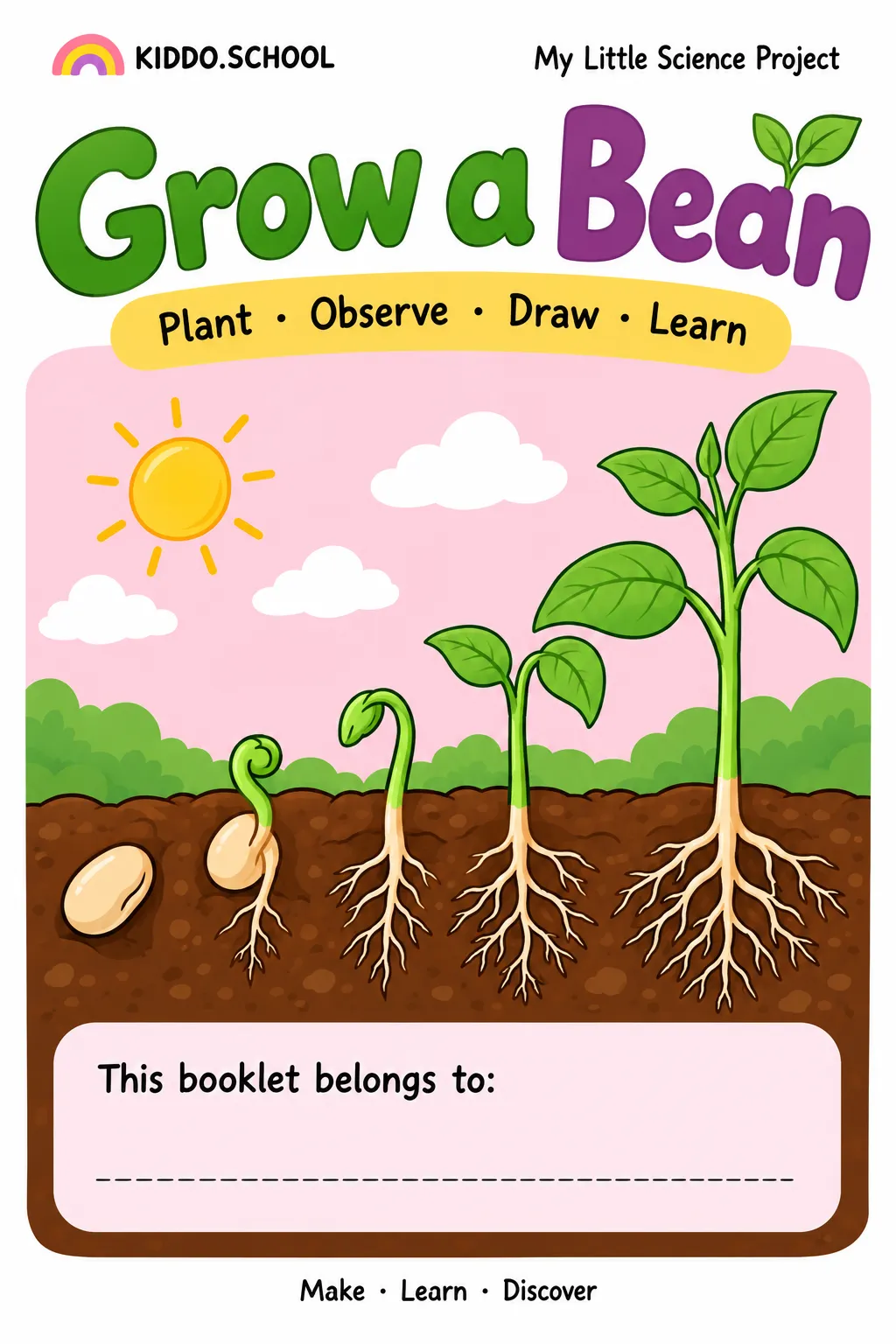
Grow a bean.
A tiny seed. A whole lot to discover.
A clear container lets you look at the part of a plant that usually hides underground. Set up a bean, make a prediction, and return each day to see what has changed. Germination can take several days; every seed has its own pace.
Seven little investigations.
Draw, type and save your work on separate activity pages.
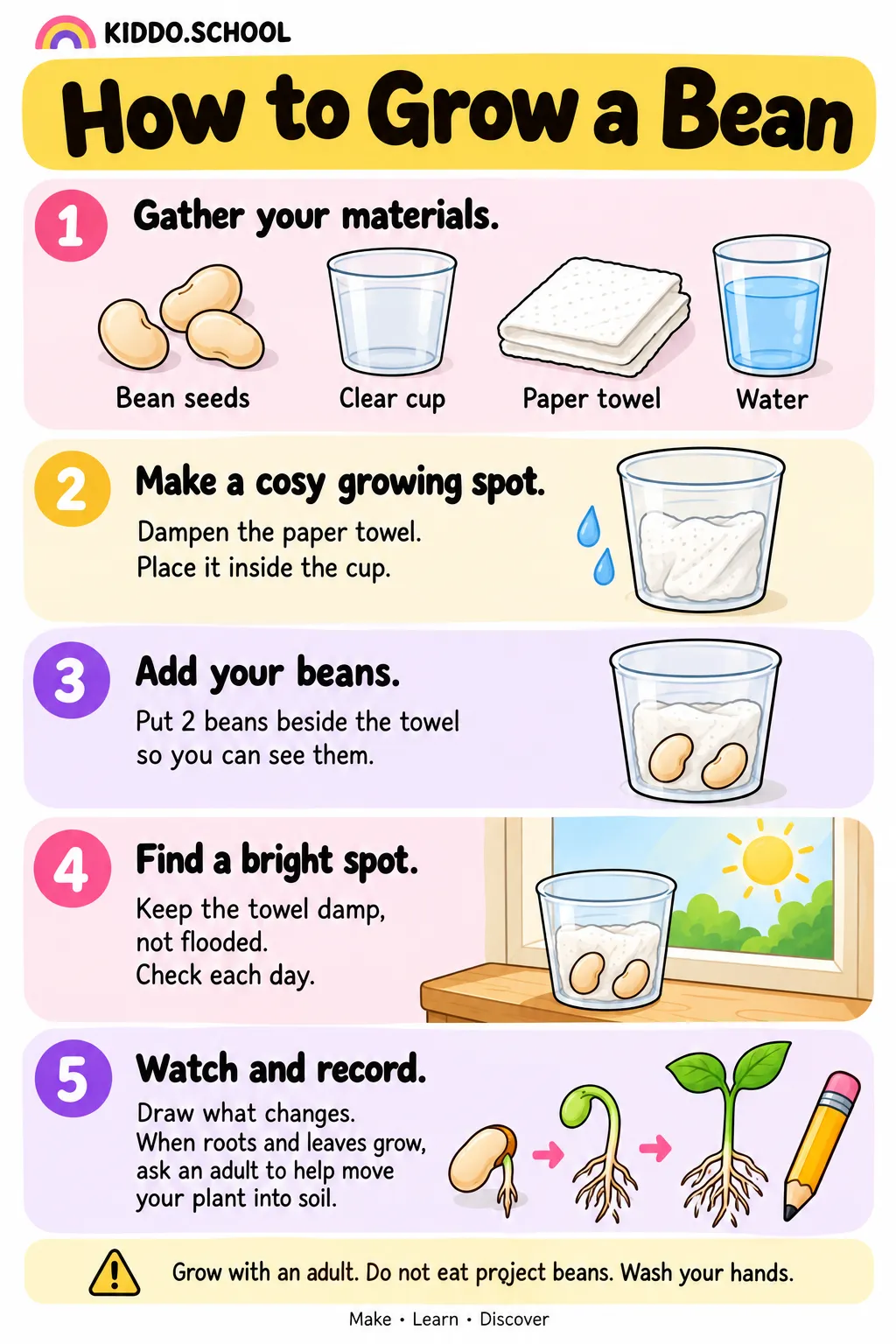 01How to Grow a Bean
Set up a tiny science project with a grown-up. Make a prediction, then check your bean each day.
Draw · Type · Save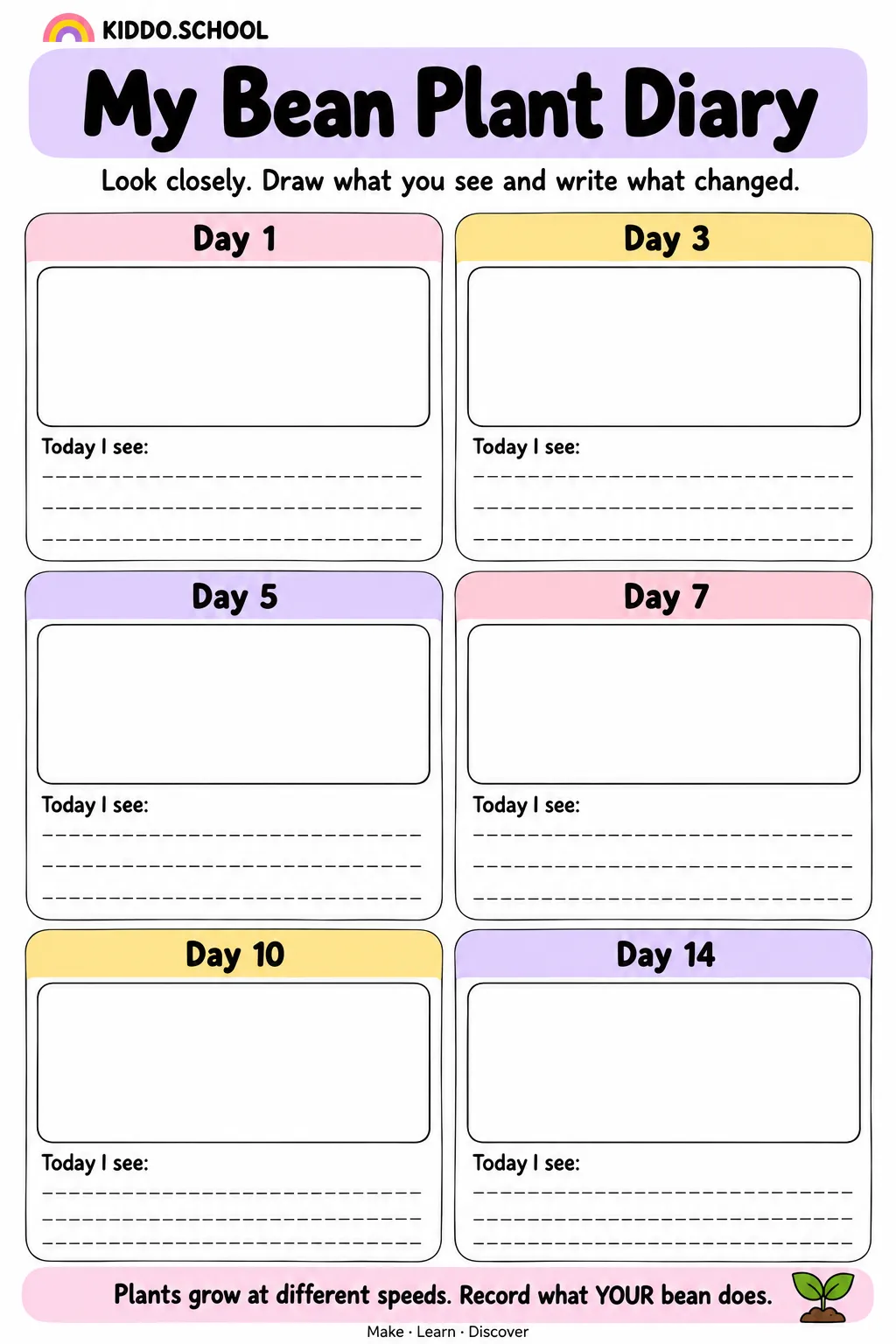 02My Plant Diary
Look at the same bean over several days. Record what you actually see—even if nothing has changed yet.
Draw · Type · Save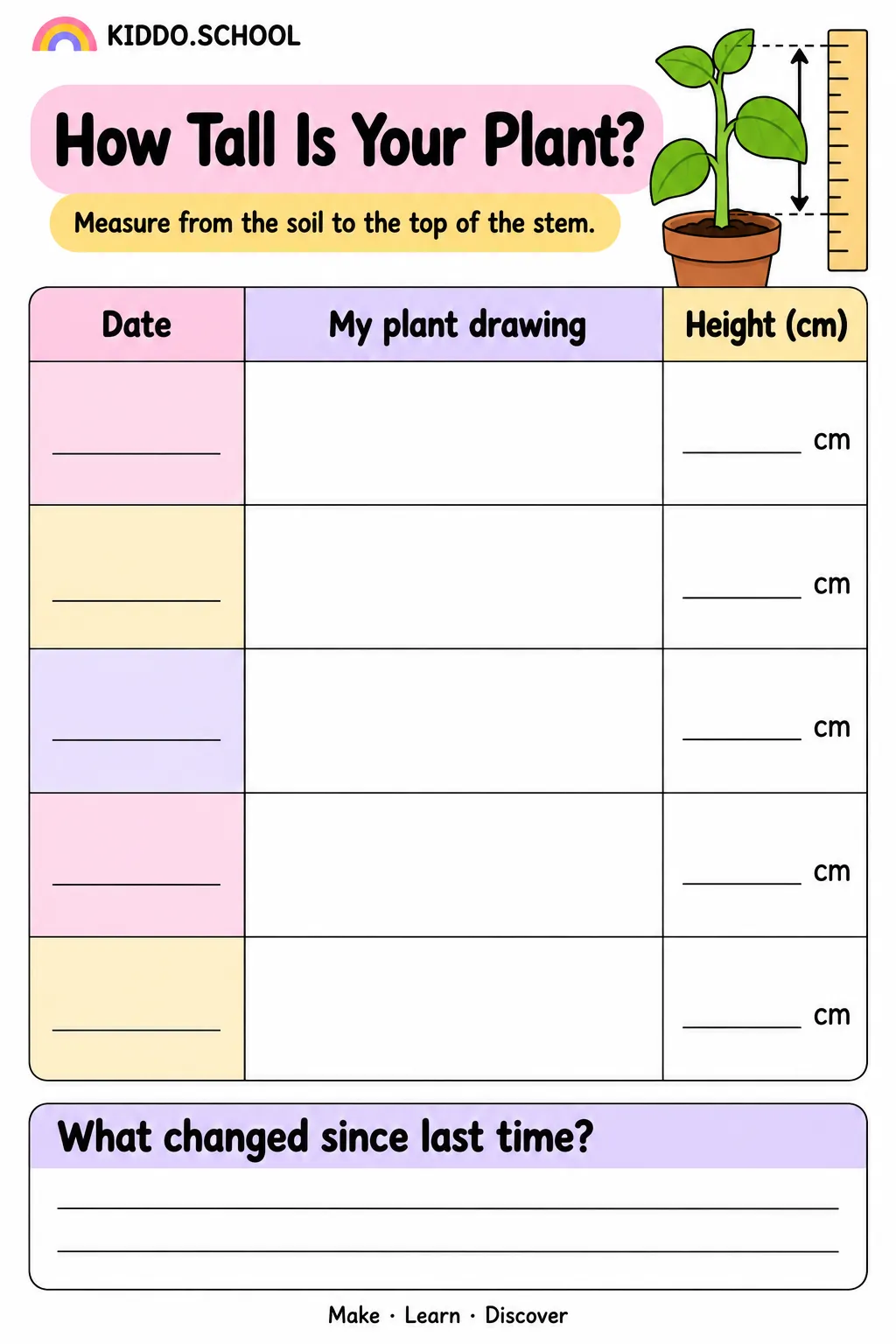 03How Tall Is Your Plant?
Once your seedling is planted in soil, measure its height and compare your records.
Draw · Type · Save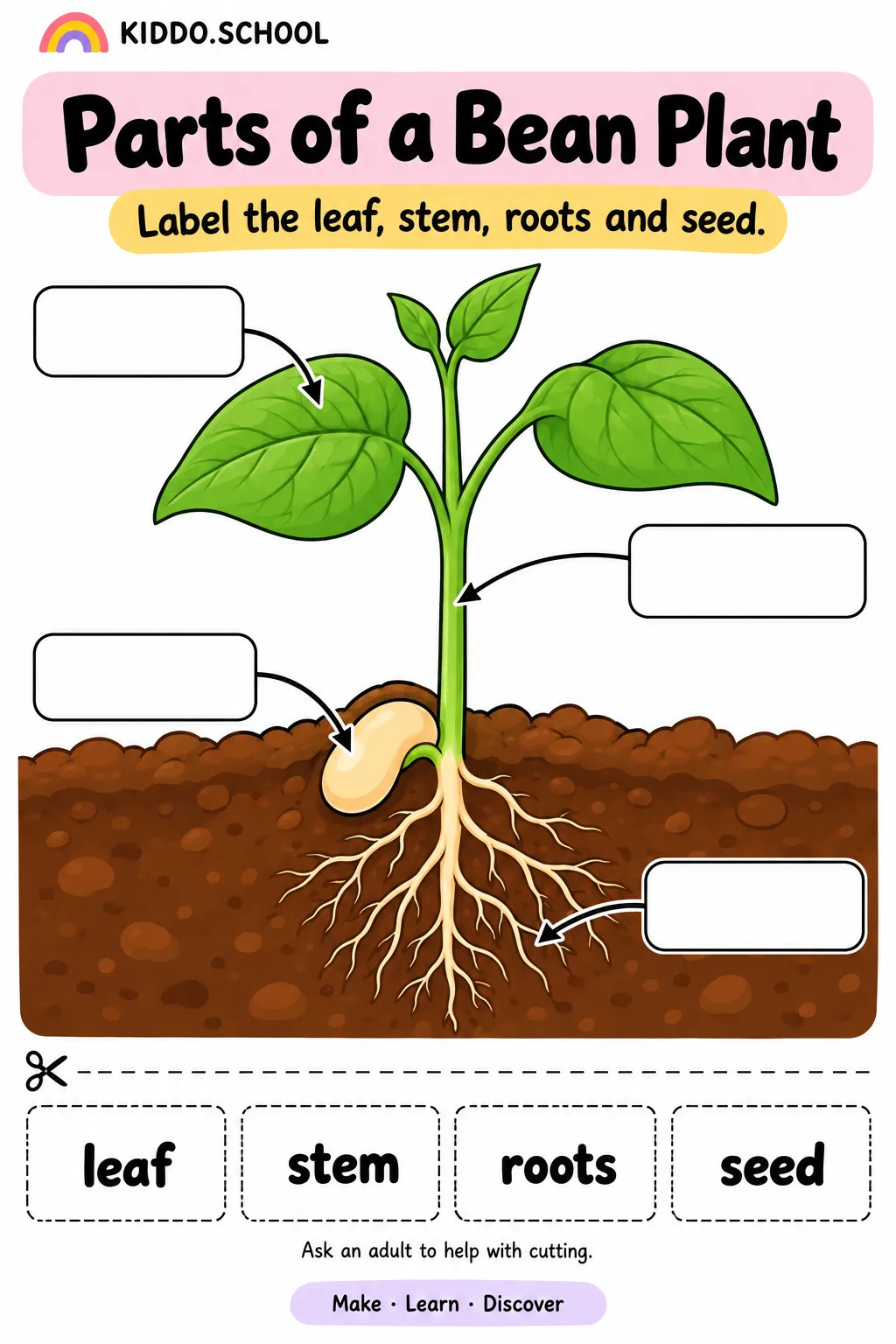 04Parts of My Plant
Look for a seed, root, stem and leaf. Draw each part, name it and describe what it does.
Draw · Type · Save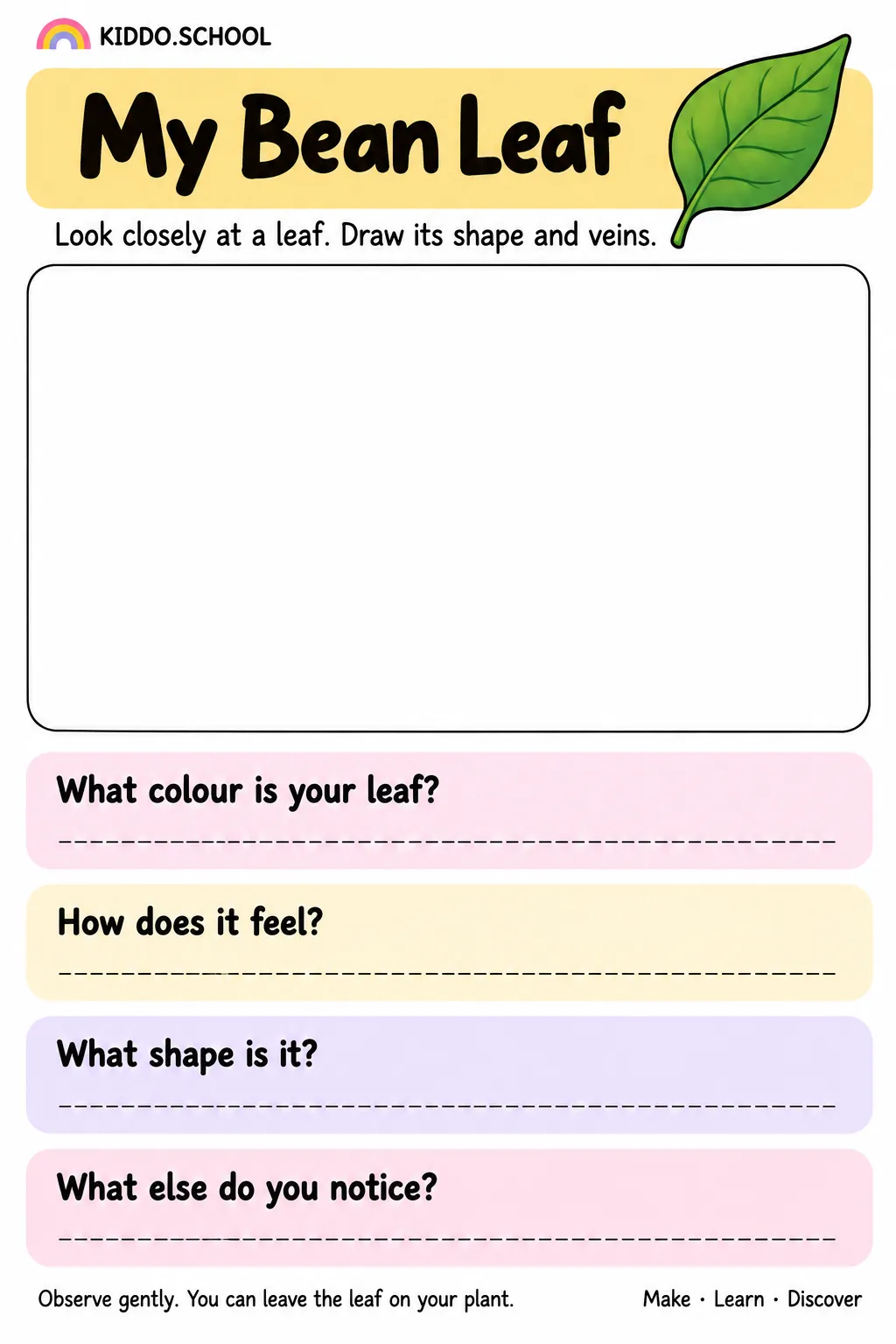 05My Bean Leaf
Become a leaf detective. Look gently and leave the leaf attached to the plant.
Draw · Type · Save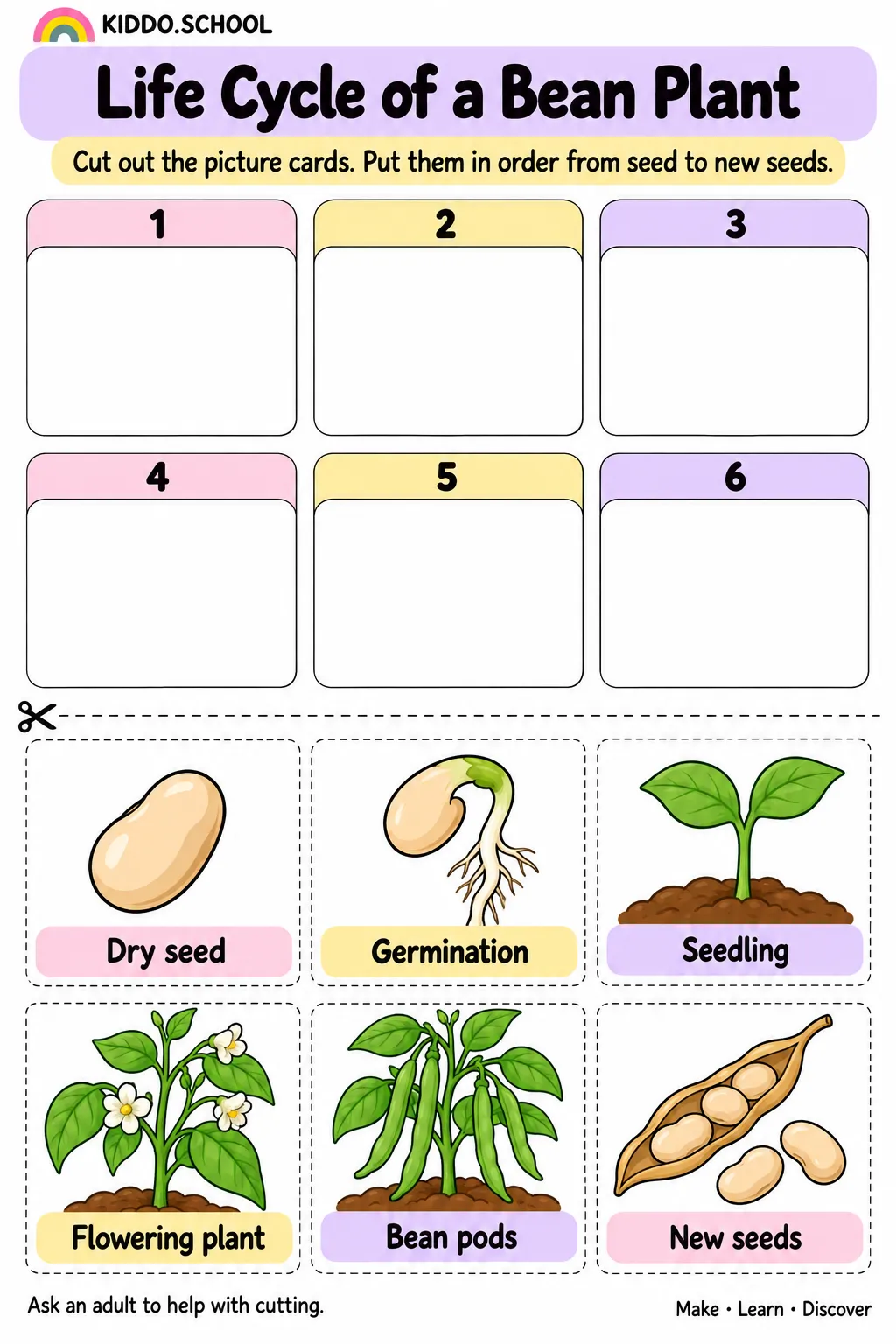 06Life Cycle of a Bean Plant
Follow a bean from seed to new seeds. Use the picture cards, then explain the changes in your own words.
Draw · Type · Save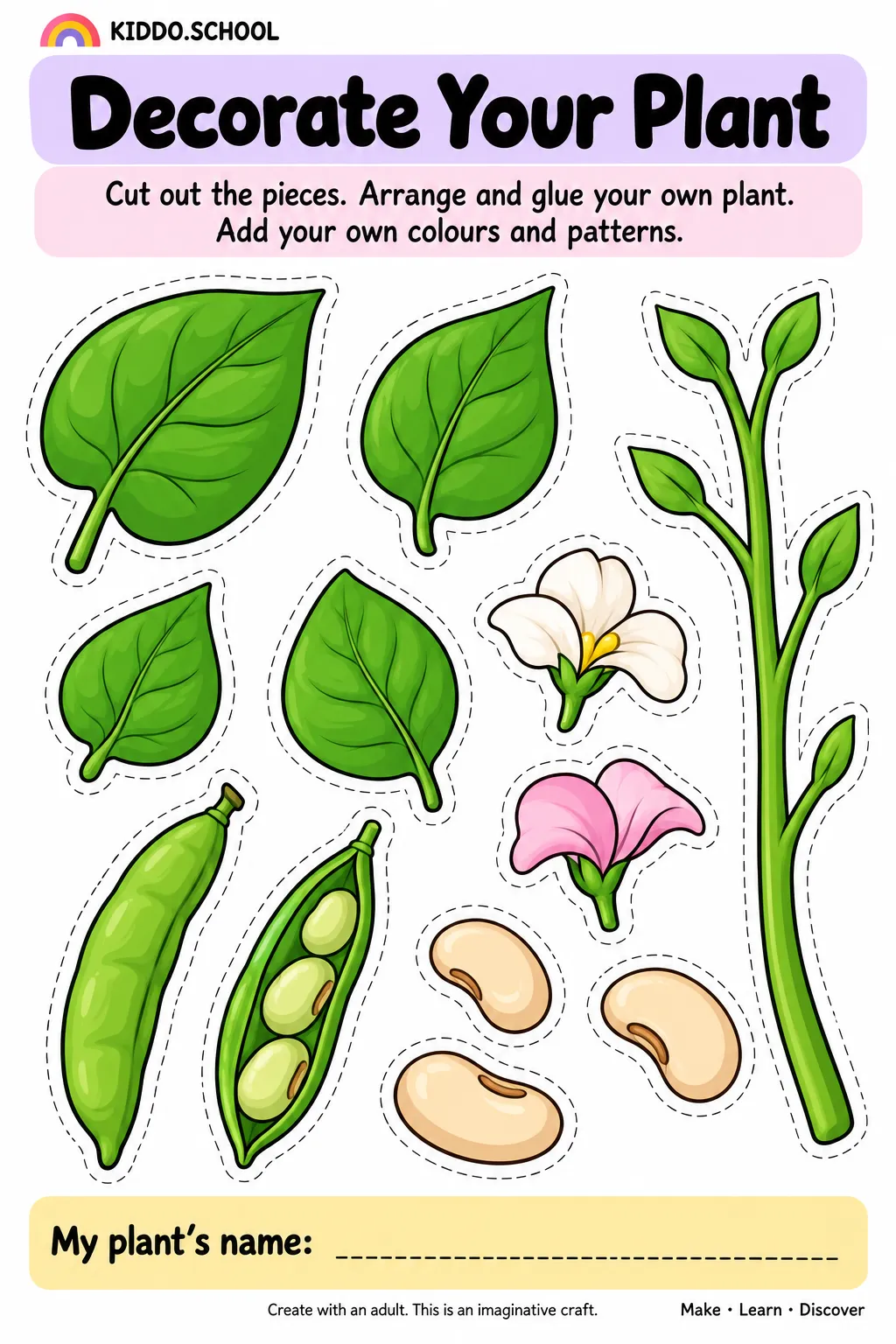 07Decorate Your Plant
Design an imaginary plant with leaves, flowers, pods and seeds. Draw on screen or use the printable cutouts.
Draw · Type · SaveLet's make it happen.
Wake up the seeds
Soak the bean seeds in water overnight, then drain. Prepare two or three so you can compare them; some seeds may not sprout.
Make a window for the roots
Dampen a folded paper towel and place it against the inside of the container. It should feel damp, not drip. Tuck the beans between the towel and the container wall so you can see them.
Choose a place and predict
Stand the open container in a warm spot with indirect daylight, away from a hot windowsill. Draw the beans and predict what will appear first. Label the date.
Look a little every day
Check once a day. Add a spoonful of water if the towel is drying out, and tip out standing water. Draw any changes. Once a root appears, measure it gently through the container; do not pull the bean out.
Give your seedling a new home
When roots and leaves have developed, ask an adult to help transplant the seedling into potting soil. Keep the shoot above the soil. Continue observing in a bright place and water as needed.
What's happening here?
Water allows the seed to start germinating. The first root anchors the seedling and takes up water; a shoot grows upward. Stored food in the seed supports early growth. Once leaves develop, light helps the plant make its own food.
Keep the wondering going.
- What changed first: the seed coat, root or shoot?
- Did every bean grow at the same speed?
- What could you measure in the same way each day?
Make it work for you.
Keep it simple
An adult can write down a child's spoken observations. Draw just one bean each day.
Take it further
Measure the root at the same time each day and graph its length. Keep the light, seed type and amount of water consistent.
Not quite going to plan?
No change after about a week? Check that the towel stays damp and the spot is warm. Try fresh seeds if needed. A bad smell or fuzzy growth means an adult should discard the setup and start again with a clean container.
My bean diary
Draw your bean on three different days. Add the date and one thing you notice.
Image · prints on A4 or Letter using “fit to page”. Plain paper works just as well.
Download the sheet Open image to print ↗You may print and use this original activity sheet at home or in your classroom. Please link to the activity page when sharing it online.