
Dance — a step-by-step lesson for grown-up and child
This lesson teaches dance — what happens when the beat climbs out of your clapping hands and moves into your whole body: music you do not just hear but BECOME.
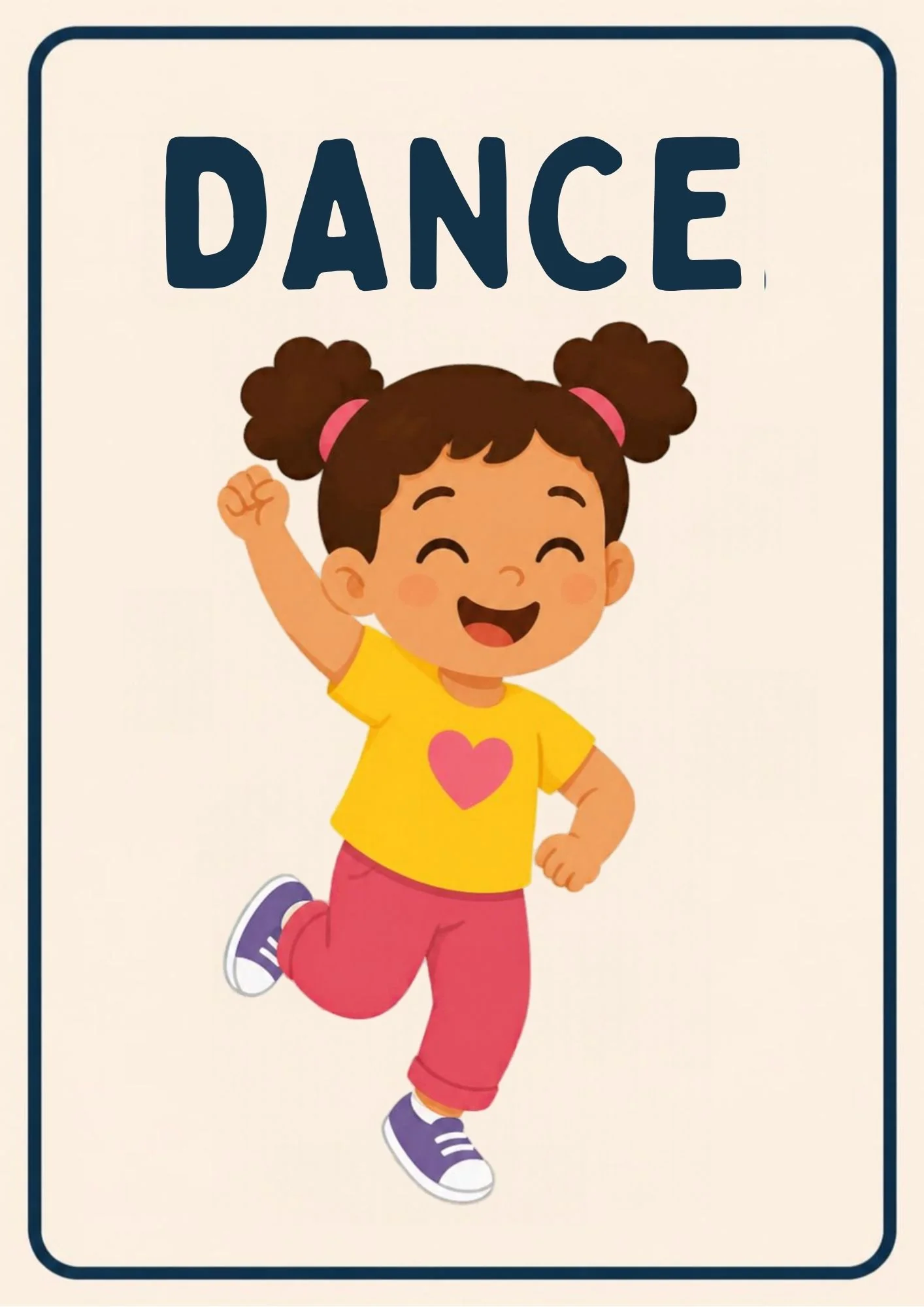
What is this?
Dance is moving to music: steps, sways, spins and jumps that follow the beat and tell the song with your body. Every culture on Earth dances — it is music’s oldest way of being understood.
What does it mean?
Dance completes the musical body: ears found the beat, hands clapped it, and now the feet, hips and shoulders join. Full-body listening is the goal — and the freeze dance is its best trainer, because stopping ON the beat proves the body was truly listening.
What does the child need to know?
Your child needs three dance ideas: the body follows the BEAT — steps land on the pulse, not between; the music suggests the mood — sleepy songs sway, jumpy songs jump; and freezing is part of dancing — stop when the music stops, statue-still.
Why this matters
Full-body rhythm is the deepest musicality a four-year-old can own — and it is invisible in tests but obvious on every dance floor for the rest of their life.
What it teaches
Whole-body beat keeping, mood-to-movement mapping, start-stop control (the freeze), and expressive movement — the body telling the song.
Words to learn
dancemovefollowbeatfreezeswayspin
Say this to your child
“"Dance is the beat climbing into your whole body! March on the pulse — feet on the clock. Sway when the music is sleepy, jump when it is jumpy — the music suggests, your body answers. And when the music STOPS: freeze like a statue! Freezing is dancing’s proof — it shows your whole body was listening."”
Step by step
- Show the card: "This is dance — the beat living in your whole body."
- Follow the beat: play a song and march ONLY on the pulse — feet on the clock. Then let the hips sway, the shoulders bounce: the whole body joins the clock.
- Mood mapping: change the songs — a slow sleepy song: sway like seaweed. A jumpy song: hop like popcorn. The music suggests; the body answers.
- The freeze: when the music STOPS — statue! No wiggles, no giggles (well, a few). The freeze proves the feet were listening.
- Play the freeze dance below and close: "the body listens too."
Look closer at the picture
On this card the word "Dance" stands in big navy capitals inside the rounded frame, with a friendly dancing illustration below — exactly as the moving beat looks.
Ask your child
"What do our feet follow? What does sleepy music make the body do? What proves the body was listening?"
What your child can say or do
Your child might say: "Feet on the clock!" "Sleepy song — seaweed sway!" or the frozen statue: "FREEZE — nobody wiggles!"
Out in the real world
Dances live everywhere: weddings, kitchens, school gyms, the living-room carpet at 5pm. Put on any song tonight and march the pulse together — the beat is already in the room; dance lets it in.
Try it together
Freeze Dance: favourite songs on, everyone dances — full body, big joy. The pause button is the freeze caller: music off, STATUE, three seconds, music on, dance again. Five freezes, five statues, one enormous giggle. Then the mood round: sleepy song → seaweed; jumpy song → popcorn; royal song → slow proud marching. The body learned the whole language of music today.
Understanding check
Ask: "What does the body follow? What does the freeze prove? Who suggests the mood?" The beat, the listening, the music — three answers and the whole body plays.
Parent tips
Statues get praised louder than dances — the freeze is the skill. And let the child press the pause button once: being the freeze-caller is as educational as freezing.
This lesson pairs with the Dance flashcard in the library — print it, show it, keep it on the fridge. Back to Music Room (Class 23).