
Clap — a step-by-step lesson for grown-up and child
This lesson teaches the clap — the first instrument every human owns: two hands, zero setup, and enough rhythm to carry whole songs.
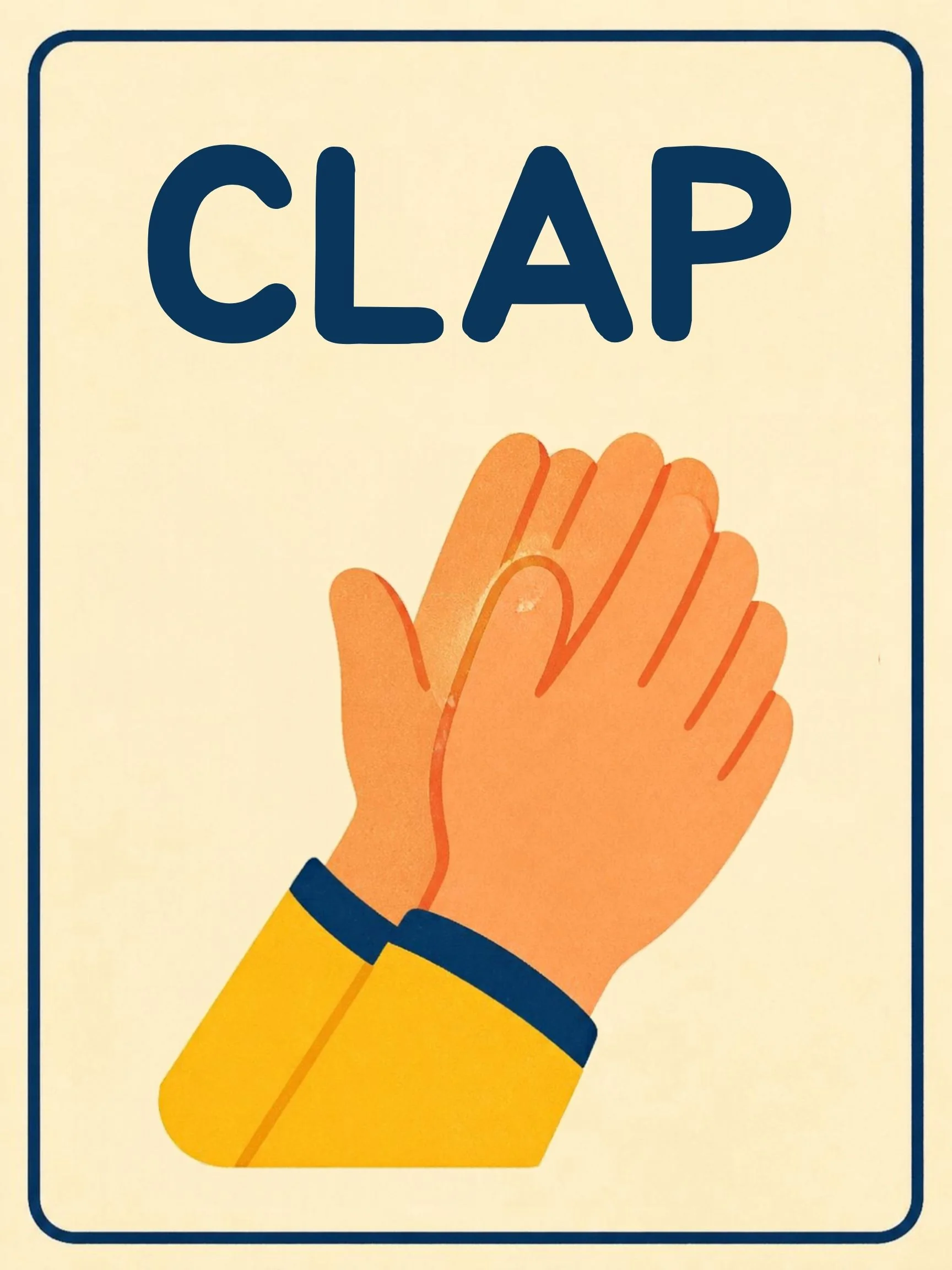
What is this?
A clap is body percussion: hands striking each other in a rhythm. Claps keep the beat, copy patterns, answer drums and applaud the show — the most versatile sound a body makes.
What does it mean?
The clap is music’s portable laboratory: no instrument, no setup, any room, any time. Echo games on claps train listening memory, and the pattern games build the rhythmic sentences that all instruments later speak.
What does the child need to know?
Your child needs three clap ideas: claps can be LOUD (cupped hands, big air) or SOFT (flat fingers, whisper-clap) — two volumes in one pair of hands; the echo is the game — hear it, say it back exactly; and patterns are sentences — clap-clap-rest means something, and so does clap… clap-clap-clap!
Why this matters
Echo-clapping is the best aural-memory exercise ever invented for small musicians — and it needs nothing but the hands they came with.
What it teaches
Aural memory (echo patterns), dynamic control (loud-soft claps), rhythm sentence building, and turn-taking — the clapper listens before answering.
Words to learn
clapbody percussionechopatternloudsoftrhythm
Say this to your child
“"The clap is your first instrument — born right into your hands! Loud clap — cup your hands, big air. Whisper clap — flat fingers, soft. And the oldest music game on Earth: I clap a pattern, you clap it back EXACTLY — clap-clap-rest! Your ears are the teacher, your hands are the speaker."”
Step by step
- Show the card: "This is clap — the instrument you were born carrying."
- Two volumes: cupped hands — CLAP! Flat fingers — clap, the whisper. Do both; the hands have a dial.
- The echo: I clap two — you clap two. I clap clap-rest — you clap clap-rest. Exactly the same: the ears are the teacher.
- Build a sentence: clap-clap-REST… clap-clap-REST — the rest is part of the sentence! Then the long one: clap… clap-clap-clap — an echo in a pattern.
- Play the echo games below and close: "hear it, clap it back."
Look closer at the picture
On this card the word "Clap" stands in big navy capitals inside the rounded frame, with a friendly clapping illustration below — exactly as the body instrument looks.
Ask your child
"How do we make the loud clap? The whisper clap? What do our ears do in the echo game?"
What your child can say or do
Your child might say: "Cupped hands — CLAP!" "I echoed it exactly!" or the leader’s joy: "Now MY pattern for YOU!"
Out in the real world
Claps answer every song on every radio, cheer every show, and play pat-a-cake in every kitchen — body percussion is humanity’s oldest music and its most portable.
Try it together
Echo Circle: sit in a circle, one clap pattern travels player to player — each echoes it exactly, then adds ONE clap of their own. The pattern grows as it goes: clap-clap-rest → clap-clap-rest-clap → … by the time it returns, the sentence is enormous and the giggles are bigger. Loud claps, soft claps, rests — the whole rhythm section, born carried.
Understanding check
Ask: "How do the hands whisper? What does the echo start with? What is the hardest clap of all?" Flat fingers, the leader’s pattern, the rest — three answers and the circle echoes.
Parent tips
Keep patterns short at first — two to four claps: memory grows by success. And honour the REST: a held silence inside a pattern is the hardest and best clap of all.
This lesson pairs with the Clap flashcard in the library — print it, show it, keep it on the fridge. Back to Music Room (Class 23).